The Next Step in PPE Decontamination: Measuring What Matters
Key Highlights
- Visual cleanliness does not tell the full story of PPE decontamination.
- Different contaminants and PPE layers can respond differently to cleaning methods.
- Independent testing can help departments better understand decontamination effectiveness.
- Contaminant removal should be considered alongside PPE integrity and service life.
- Better data can help departments make more informed PPE care decisions.
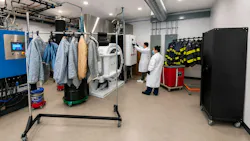

The fire service has made significant progress in recognizing contaminated turnout gear as an occupational exposure concern. Practices that once were common, like wearing soot-covered gear as a badge of honor or bringing contaminated PPE into living spaces, have increasingly given way to a greater emphasis on exposure reduction, proper handling and routine cleaning. Now, the conversation is evolving again.
The question is no longer around whether turnout gear should be cleaned. Departments also need to understand what happens during that cleaning process, which contaminants are being removed, what may remain within the gear, and how cleaning effectiveness is measured. As research continues to advance, "clean" and "decontaminated" should not automatically be considered the same thing.
Looking Beyond What We Can See
Turnout gear can encounter a complex mixture of contaminants during a fire response. These may include polycyclic aromatic hydrocarbons (PAHs), volatile and semi-volatile organic compounds (VOCs and SVOCs), heavy metals, and other hazardous substances.
Some contamination is obvious. Soot, debris and odor can provide visible or sensory indications that gear has been exposed. Other contamination cannot be identified through appearance alone. This distinction matters because turnout gear is a multilayer ensemble. Contamination isn't necessarily limited to the exterior surface.
Contaminants can become trapped on or within turnout gear and potentially transfer to firefighters' skin or release vapors into the surrounding air. Research into PPE cleaning has also found that not all contaminants, including PAHs found throughout turnout ensembles, are removed through typical cleaning methods. That means a coat or pants that “looks clean” may tell us relatively little about what remains within its materials.
Not Every Fire - or Contaminant - Behaves the Same Way
Firefighters encounter a wide range of materials during emergency response, and the contamination left behind on PPE can vary significantly depending on what burned. That distinction is becoming increasingly important as the modern fire environment changes.
PFAS is an example of this complexity. The National Institute of Standards and Technology (NIST) research evaluating 55 PFAS across 32 firefighter PPE textiles found that the number and concentration of PFAS detected varied considerably by material. Testing of the Liquid CO2+ process similarly found differences among individual PFAS compounds, with an average removal rate of approximately 84% across the four compounds evaluated.
Lithium-ion battery fires introduce another evolving contamination profile. Research from the Texas A&M Engineering Extension Service (TEEX) found emissions containing heavy metals and numerous SVOCs, with particulate concentrations reaching 12,000 to 17,000 times the EPA ambient PM2.5 standard cited in the report. Researchers also found that some SVOCs penetrated the outer shell and reached the vapor barrier. The same research found water-based cleaning removed between 21% and 92% of the SVOCs evaluated, while many became undetectable following Liquid CO2-based cleaning. Metallic-particle removal was approximately 99.2% with water-based cleaning and 99.8% with Liquid CO2.
The takeaway for departments is that there is no single contaminant profile for "dirty gear." A structure fire, vehicle fire, wildfire, or lithium-ion battery incident can expose PPE to different hazards that behave differently within its materials. As these hazards evolve, departments should understand which contaminants a decontamination process has been tested against, and what the data says about their removal.
Ask What the Data Actually Measures
As more cleaning technologies and decontamination options become available, departments should become comfortable asking questions about the research supporting them.
When reviewing testing, chiefs should feel empowered to ask these questions: What contaminants were evaluated? Were samples taken only from the outer shell, or were additional layers evaluated? Was testing performed by an independent or accredited laboratory? How were the garments contaminated? What methodology was used to determine removal rates?
The answers provide important context. A claim that a process "removes contaminants," for example, means far more when a department can understand exactly which contaminants were evaluated and review the methodology and results supporting that claim.
This isn't about expecting chiefs or PPE committees to become chemists. It's about giving departments enough information to make informed decisions about an important component of firefighter health and safety.
Cleaning Effectiveness Is Only Part of the Equation
Removing contamination is critical, but there is another question departments should consider: What does repeated cleaning do to the gear itself? Turnout gear must continue performing its primary job: protecting those who wear it.
Outer shells, moisture barriers, and thermal liners serve different functions, and cleaning processes can interact with those materials differently. The National Institute for Occupational Safety and Health (NIOSH) has noted the challenge directly: Some changes to temperature or cleaning chemistry may improve contaminant removal, but those changes also must be evaluated for their potential effect on PPE materials. That creates an important balance.
A comprehensive approach to PPE care should consider both contaminant removal and the effect of repeated decontamination over the garment's service life. When evaluating a process, departments can look for testing that addresses not only cleaning effectiveness but also material durability and PPE performance after repeated cleaning cycles.
From Process to Measurable Outcome
The next stage in PPE decontamination is not simply finding another way to clean turnout gear. It is developing a better understanding of the outcome.
At Emergency Technical Decon (ETD), this principle has shaped our approach to Liquid CO2+ decontamination. Independent testing of the process has evaluated more than 50 contaminants, including SVOCs, heavy metals and PFAS, as well as contaminants associated with lithium-ion battery and other green-technology fires. This breadth of testing is important because firefighter exposures are not limited to one type of incident or contaminant.
Separate testing has evaluated the effects of repeated Liquid CO2+ cleaning on outer shells, moisture-barrier and thermal-liner materials. Testing after repeated cleaning cycles found no significant adverse effects on key protective properties, helping departments effectively decontaminate PPE while supporting gear integrity and potentially extending its usable service life. We believe departments should expect this level of transparency from any PPE decontamination process they evaluate.
The fire service has already made tremendous progress by changing the culture around contaminated gear. Continuing that progress means asking deeper questions, examining the available research and using measurable results to guide PPE care.
Cleaning the gear is an important step. Understanding what that cleaning accomplished is the next one.