Designing a Fire Station With Community Engagement
Key Takeaways
- When listening to members of the community is included early and design is done collaboratively, new fire station projects produce architecture that has cultural meaning, not just technical precision.
- The success of engagement with members of the community in which a new fire station will be constructed is optimized when that engagement is facilitated through meetings on varied days and times, that simultaneously convenes in person and virtually, and that provides an online option.
- When operational performance of a new fire station results from the early identification of operational stakeholders and engagement with residents of the community, station upgrades are shaped through value-driven conversations.
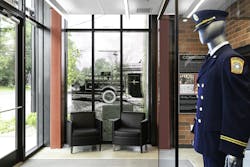
Firehouses are more than operational facilities; they are civic symbols and community anchors and often create or reinforce local identity. They represent safety and readiness and often are seen as one of the most trusted local institutions. Engaging residents and neighbors early in the process helps to ensure that a new station strengthens the bonds that are between the department and the community, particularly when the historical marginalization of residents has left an imprint.
The development of the Arlington County, VA, Fire Department’s Fire Station 8 leveraged community engagement as a core design tool from the earliest stages of the project.
Sustained, inclusive dialogue
History played a critical role in understanding the station and the community that it serves as well as the reason that community engagement was critical to its success.
The Halls Hill Volunteer Fire Department (HHVFD) was established in 1918 in response to the racial segregation of public safety. The all-white Arlington County Fire Department (ACFD) refused to respond to emergencies within the Black neighborhood of Halls Hill, which was walled off from the rest of the county. The 14 Black volunteers who served as the first HHVFD firefighters initially fought fires by grabbing a shared water tank and carrying it to the fire on foot.
The station was absorbed as the ACFD’s Fire Station 8 in 1944 and was integrated in 1963. As Rev. Ashley Goff, chaplain for the ACFD, reflected at the Hose Uncoupling Ceremony, “Station 8 was more than a station. It was safety, it was joy, and it was family. It knit together the Black communities of Arlington.”
When facility planning suggested relocating Station 8 to another neighborhood, Halls Hill residents, local historians and descendants of the original HHVFD firefighters organized quickly in response, to advocate for Station 8’s effect on the community, which went far beyond public safety. Former Task Force Chair Noah Simon summarized this community sentiment: “This was so much more than simply a fire station, simply a firehouse. This was a place where the marginalized African American community could come together and build community, where they could feel safe, their children could play.”
Arlington County set up a clear, front-loaded process, which was anchored by a Public Facilities Review Committee (PFRC) framework that all municipal projects are required to follow. This process brings together representatives of other county commissions, such as civic associations from nearby neighborhoods, the county’s Transportation Commission and Disability Advisory Commission, environment and energy conservation, and the Historical Affairs and Landmark Review Board, among others. Members of the project were determined by their commission/association based on the scope and location of the project. Stakeholders were mapped early and transparently, including Halls Hill neighbors, HHVFD descendants, county staff, the fire department and the construction manager at risk, in addition to PFRC members.
Just as importantly, engagement was designed for access: Meetings were held on varied days and times, which offered in-person and virtual participation simultaneously, and they paired with an online option, so residents could weigh in around shift work, caregiving responsibilities, mobility limitations or other life constraints.
The result wasn’t a single public meeting to “check a box” but a sustained, inclusive dialogue of more than 30 public meetings that shaped both the decision to rebuild on the historic site and the cultural meaning of the station.
From the outset, community engagement was a shared act of authorship. Neighbors envisioned a new station that honors and reflects the past while also celebrating the current and future firefighters who would live and work in Station 8.
Six virtues
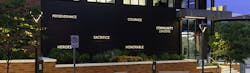
Early in the process, six community virtues emerged through a series of meetings: perseverance, courage, sacrifice, community leaders, heroes and honorable. These virtues offered a language that could bridge past and future, to ensure that the building would be more than a technically excellent facility; it would be a public statement of identity.
With those shared virtues in place, the engagement process echoed what a fire station represents in public life: a trusted, always-there civic presence. Arlington didn’t ask the community to validate a finished idea; it invited residents into a transparent, accountable process in which their time, stories and concerns carried real weight.
Two prominent examples of community guidance can be seen by passersby as well as residents.
The Beacon of Light, which is a vertical stair tower that glows red during dispatches, was developed after hearing a story that a resident told about how neighbors in the 1960s who were chased down the road by members of the Ku Klux Klan only knew that they were safe when they saw the lights of Station 8 ahead.
The Façade of Virtue Words, where the six community virtues are inscribed and backlit on the west face of the building, makes the community values visible day and night.
History & neighborhood
Storytelling continues throughout the site. A granite timeline that’s located along the public walkway traces major moments in HHVFD and Halls Hill history, to integrate interpretation into the everyday path of entry.
Inside, the 24/7 lobby serves multiple purposes: It welcomes visitors to a curated exhibit while also protecting residents in a bulletproof safe haven that’s designed to support victims of domestic violence who are being attacked. The etched silhouette of the first fire engine connects the earliest volunteers to today’s firefighters and gives physical form to perseverance across generations.
Even fundamental planning choices reflect neighborhood priorities. Massing, setbacks and positioning respect adjacent homes while maintaining a clear operational presence, to reinforce the station as both neighbor and service hub.
Operations
Operationally, engagement strengthened performance. Because the fire department and other operational stakeholders were identified early and engaged alongside residents, these upgrades weren’t developed on a separate track. They were shaped through the same value-driven conversations that guided the rest of the project.
The community consistently emphasized that Station 8 needed best-in-class operational spaces, layouts and equipment, to ensure that the historic disadvantages that the HHVFD faced wouldn’t be repeated in the next generation of the station.
The facility includes four drive-through bays that have direct-capture exhaust; advanced alerting systems to reduce sleep disruption and stress; and gender-neutral bunk suites that support an inclusive workforce. Wellness amenities, including thoughtfully designed decontamination spaces and a fitness space that opens to an outdoor patio, recognize that readiness depends on health as much as equipment.
Sustainability emerged as a shared value. Targeting LEED Gold, the project features a bio-solar roof that combines photovoltaic arrays and green roof systems; stormwater management with native plantings; electric vehicle charging for personal vehicles and infrastructure for future EV fleets; and resilience measures that frame environmental stewardship as part of Halls Hill’s enduring legacy.
Cultural meaning
Station 8 now honors Halls Hill’s past while preparing firefighters for the operational demands of the next hundred years. The community sees its history not only acknowledged but made visible through the building itself. The station stands as proof that listening early and designing collaboratively produces architecture with cultural meaning, not just technical precision.
As Fire Chief David Povlitz noted, Station 8 “symbolizes struggle, determination, progress, and the importance of service to and in the community.”
ACFD Fire Station 8 offers a powerful model for fire departments that seek to build stations that are rooted in equity, memory and lasting community partnership.
As Libby Garvey, who is the former Arlington County Board Chair, mentioned at the station’s grand opening, “This building shows what a group of people with strongly held opposing positions but who are of good will can accomplish with good leadership in a community that values good government and wants to serve all its residents.”
About the Author
 Katie Atwater
Katie Atwater
As an architect who has 15 years of experience in northern Virginia, Katie Atwater, AIA, LEED AP BD+C, brings a client-focused, practical approach to public safety design that helps fire and rescue teams translate operational needs into durable, high-performing facilities that serve their community for decades. Since completing graduate studies in 2010, Atwater has practiced continuously in Virginia, including her time at LEWA and, after acquisition, FGM Architects’ Reston office. She is licensed in Virginia, Washington, D.C., and six other states and provides project support for public safety facilities across the United States. Atwater’s work spans project management and design coordination, with responsibility for budgets and multidisciplinary consultant teams from early planning through construction. She has presented at fire station and public safety facility design conferences.