Station Design Conference 2026: Trends in Fire Station Design
Key Takeaways
- Station Design Conference’s exclusive 1-on-One pre-conference program offers attendees the opportunity for an independent review of plans for new and/or renovated stations by architects who specialize in public safety designs.
- Track 1 of the 2026 Station Design Conference will include programs for developing needs assessment and planning studies and estimating costs regarding site selection. Track 2 is for fire departments that have active projects. Track 3 is for law enforcement facilities. Track 4 will cover a broad range of public facility topics, including one session that will flesh out bonds, grants, partnerships and capital improvement program costs.
- Station Design Conference’s “The New NFPA 1400 Standard on Fire Service Training: Impacts on Training Facilities and Training Operations” will be presented by an expert who has served for 26 years on two NFPA Technical Committees.
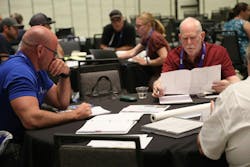
For the past 12 years, Firehouse Station Design Conferences focused on providing fire chiefs and officers with programs to help to design new or renovated stations and facilities. In addition, we offered the latest trends, innovations and standards updates. The 2026 Station Design Conference is no exception.
Pre-conference: Volunteer departments
The Station Design Conference offers three distinct opportunities: specific programs that are led by experienced speakers; networking with peers from across North America; and the chance to meet industry providers who specialize in public safety services and products.
Since its inception in 2014, the conference has introduced new trends and topics in fire station design, and five years ago, it expanded to include law enforcement facilities. For the 2026 conference, at least 185 topic proposals were submitted and reviewed to identify programs to best serve attendees.
Station Design Conference’s exclusive 1-on-One pre-conference program offers fire service and law enforcement attendees the opportunity for an independent review of their plans by architects who specialize in public safety designs. Whether it’s rough sketches or engineering plans for active projects, the 1-on-One session team provides objective insights and support to save time and money for the best station for your department and the community that’s served.
Pre-conference programs start on Monday, May 18, and run from 1 p.m. to 5 p.m. The General Session kicks off on May 19 with presentations including: “Next-Generation Public Safety Facilities” and “A Strong Foundation: Getting the Right Start for Your Public Safety Design.” After lunch, attendees can choose from four tracks that will continue through noon on May 21.
Among the 12 pre-conference programs are two new programs for volunteer departments: “The Modern Volunteer Fire Station: Right-Sizing for Safety, Staffing and Community Support” and “How to Plan a Volunteer Station Today that Will Transition into a Career Station Tomorrow.” Other new pre-conference programs include “Ready, Set, Go! Pro Tips to Advance Your Project No Matter Where You Are in the Process,” which will provide a practical, easy-to-follow flowchart of the design process, and “Emerging Technology in Fire Training Simulators and Facilities.”
More than 80 percent of Station Design Conferences are attended by those who are building their first station. Consequently, Track 1 introduces the basics of designing a new facility. It includes programs for developing needs assessment and planning studies; creating an effective program to define facility size, determine individual space requirements and shape the project budget; site selection costs; and the popular program on learning how to read construction drawings, plans and specifications.
Track 2 is for departments that have active projects, and Track 3 is for programs for law enforcement facilities. Track 4’s programs target a broader range of public safety facility topics.
Each of the four tracks is open to all conference attendees, including registered officials of muncipalities.
On the cutting edge
New trends at the 2026 conference expand on advances in artificial intelligence, electric vehicles, and net-zero initiatives that directly apply to fire and law enforcement facilities.
AI is changing our culture and daily lives radically, but it also offers significant benefits for public safety facilities and operations.
“AI in Design: How Artificial Intelligence Is Transforming Public Safety Facility Design” will demonstrate how AI-driven tools enable data-informed site selection and predictive modeling for station response times and energy performance.
“Preparing for the EV Era: Infrastructure and Design Requirements for Electric Fire Engines and Fleet Vehicles” will explain how to assess electrical capacity, select charging equipment, and prepare bays and maintenance areas for electric apparatus.
Climate change is highly controversial right now and likely won’t go away. In 2018, Salt Lake City Fire Station No. 14 became the first fire station in the United States to achieve Net-Zero Energy (NZE). Since then, the number of net-zero fire stations increased. “Net-Zero in Action: Meeting Montgomery County’s Aggressive Climate Action Goals While Creating a Highly Functional, Mission-Critical Facility” will feature a case study on the District 6 police station in Gaithersburg, MD.
“Old Walls, New Challenges: Whether to Renovate or Rebuild" will explain how to decide whether to renovate, rebuild or relocate a facility. The topic is particularly timely, because 43 percent of U.S. fire stations are more than 40 years old. These stations were built before modern apparatus, building, and health and safety standards were known and prior to gender equity and energy efficiency becoming vital.
As recently as 10 years ago, the idea of building a facility that would last 75 years was “outside of the box.” However, continual upgrades to construction and structural materials have enabled the design and construction of facilities that are maintenance-free and long-lasting. “How to Afford a 75-Year Facility and Grow Volunteer Stations” will lay out facility considerations that include site components, exterior building options and interior building choices.
“Trauma-Informed Design: Integrating an Understanding of High-Stress Psychological and Physiological Effects into the Built Environment” will cover efforts to transform public safety facilities (fire stations, emergency shelters, 9-1-1 communications centers, emergency operations centers and police stations) into spaces of resilience, empathy and healing. The program will focus on new research on protecting the mental health of first responders and public safety personnel from the psychological, emotional and physiological effects of high-stress and crisis situations.
Over the past 130 years, the NFPA has produced more than 300 codes and standards on a variety of fire-related topics. Most recently, NFPA 1402: Standard on Facilities for Fire Training and Associated Props, NFPA 1403: Standard on Live Fire Training Evolutions, NFPA 1404: Standard for Fire Service Respiratory Protection Training, NFPA 1407: Standard for Training Fire Service Rapid Intervention Crews, NFPA 1408: Standard for Training Fire Service Personnel in the Operation, Care, Use, and Maintenance of Thermal Imagers, NFPA 1410: Standard on Training for Emergency Scene Operations, and NFPA 1451: Standard for a Fire and Emergency Service Vehicle Operations Training Program were consolidated into NFPA 1400: Standard on Fire Service Training. In addition to revisions, NFPA 1400 affects all fire training operations and facilities, including those at fire stations. “The New NFPA 1400 Standard on Fire Service Training: Impacts on Training Facilities and Training Operations” presenter has served for 26 years on two NFPA Technical Committees and will offer unique insights into NFPA 1400.
Unmatched resource
The 12th annual Station Design Conference is a resource for fire department staff who are involved in a new or renovated facility. In addition, many local and municipal officials attend the conference to better understand the costs and requirements of first responder facilities, both now and over the next 75 years.
For information on the 2026 Station Design Conference, May 18–21, at the Grand Sierra Resort, Reno, NV, go to fhstationdesign.com.
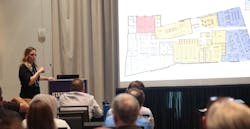
About the Author
 Janet A. Wilmoth
Janet A. Wilmoth
Special Projects Director
Janet Wilmoth grew up in a family of firefighters in a suburb of Chicago. Wilmoth, who is owner of Wilmoth Associates, worked with Fire Chief magazine for 27 years until it closed in 2013. She currently is the project director for Firehouse, overseeing the Station Design Conference.