Is Your Fire Station Vision Viable? The Power of Feasibility Studies
Key Takeaways
- Feasibility studies help to determine the best course of action for fire facility projects, whether renovating, consolidating or building new stations.
- Engaging qualified professionals early ensures comprehensive analysis, accurate cost estimates and effective project planning.
- These studies evaluate potential challenges and benefits, to guide departments to make confident, data-backed choices.
Your fire service needs to evolve, but what actually needs to happen next? Do you need to buy land? How should you determine to renovate your facility, add to it or build new? Should you continue with the number of stations in their current locations, consolidate locations or add more facilities? Do you need a modern emergency operations center or public safety answering point? How about an upgraded or new training facility?
For answers to these questions and many more, contracting for a feasibility study often is the first step in the process of documenting, enhancing, rethinking or modernizing your physical facilities. Public safety leaders often are asked to make facility decisions long before the path forward is clear. That uncertainty is precisely where a feasibility study becomes critical. However, defining what a feasibility study is and what it can accomplish differs greatly based on your needs. Understanding the process and how qualified professionals can best support your potential projects can position you to make confident, informed decisions.
Why a feasibility study?
Although the prevailing thought is that feasibility studies help to support your efforts in showcasing the need for a new station, these comprehensive, operations-based and data-driven studies can evaluate a variety of factors and produce a vast array of potential solutions, including station consolidation, equipment upgrades or possible upgrades to current stations.
Misconceptions, preconceived notions or a general lack of awareness regarding the scope and value of feasibility studies can set departments back. It’s crucial to understand the value of these studies from the onset of a potential project and to contact a qualified design professional as soon as thoughts of these improvements begin to develop.
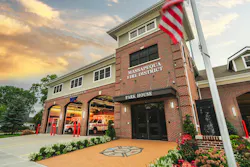
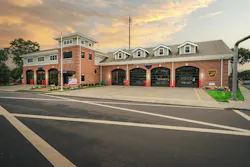
An example of this process is the Massapequa Fire District in New York. The Board of Fire Commissioners spent multiple years evaluating the district’s facilities to determine the best course of action for its existing Park House Station. The station, which was built in 1953 and saw multiple additions over the years, wasn’t compliant with current building codes nor well suited for modern firefighting practices, including preventing carcinogenic cross-contamination.
After evaluating whether renovation or new construction would best meet the community’s expanding needs and support first responders, designers concluded that a significant renovation was needed. The board chose to design a new station but required the adaptation and reuse of the original hose-drying tower as a prominent feature in the new design.
This process resulted in a new 21,600-sq.-ft. station that comprises seven bays, integrated hands-on training, decontamination spaces, company offices, fitness facilities, a training classroom, rehab support and a large multipurpose room.
Whether you have visions of a new fire station, would like to redesign your station’s bunking situation or seek advice on the purchase of land for the development of a new facility, a feasibility study determines the deficiencies that currently exist and highlights the challenges that could arise from pushing the problem further down the road. Simply put, these studies aim to highlight the advantages and disadvantages of a potential project and provide a department and municipal leaders with the insights that are needed to determine whether a project should move forward, be modified from the original concept or be shelved entirely.
How studies build support
It’s important to note that it isn’t guaranteed that feasibility studies show favorable results. Ambitions to construct a new station or acquire land might be extinguished by the factors that are identified within the study. In these situations, it’s important to communicate findings with taxpayers, regardless of their position on the proposed work.
If the community is largely in favor of the construction of a new station but a feasibility study recommends retrofitting the current station, it’s key to present this information through various avenues, including at regularly scheduled municipal meetings.
When discussing important updates, the design team and design committee must communicate with those who are on either side of the fence. Detractors of a potential project can possess as much key insight as supporters. Although one side might not be pleased with the results from a feasibility study, those people will appreciate those results being communicated openly, particularly when the proposed project requires bond approval or an increase in capital improvement budgets.
It’s important to understand that feasibility studies are designed to provide objective guidance, not to dictate outcomes. Even when the results of a study align with the design team’s vision, it ultimately is up to municipal leaders and/or taxpayers to decide to move forward. Working with qualified professionals can help to inform the public and politicians of the results of the study, what it means and how to best move forward with its recommendations.
Who to contact?
The key to a comprehensive, informative study is starting with a qualified professional team. This team might consist of architects, engineers, estimators or specialists, often regional, in a variety of services, including geographic information systems, geotechnical analysis or surveys. The answers that are sought will help to determine who is needed on the team. Look for expertise, relevant experience, and references when choosing a qualified professional or firm. Although working with a local firm might seem convenient, it’s equally important to ensure that the team has demonstrated experience in this highly specialized facility typology, because public safety planning requires a depth of knowledge that extends beyond general building design.
Qualified professionals will require the design team’s input to help to program project needs. Those people will ask for feedback and review during the scope of work. The input that they will receive will act as a critical step in the process. A meaningful study shouldn’t be prepared in a vacuum.
Feasibility studies cost time and money; however, these factors shouldn’t be the primary driver of whom is hired to conduct the study. If you needed a heart doctor, you certainly wouldn’t select one based solely on price. You would want the most qualified doctor and team based on your particular needs. Have a plan in place to react to the recommendations and move the vision forward.
Most studies will have some form of budget or cost recommendations as well as a proposed timeline. Knowing that money and time will be required to implement the recommendations, it never is too early to start to plan funding mechanism and timetable.
Prepare for the unexpected
Working with a professional team in the development of a feasibility study ensures that key decision-makers whoare involved in the project have the necessary insights that they require to pursue potential facility projects and to foster community and municipal support. Choosing the right team to conduct the study and to openly share results will position the design team with informed next steps.
It’s vital to remember that feasibility studies often result in further work based on required information and study recommendations. A feasibility study serves no purpose if the study is relegated to sitting on a shelf.
About the Author
 Aubrey Dunn
Aubrey Dunn
Aubrey Dunn, Assoc. AIA, LEED Green Assoc., is a staff designer at H2M architects + engineers with experience in the planning and design of municipal and public safety facilities. Her responsibilities include project management, drafting, developing renderings, and construction administration. Dunn is also skilled in the use of Revit.
 Dennis A. Ross
Dennis A. Ross
Dennis Ross, AIA, is a Technical Advisor and past Emergency Services Market Director at H2M architects + engineers. Previously, he was a founder and co-owner of a nationally recognized, award-winning firm exclusively dedicated to the design of emergency response facilities across North America. He has over 40 years of focused experience in construction and development, which allows him to assess projects from multiple points of view.
He is NCARB certified; a member of the American Institute of Architects, National Fire Protection Association (NFPA), and the International Code Council; licensed in 14 states; and an honorary member of the Kingston Fire Department. His expertise in public forums, project management, land use, budgeting, construction and focus on solutions to difficult problems has enabled him to knowledgeably write and speak on a variety of emergency services station design issues. Dennis has authored many articles and presented at even more conferences. In 2001, he received the Business Council of New York State’s and National Federation of Independent Business’ annual award for “New York State Small Business Advocate of the Year.”
Dennis is currently serving on the NFPA Technical Committee on “Emergency Responders Occupational Health,” which is tasked with developing a new Standard for Contamination Control, NFPA 1585. Dennis led the task group for Chapter 5, Emergency Services Organization Facilities. In 2022, he was appointed to the NFPA - Architects, Engineers, Building Officials (AEBO) commitee as an Executive Board Member.