Designing Modern Fire Stations for Neighborhood Compatibility
Key Takeaways
- Early fire station stakeholder engagement is crucial to define neighborhood compatibility, considering the specific context and community expectations.
- Design strategies such as massing, material selection, and landscaping help minimize visual and noise impacts while maintaining operational efficiency.
- Traffic planning, including dedicated access points and traffic studies, ensures quick emergency response and minimizes neighborhood disruptions.
Fire stations are among the most essential pieces of civic infrastructure, yet they are also some of the most complex buildings to integrate into established neighborhoods. Designing a fire station that meets rigorous operational demands, rapid response times, large apparatus, and 24/7 activity, while also respecting the character, scale, and expectations of its surrounding community requires a thoughtful approach to neighborhood compatibility.
This balance goes beyond aesthetics; it involves early stakeholder engagement, contextual design decisions, and a clear understanding that compatibility is not a one‑size‑fits‑all solution. When done well, a fire station can be both a high‑performance emergency facility and a valued neighborhood asset.
Defining neighborhood compatibility
To define neighborhood compatibility for a project, early engagement with stakeholders is critical in establishing the overall aesthetic and vision for the building. Stakeholders may include department members, designers, community residents, and zoning or planning boards; however, this group will vary depending on the project’s location and context. Is the station nestled within a residential neighborhood, located in a bustling business district, set in a quiet rural community, or situated within a historic district? Each setting brings different expectations, sensitivities, and voices that will want to participate in defining what compatibility means for the site.
It is essential to establish clear goals and priorities with these stakeholders, whether the objective is to blend the building into the existing architectural fabric, pay homage to the department’s history through design, or introduce a more modern facility that serves as a community landmark and supports recruitment and retention efforts.
Approaches for different project types
Each project, whether ground‑up new construction or an addition/renovation, will have its own definition of what it means to be compatible. For additions and renovations, contextualizing the new work within the existing station may be the top design priority. Ground‑up construction on an existing site offers additional opportunities for community input by gathering feedback from neighboring properties based on their experiences with the current station.
When a project involves ground‑up construction on a new site, it is important to recognize that neighbors may have no prior experience living adjacent to a fire station. Providing transparency about the design process and operational considerations can help alleviate concerns, reduce opposition, and address common “not‑in‑my‑backyard” attitudes.
Design for both functionality and community acceptance
Engaging project stakeholders to help define neighborhood compatibility provides a valuable framework that can guide the overall exterior design aesthetic of the station. Equally important is educating stakeholders on the critical functions and operational needs of a fire station, while ensuring their feedback is genuinely heard and considered. One of the primary responsibilities of the design professional is to balance efficient emergency response and daily operations with community expectations related to exterior appearance.
Design professionals work within building code and zoning requirements to develop a building mass that accommodates the programmatic needs of a fire station. Apparatus bays, for example, require significantly greater square footage and volume than standard office spaces or neighboring homes. Through thoughtful massing, articulation, and material selection, a qualified design team can achieve an exterior design that functions operationally, respects the surrounding context, and appropriately manages community expectations.
While building massing tends to be the largest sticking point in residential neighborhoods, other common design elements that matter most to stakeholders include mitigating noise and light pollution, screening the visibility of commercial equipment such as HVAC units and generators, thoughtful landscaping and planting, and traffic patterns associated with entering and exiting the site. It is important to work closely with your design professional to minimize these operational impacts through informed planning and design.
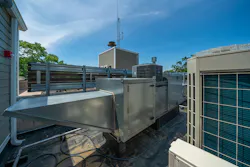
Building massing and roof design can be used strategically to conceal rooftop equipment such as HVAC units, while landscaping and screening elements can help minimize the visual and acoustic impact of ground‑mounted equipment. Lighting impacts can be mitigated through careful fixture selection, aiming strategies that limit light spill, and the use of controls such as dimming or motion sensors to reduce nighttime light pollution while maintaining safety and security.
In some cases, neighborhood compatibility may be defined less by building aesthetics and more by the role the fire station plays as a community asset. Project stakeholders may prioritize spaces that foster public engagement and strengthen the relationship between the department and the surrounding neighborhood. Incorporating community rooms for public functions, such as fundraisers, fire safety education events, local voting/polling station, or use as a storm shelter, can help establish the station as an extension of the community rather than an isolated civic facility.
In other contexts, stakeholders may value the inclusion of additional green space, such as a pocket park or publicly accessible landscaped areas, further reinforcing a sense of shared ownership and connection between residents and the department.
Traffic planning for emergency response
Traffic considerations should be addressed early through clearly defined and separated access points for emergency responders and the public, allowing apparatus to enter and exit the site efficiently while reducing conflicts with pedestrian and neighborhood traffic.
In many cases, conducting a traffic study can help inform curb cut locations, turning movements, traffic signal time optimizations and the integration of traffic signal pre‑emption systems to support safe and reliable emergency response.
Case studies
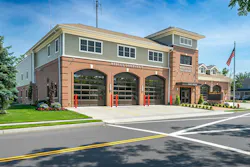
At the Massapequa, NY, Park House fire station, located on Long Island, NY, a split-level building strategy was used to reduce the overall building height required for the apparatus bay, allowing the station to align more closely with the scale of the surrounding residential neighborhood. Residential-style materials, including brick, siding, asphalt shingle roofing, and window proportions that mirror nearby homes, help the station blend into the existing neighborhood fabric.
A mansard roof form contributes to a pitched roof appearance consistent with adjacent residences while allowing flat roof areas to be strategically located out of view. These flat roof areas conceal mechanical equipment through the use of screening, which minimizes visual impacts and supporting neighborhood compatibility without compromising operational performance.
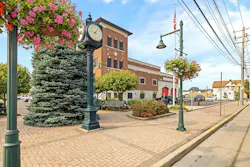
The village of Mineola, NY, Fire Headquarters is located along a busy roadway and demonstrates how site planning and landscape design can support neighborhood compatibility in more urbanized contexts. The inclusion of a pocket park along the street frontage softens large areas of hardscape and reinforces the station’s role as a civic and community-oriented facility, rather than a purely operational one.
Conclusion
As you embark on the design of a new or renovated fire station, it is essential to prioritize the functional and operational needs that support emergency response first and foremost. However, meaningful community engagement and transparency throughout the process can foster positive relationships with the stakeholders the department serves.
When project goals are misaligned or poorly communicated, concerns and public opposition throughout the community are more likely to arise. Establishing clear objectives early and maintaining ongoing dialogue with both stakeholders and the design professional creates a shared understanding of success, helping ensure the station operates correctly while being accepted and valued by its neighborhood.
About the Author
 Rachael Grodzki
Rachael Grodzki
Rachael Grodzki, R.A. is a project architect who has more than eight years of experience at H2M architects + engineers. She specializes in architectural design for public safety facilities. Grodzki holds a Bachelor of Science in architectural engineering technology from the State University of New York at Farmingdale and is a registered architect in the state of New York. She is experienced in the programming and design of public safety facilities to ensure the health, safety and well-being of the communities and clients that H2M serves.