Interior Design Strategies to Keep Fire Stations Functional for Decades
Key Takeaways
- Materials used in the the design of fire stations should withstand daily wear, chemical exposure, and require minimal maintenance to ensure longevity and reduce lifecycle costs.
- Balance rugged operational zones with warm, residential-style living spaces using soundproofing, acoustic treatments, and comfortable finishes to support firefighter wellness.
- Plan for future modifications by selecting materials and infrastructure that are easy to replace or upgrade, minimizing disruption and costs over the building’s lifespan.
Designing the interior spaces of a fire station is unlike designing other buildings. These spaces must be built to withstand rigorous daily use and constructed for long-term resistance while providing a sense of comfort and community for the firefighters who live and work within them. As fire departments evolve and the operations of these facilities grow, it becomes essential to think beyond immediate needs. Futureproofing—or designing with durability, adaptability, and long-term functionality in mind—ensures that fire stations remain effective, welcoming, and cost-efficient for decades to come.
Longevity is an important consideration in fire station design. The station’s life expectancy is based upon many factors, including the quality of construction and its materials, and maintenance practices. When designing a facility where continuous operations are required with minimal disruptions, it is essential to consider the durability and adaptive uses of materials. With the average costs per square foot on the rise, finishes are often the first avenue for monetary savings. Initial costs should be weighed against lifecycle value. What saves money today may cost more money in repairs and renovations tomorrow.
Built for purpose
A fundamental design principle in fire station architecture is that the form should be dictated by its intended function. Every area within the fire station is designed to meet specific functional requirements and should be tailored to support the department's operational needs for maximum efficiency, rather than being influenced by temporary trends.
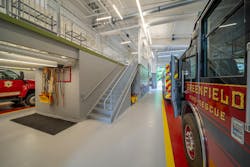
Materials used in firematic zones, such as apparatus bays, decontamination rooms, and gear areas, must be heavy-duty, and washdown-capable, and able to withstand constant wear from bunker gear and equipment without compromising performance. Consider material choices that are long lasting, such as concrete masonry walls with epoxy paint coatings for cleanability paired with a seamless epoxy floor for protection against chemical spills, moisture resistance, and added grit for maximum slip resistance.
Longevity of materials is not only dependent on the composition of the material but understanding the maintenance requirements of the products being installed. During the material selection phase, it’s essential to ask your designer not only about performance but also about maintenance. Understanding which cleaning products are safe for each surface helps prevent damage that could lead to premature replacement. Even the most durable finishes can degrade quickly if exposed to harsh chemicals or improper care routines, turning a long-term investment into a short-term fix.
Creating a home away from home
While firematic zones demand hard washdown surfaces for safety and sanitation, not every space within the station should feel institutional. Living areas benefit from softer finishes, warmer materials, and more residential characteristics.
Living spaces such as bunk rooms, kitchens, and dayrooms serve as central areas within the station. It is important to ensure that finishes in these areas are both sufficiently durable to withstand frequent shift changes and designed to create a comfortable, non-institutional environment.
In living spaces, it’s important to introduce materials that provide both warmth and acoustic benefits tailored to the specific function of each area. For bunk rooms and private offices, designers should carefully evaluate adjacent spaces and implement preventative measures to manage sound transfer. Incorporating elements like carpeting, soft-surface furniture, and acoustic ceiling panels with high noise reduction coefficients can significantly reduce noise pollution, both from within the station and from external sources.
Features like dual roller shades with both light-filtering and blackout fabrics have been shown to influence sleep quality, which, in turn, can affect mental clarity during emergency response calls. These solutions not only enhance comfort but also help prevent makeshift DIY fixes by occupants trying to block out light. By addressing these needs proactively, designers can support wellness while preserving the integrity of the space.
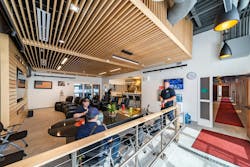
These design principles were thoughtfully applied throughout the new fire headquarters for Greenfield, MA. Private living quarters and bunk rooms were strategically positioned with direct circulation paths to the apparatus bays, enabling rapid response times. Acoustic properties of materials were carefully reviewed prior to installation to ensure comfort and minimize noise disruptions. The living quarters feature an open-concept layout between the dayroom and kitchen, enhanced by warm wood tones introduced through acoustic ceilings and wall panels. Porcelain tiles were selected for durability under heavy foot traffic, while vibrant walk-off mats add color and help trap dirt and particulates—supporting both cleanliness and visual appeal.
Greenfield opted for individual walk-off mats that can be easily removed and cleaned through an off-site laundering service. Given the station’s usage levels and the maintenance demands of linear mat runs, this approach proved to be the most cost-effective and convenient solution. Individual mats also offer flexibility in placement and allow for quick visual refreshes—whether through color changes or updated logos. Alternatively, some stations prefer recessed walk-off mat systems for their superior ability to trap dirt and moisture while providing a seamless, flush appearance with surrounding flooring. Both options offer distinct advantages, and the right choice depends on the station’s operational needs and aesthetic goals
Designing for change
During the installation of new materials or the construction of a new building, future modifications may not be a primary consideration following the initial investment. However, incorporating adaptability into the design process can substantially reduce the cost of future changes.
Choose materials that allow for easy replacement and flexible infrastructure. Luxury vinyl plank and carpet tiles, for example, come in various colors and sizes and can be individually replaced when damaged, reducing both disruption and cost.
Similarly, suspended ceiling systems provide acoustic benefits while allowing easy access to mechanical and electrical systems above. From standard two-foot-by-two-foot ceiling grids to linear wood planks, acoustic clouds, and metal panels, these systems offer both functional and aesthetic versatility. Making thoughtful choices upfront ensures that future updates or repairs are manageable and cost-effective.
Wall finishes can range from simple paint to applied graphics, wall panels, and modern wallcoverings — each offering different benefits in terms of durability, maintenance, and aesthetics. Painting remains the most flexible and cost-effective option, allowing for easy touch-ups and color changes. Wall panels, especially in high-impact areas like corners and corridors, provide durable protection and can often be replaced individually without disturbing the mounting system. Meanwhile, wallcoverings have evolved far beyond traditional wallpaper. Today’s vinyl-backed, bleach-cleanable surfaces are ideal for high-traffic zones, offering both visual appeal and easy maintenance.
Getting the material choices right from the beginning helps prevent early wear, but what’s right can differ depending on your climate, station layout, and department’s unique needs. What works well in one location may not be suitable for another. That’s why it’s critical for your designer to understand your station’s response patterns and how occupants use each space to make informed, context-sensitive material choices.
Conclusion
Designing a fire station for the future means more than meeting today’s needs; it’s about creating spaces that endure, adapt, and support the well-being of those who serve our communities. From firematic zones built for resilience and safety to living areas that foster rest and camaraderie, every material and layout decision plays a role in the station’s long-term success.
By prioritizing durability, ease of maintenance, and thoughtful adaptability, departments can avoid costly renovations and ensure their facilities remain functional and welcoming for decades. Futureproofing represents more than a design strategy; it signifies a dedication to ensuring the long-term sustainability, operational efficiency, and comfort of facilities that serve first responders each day.
About the Author
 Rachael Grodzki
Rachael Grodzki
Rachael Grodzki, R.A. is a project architect who has more than eight years of experience at H2M architects + engineers. She specializes in architectural design for public safety facilities. Grodzki holds a Bachelor of Science in architectural engineering technology from the State University of New York at Farmingdale and is a registered architect in the state of New York. She is experienced in the programming and design of public safety facilities to ensure the health, safety and well-being of the communities and clients that H2M serves.