'Find Them Now' Calls for Support to Make Firefighter Tracking Technology a Priority with the FCC
Key Takeaways
- Former Boston Fire Commissioner Joseph Finn says available location tools are not yet accurate enough to reliably locate firefighters inside buildings.
- Find Them Now is calling on the administration and FCC to advance technology that can identify a firefighter’s precise location, including their floor.
- Phoenix firefighter Bret Tarver was lost in a supermarket fire in 2001, prompting extensive rapid intervention training but leaving the need for reliable indoor tracking unresolved.
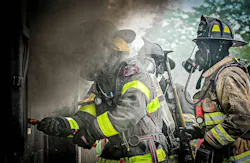
Nearly 27 years after the Worcester Cold Storage fire, which was the beginning of discussions about locating firefighters inside buildings, today’s incident commanders are still unable to access the technology that would allow them to reliably pinpoint a downed or injured members' location inside a building.
What was first thought to be a problem only in large commercial buildings has shown up time and time again in all types of structures. Several line-of-duty-deaths in recent years occurred in single-family dwellings where crews were unable to locate a downed firefighter. In commercial fires, several firefighters became disoriented or lost just feet from an exit and required extensive searches to be located and removed.
Find Them Now—launched by a group of fire service leaders—is calling for action by the administration and the Federal Communications Commission (FCC) for this technology.
“We are able to track the location of our suitcase or telephone or even a meal as it is being delivered to our home, yet we cannot consistently find where a lost or missing firefighter is inside of a building today,” former Boston Fire commissioner Joseph Finn told Firehouse.com.
Finn said location tools available today are a step in the right direction but are not yet accurate enough inside a building to reliably find a firefighter in trouble. What's needed is precise X, Y and Z locations, including which floor they are on, and the FCC is now considering rule changes that would enable private companies to deliver the solutions first responders need.
A call to action
Finn is asking the fire service to sign up and show their support for Find Them Now, a critical evolution in firefighter safety technology.
One of the original advocates for Find Them Now, Finn tells the story of how the Boston Fire Department lost two firefighters in the line of duty during a 2014 fire.
During the Back Bay fire, firefighters working in the basement of a large brownstone called a mayday after they lost water. Despite multiple calls for help, firefighters were unable to locate the firefighters because the basement was cut up and divided, making it nearly impossible to search amid growing fire conditions.
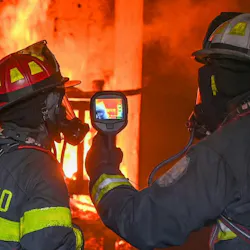
“I’m asking the fire service and other public safety professionals to visit Find Them Now to sign up, show their support and help the government understand that firefighters’ lives are on the line,” Finn said.
Reflecting on Phoenix's Bret Tarver incident
Nearly two years after the 1999 Worcester Cold Storage Fire, the Phoenix Fire Department (PFD) lost firefighter Bret Tarver when he responded to a fire in the Southwest Supermarket on March 14, 2001.
He became disoriented in the building and firefighters were unable to find him for nearly 15 minutes. Due to content in the fire building, firefighters worked for nearly 35 additional minutes to recover Tarver.
Following that fire, PFD conducted extensive research and developed a national standard for rapid intervention training, but one overarching necessity on the fireground that day is still unavailable today: Being able to locate a missing firefighter.
Scott Krushak, who was a PFD captain/paramedic at Phoenix Fire Station 21—where Tarver worked—was assigned to coordinate the training that PFD members attended following the outcome of the Tarver incident finding.
“It's a long time coming,” Krushak told Firehouse.com. He is now fire chief at the Rio Verde Fire District in Arizona.
“It was a tragic, difficult incident trying to locate Tarver. We thought we located him but with the carbon monoxide inhalation, he went the other way, and we had to keep searching. He tried to tell us where he was, and we just had the mindset of operating in a residential mentality in a big box building, and that didn’t work,” Krushak recalled.
“Usually you can find a window or there isn't that much area to search. We were always lucky that way, but this time it was different,” Krushak said. “This was a grocery store and trying to find somebody in a grocery store with all the produce, all the shipping containers, the cartons of food and the shelves are knocked over. It was extremely difficult, and the fire conditions made it worse.”
After the fire, each Phoenix firefighter went through extensive rapid intervention training, including self-survival skills and Krushak observed over many of those drills.
“It was limited visibility for them, but we would watch the whole thing…and it was painful to watch the other firefighters try and find that missing firefighter, and then get themselves in trouble, and then have to call another RIT team.”
He said many of those rapid intervention drills sparked between a dozen to 20 individual mayday calls as firefighters would get lost, disoriented or run out of air. They couldn't find their crews, or the downed firefighter oftentimes.
“Survival is the difference of seconds of being able to locate the firefighters and being able to extricate them in that precious time frame is the holy grail, and we couldn't figure out how to do it.”
He said drills after 2001 included firefighters inside the training building call using cell phones to try and share locations, using early thermal imaging cameras and following tagline rope systems but locating the missing firefighter was still challenging with the extra intelligence.
“You think we would've been able to find a firefighter in a building by now, in a generation of AirPods, global tracking and other cell phone technologies,” Krushak said. “After losing Bret, I reflect a lot and know that he didn't die in vain, and advocacy efforts like Find Them Now could help save hundreds of other firefighters lives, so it's little bittersweet for me.”
About the Author
 Peter Matthews
Editor-in-Chief
Peter Matthews is the editor-in-chief of Firehouse. He has worked at Firehouse since 1999, serving in various roles on both Firehouse Magazine and Firehouse.com staffs. He completed an internship with the Rochester, NY, Fire Department and served with fire departments in Rush, NY, and Laurel, MD, and was a lieutenant with the Glenwood Fire Company in Glenwood Landing, NY. Matthews served as photographer for the St. Paul, MN, Fire Department and currently is a photographer for the Fort Worth, TX, Fire Department.
Connect at [email protected] or LinkedIn.