Avoiding 10 Fire Department Technology-Purchasing Pitfalls
Key Takeaways
- When fire departments consider the purchase of new technology, they should do so only in the context of solving a problem or fulfilling a need. Otherwise, they risk detracting from their mission and/or depleting assets that could be used in better ways.
- If the technology that’s under consideration for purchase isn’t compatible or can’t integrate with existing technologies, a lifetime of costly workarounds or inefficiencies are likely.
- When fire departments that are considering the purchase of new technology allow for input from stakeholders, such as people who are in charge of finances, elected officials, community members and IT personnel, they increase the likelihood that the initiative will be well supported.

There often is an apprehension surrounding the procurement of technology, particularly when the people who are involved in that aren’t “techies” themselves. Although many of my ways to avoid purchasing pitfalls can be applied to any procurement process, what’s noted below was developed through trial and error and, in some cases, led to substantial department risk or wasted taxpayer dollars. I always have believed that I never will live long enough to make every mistake, so I always try to learn from others. So, what’s shared is a collection of failures that helped me to navigate the world of procuring technology.
Not defining clear needs/objectives
If you take note of only one line of this article, make it this one: Purchasing should solve a problem or fulfill a need. Any other reason often is frivolous, detracts from the primary mission and/or depletes assets that could be used better somewhere else.
The first question that always should be asked: What problem will this purchase solve? Many times, it can be pointed to a near miss, a lost opportunity or even a future state of the department when it comes to adding a new capability. This also helps a department to avoid the mentalities of the “new shiny object,” “keeping up with the neighboring department” or “we have end-of-year money to spend so we don’t lose it,” which often lead to wasted money.
Falling for hype
When I went to school for a Master of Business Administration, one class went in depth into marketing psychology. Let me tell you, a ton of money has been invested in marketing science, which has led to persuasive and even dangerous marketing practices. We often see it if you have children at home who can recite verbatim the commercial for the toy that they want. We as adults and leaders must be aware of the influence that marketing has on us.
Make sure that you rigorously evaluate your prospective purchases rather than just taking in the marketing verbiage. For example, the marketing message for a product says that the product is safer. How safe? How is it safer than a competitive product? What peer-reviewed resources verify the company’s claim?
This also applies to price-checking. Do research on pricing to see whether the company artificially inflated the price of its product, to give a steep discount and appear to be offering a better deal than competitors.
Ignoring compatibility issues
Although mainly for software purchases, this matter is one that often greatly adds to the total cost of ownership. It also can apply to technological upgrades that must be made in phases, such as SCBA or radio replacements. If what you’re buying isn’t compatible or can’t integrate with your existing technology, you’re looking at a lifetime of costly workarounds or inefficiencies.
Particularly with software, it’s important to know to what integrations the product company has experience connecting, because nearly every vendor that I interviewed over the years said it could integrate with what my department had. You must be more interested with what it already has integrated.
You also can look at technology that’s meant to replace multiple systems, taking this question off of the table.
Underestimating implementation challenges
We all have heard the two things that firefighters hate: change and things staying the same. With the implementation of any innovative technology, there will be fast adopters, average adopters, and slow or resistive adopters.
Whether it’s a minor change or a major shift in direction, make sure that you account for the X factor in any new project, which is adoption or buy-in by staff. You often can make this easier through advanced communication, involving staff in the change process and training. That said, even the best laid plans come to a screeching halt when someone throws up the right red flag to the right person.
It also is important to understand that implementing new software and other things often comes with a learning curve, data conversion frustrations and even configuration fatigue. The sooner that you accept that things won’t be exactly like you had before, the faster that you can overcome this hurdle. Remember, if what you had before had no problems, you wouldn’t be implementing a new solution.
Overlooking TCO
When I took over as fire chief, it became abundantly clear that the previous administrations didn’t plan for the total cost of ownership (TCO) of just about everything. Apparatus were in extremely poor condition, stations had ongoing maintenance issues that never were addressed properly, and most of the equipment never was inspected, evaluated or maintained.
As a rule of thumb for any new tech purchase, identify the future expenses that will be associated with it. Does the product have batteries that must be replaced? Does it need factory calibration every X number of uses/years? Does it have consumable parts, such as filters, bulbs or fluids that must be changed? Are there ongoing data storage fees? If so, build that into the budget.
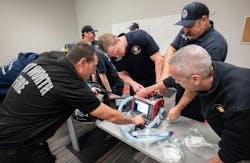
The least expensive up-front option often might have so many hidden costs after the initial purchase that the product quickly becomes the most expensive in a competitive bid situation.
Lack of vendor due diligence
Every department builds vendor relationships. Don’t let the familiarity jeopardize the long-term success of a department.
Competitive bidding processes exist for a reason. They might take more time and effort, but they help to keep vendors in check.
When a vendor knows that you’re going to sole-source your purchase, there isn’t incentive for the company to, as my former deputy used to say, “sharpen their pencils on the quote.”
Doing your due diligence on vendors often reveals whether they have financial stability and good customer support and will be around to deliver what they promised. Lack of due diligence leads to having equipment that no longer can be serviced or needs parts that no one is making. Take time to check into your vendor.
Security and compliance failures
Often, failing to consider security and compliance is the result of a larger department not bringing in its information technology personnel until a product selection is made, and then the department realizes, for example, that it needs connectivity to a government-controlled network or support from the IT department.
The IT department has a role and responsibility to protect critical infrastructure, networks and even resident data. Any new system that’s introduced often needs to meet IT policies and practices to ensure that it isn’t going to become a security risk. Fire departments that fail to identify these issues early often end up being unable to use the product or service that they purchased. It also is important with software to make sure that it’s compliant with rules and standards to protect employee data, patient data and other personal information.
Not testing before buying
Most of us wouldn’t buy a piece of clothing without trying it on. Why would you purchase apparatus, SCBA, a thermal imager or a records-management system without evaluating it? This is so much more involved than just driving it, pumping with it or using a piece of tech for a few training evolutions.
True testing puts the prospective piece of equipment through scenarios that are meant to replicate real-life use cases. I watched this issue play out when the first battery-powered extrication tools hit the market. They performed well and were lighter in weight than existing models, but no one thought to try them out in real or simulated rain, where they failed. (How many extrications occur on wet rainy nights?)
Ideally, most vendors are willing to provide loaners, test products or sandbox environments to allow a department to test their product or service. If a vendor doesn’t have an option for this, buyer beware. That said, there are legitimate reasons why this might not be possible. In these situations, vendors often offer a reference client who might be willing to show you its product.
In short, make sure that you know what you’re getting and don’t be afraid to ask for something to evaluate.
Ignoring scalability and futureproofing
If your department is anything like the ones where I have worked, there always are more needs than budget allows. Unfortunately, failure to look at how a product or service will grow with your department often can lead to having to make a change in the future. This is particularly true with software purchases that charge per user or per connection. Initially, you might need 24 connections, but what happens if your department gains new area, new funding or other factors that cause it to grow the number of connections to 100?
It also is important to think strategically about where your department is heading in the future. The choice of product, technology or service might look a lot different when you plan for your future instead of just your current state.
Skipping stakeholder input
Although this is the last pitfall to avoid, it’s perhaps the second most important behind not defining clear needs and objectives. Furthermore, often, ensuring that stakeholders have input can help to reduce the risk of other pitfalls occurring.
Stakeholder input goes beyond the line firefighters who use the tech. Involving the people who are in charge of finances, elected officials, community members and IT folks is a great way to get a well-rounded evaluation and, more importantly, a well-supported initiative. You don’t need elected officials or finance people to do evaluations, but bringing them into the initial discussions of the problem to be solved is invaluable when you need fiscal support to move forward.
In any case, make sure that you include input from anyone who will have anything to do with the support, use, maintenance or financing of what you’re buying.
Value-driven
Avoiding purchasing pitfalls is a wonderful way to ensure the success of a program, project or technology upgrade. Starting with the problem that you want to solve and ending with group buy-in helps any department to avoid the embarrassment of a failed initiative that costs X dollars. It also is the best way to ensure that you add value to the people who serve the community and not just make a purchase because everyone else is.
About the Author
 Jason Moore
Jason Moore
Jason Moore is a 23-year veteran of the fire service who began his career with the U.S. Air Force as a fire protection specialist. Moore is involved with the International Association of Fire Chiefs’ Technology Council and is a founding member/associate director of the Indiana University Crisis Technologies Innovation Lab (IU Red Lab). He delivered presentations on implementing technology, using technology for community risk reduction and best practices to justify funding for innovative programs. Moore was the keynote speaker at FireFusion 2024 and is a member of the Firehouse Editorial Advisory Board.