How Fort Worth, TX, Fire Is Using 9-1-1 Caller Video to Improve Fireground Size-Up
Key Takeaways
- The Fort Worth Fire Department now uses Prepared to receive live videos from 9-1-1 callers, aiding emergency scene size-ups.
- The technology helps determine whether a full or scaled fire assignment is needed, optimizing resource deployment.
- Video sharing has already prevented unnecessary fire apparatus dispatches, saving costs and resources.
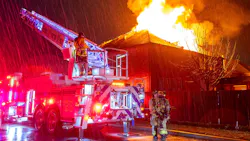
It’s about 9 p.m. in Fort Worth as a severe storm passes through and fire companies in the deep south side of the city are dispatched to a house fire from a possible lightning strike. The dispatcher comes on the radio, “All companies responding to the residential structure fire, we have video in the alarm office with fire showing from a two-story home.”
I listen to the Fort Worth Fire radio most all the time and this was the first time I’d heard that information relayed, so I head out with my cameras and make my way south. Minutes later, crews get on with fire showing from a house a few doors down from the caller’s address.
As I near, I can see the glow, but my interest is equally piqued by where the traffic camera was located that the dispatchers had seen the fire footage from. Maybe it was a Real Time Crime Camera? I didn't see any as I pulled into the neighborhood.
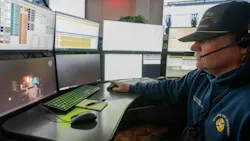
Over the next few weeks, I’d hear similar transmissions from the Fort Worth Fire Alarm Office (FAO) reporting video footage for structure fires, accidents and investigation calls. After asking the PIO, Craig Trojacek, he shared the recent rollout of Prepared's live-streaming platform, which allows dispatchers to obtain videos and photos from the scene as they talk with 9-1-1 callers.
Adding early intelligence to responding firefighters
Fort Worth Fire Department (FWFD) conducted a trial with the GoodSAM app, which allows 9-1-1 callers to send video into the FAO. It proved its value early on, allowing dispatchers — who are firefighters and fire officers — the ability to get a visual from the scene and determine if the proper resources were dispatched.
Robert Chan, who is the FAO Administration Lieutenant, said the department used the trial period to see the immense value of the service but opted to go with Prepared because it integrated with systems already in use by the Fort Worth Fire, EMS and police CAD systems.
Prepared is a software suite that ties multiple 9-1-1 caller platforms together, from transcription and
The 9-1-1 caller’s words come to life
Chan explained that, if the FAO staff believe it is serious fire, they ask the caller to share video from the scene and will then send a link via text message. Once the caller accepts the link, it fires up a live video feed, similar to Facebook Live, but only the fire department can see it. The call taker can flip the phone’s view if the caller is panicked, allowing immediate video access and the caller can stay on the line, on speaker phone, to update responders about the unfolding scene.
“There's a lot of sensitivity depending on what the subject is in the video,” said Chan. “The call taker can blur the video if, say, it’s at this crime scene.”
When the caller hangs up, the live feed ends but the caller retains the ability to upload videos and photos to the FAO.
When the FAO receives a call for smoke, video helps them determine whether to dispatch a full alarm assignment with at least eight units, or an investigation assignment consisting of two units.
“If the caller says, 'there's smoke around my plug" and we send them the link and, all of a sudden, we can see that it's more than just smoke…we would change the call type. We would say we need to go ahead and upgrade this to a full alarm assignment.”
Prepared also allows the FAO staff to text callers following the call to obtain more details.
“We may have a 9-1-1 caller saying, ‘I drove by and I saw somebody laying in the woods over here,’ and we need to get better information from that person. We can send them a text to say, “This is Fort Worth Fire. We talked to you about somebody lying in the bushes. Our crews cannot find them. Can you give us a call back, give us better an idea of where the person is at.’ And they may be able to send us media that they took that helps us pinpoint the person’s location.”
Video allows members to assess response needs
Chan said the ability for the dispatchers to have video access can help them determine the incident is a true emergency that they need to dispatch firefighters to and pointed to one example where they were able to assist a citizen from the alarm office.
The caller reported a problem with their smoke alarm and one of the firefighters activated Prepared’s video feed to help investigate the issue.
“He sent the video link, walked the person through changing the battery, and the person was able to change the battery on their smoke detector, and we didn't have to send a fire truck,” said Chan. “Those are little areas where I think it can help out. It prevents a $1 million fire truck with four firefighters going out to something that we can handle over the phone.”
During busy days, such as when extreme weather is passing through, Chan said the dispatchers can use the live media feed to determine if a downed or low hanging wire poses a series threat, such as a live electric service line, or a non-serious situation such as a cable line.
Video storage and privacy policies
While the department continues to integrate into their merged fire-based EMS program, they are looking to expand the use of Prepared into EMS calls, but are in the early stages. They are examining privacy laws related to HIPAA but Chan feels they can use the live stream to ensure bystanders are performing CPR correctly, or to view the severity of injuries on a victim to ensure the proper resources are responding.
Like any government agency that's collecting data or media, Chan said the video submissions are archived in the city's archives for a period of time.
The videos can be accessed by fire investigators to assist in their work.
Increasing accessibility in the future
The department is in the early stages of planning to get live streams in the hands of responding firefighters and chiefs, so they could view it from their tablets or phones as they respond and not have to rely on dispatchers to send updates as they may be fielding multiple calls.
“A company officer could have the app on their iPad and, if they have an incident and they're not sure if arson (investigators) need to come out, they can stream video to them so that they can look at it and decide if they need to respond and investigate.”
“Our access to technology is now a full spectrum,” Chan said. “We can access traffic cameras and the Real Time Crime Cameras to see a distant view, but now we have access to exactly what the caller is seeing and that has made a big difference.”
About the Author
 Peter Matthews