The Next Evolution of Interoperability for Firefighters & Other First Responders
Key Takeaways
- The operational environment for the fire service and other emergency response agencies at major events, such as the Super Bowl, political conventions and large-scale concerts, is becoming increasingly complex. It’s crucial that every agency that’s responsible for response to those events works from the same information at the same time. Although radio operability remains essential, the next evolution of operability is centered around situational awareness.
- Dedicated public safety broadband networks, live incident intelligence platforms, drones, connected sensors, mapping platforms, translation tools and AI-assisted workflows help fire departments and other agencies to maintain a shared operational picture, to ensure that information doesn’t become trapped within a single agency or communications center.
- The value of interoperability between fire departments, law enforcement, emergency communications centers and other agencies is measured by how quickly information can move from discovery to action.
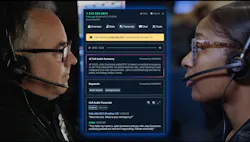
For decades, interoperability in public safety meant one thing: Could agencies communicate with each other on the radio? For a long time, that was enough. Mutual-aid channels, patched radio systems and shared frequencies represented major progress for fire service coordination. They allowed agencies from different jurisdictions to operate together during large-scale incidents, disasters and multi-agency responses in ways that once were nearly impossible. However, modern emergencies have changed.
Today’s incidents no longer are just communication challenges. They’re coordination challenges. Whether it’s a working fire, a hurricane response or a global event, such as the FIFA World Cup, today’s incidents involve far more than radio traffic between responding agencies. Fire departments, EMS, law enforcement, emergency management, transportation agencies, utility providers, drones, live video, connected devices and 9-1-1 centers generate information simultaneously while responders make critical decisions in environments that can change by the minute. Technically, everyone might be connected. That doesn’t mean that everyone is operating from the same picture.
Operational cost of fragmented information
Anyone who worked a large or fast-moving incident understands how quickly operational friction develops when critical information exists in multiple places but isn’t in a shared operational view. A neighboring 9-1-1 center answers the initial emergency call because of overflow routing, network conditions or jurisdictional boundaries or because the agency that’s responsible for dispatching fire and EMS isn’t the primary public safety answering point for that area. Now the process begins.
The first center takes the call, gathers information, begins triage and manually transfers that information to the agency that’s responsible for dispatching the response. That takes time, and in public safety, time changes outcomes.
Meanwhile, the incident itself doesn’t pause.
Additional callers might report worsening conditions. Roads might close. EMS staging locations might shift. New hazards might emerge. Evacuation decisions might change. Incident command might need updated information while units are responding.
In many systems today, those updates still are passed center to center manually through phone calls, radio traffic, computer-aided dispatch notes, callbacks or verbal relay and not in real time. The result is that critical information often moves through the response ecosystem like a game of Telephone while the incident itself continues to evolve by the second.
Radio interoperability solved the problem of agencies being unable to communicate with one another. Modern incidents are exposing a different challenge entirely: Can agencies maintain a shared operational picture while conditions actively are changing?
Major events are stress-testing systems
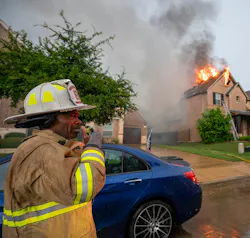
Some of the clearest examples of this challenge can be found in the major events that increasingly define modern public safety operations: the Super Bowl, political conventions, large-scale concerts, major marathons and international sporting events. These events bring together hundreds of agencies, thousands of responders, tens of thousands of attendees and countless moving parts that operate across jurisdictional boundaries. Call volumes surge. Overflow answering centers become part of normal operations. Mutual-aid resources flow across jurisdictions. Command structures expand. Information begins to move between agencies that might not routinely work together on a daily basis.
At the same time, the operational environment becomes increasingly complex. A medical emergency that involves an international visitor might require real-time language translation. A suspicious package report might generate calls across multiple jurisdictions simultaneously. Crowd movement, transportation disruptions, weather conditions and public safety concerns can change operational priorities within minutes.
The challenge isn’t simply to get information from one place to another. It’s ensuring that every agency that’s responsible for the response is working from the same information at the same time.
Major events are forcing public safety agencies to confront a reality that extends well beyond stadiums and event venues. The same coordination challenges exist during hurricanes, wildfires, hazmat incidents, active-violence events and large-scale mutual-aid responses. The difference is that major events put those weaknesses under a spotlight.
Interoperability beyond the radio
Radio interoperability remains essential. No technology replaces the importance of clear voice communication on the fireground, but as incidents become larger, more complex and increasingly multijurisdictional, the next evolution of interoperability is centered around shared situational awareness.
Large-scale events, such as the Super Bowl, major concerts, political conventions, hurricanes, and wildfires, require dozens, sometimes hundreds, of agencies to operate from a common understanding of rapidly changing conditions. In these environments, radio traffic alone can’t move every update, hazard notification, operational change and piece of intelligence that’s needed to support a coordinated response efficiently. That includes the capability of agencies and emergency communication centers (ECCs) to share live incident intelligence, location data, mapping, responder status, drone feeds, translations, hazard information and operational updates in real time rather than relying entirely on manual relays between systems and personnel.
Dedicated public safety broadband networks, such as FirstNet, have expanded the ability for responders, ECCs and agencies to exchange data far beyond traditional radio traffic. Platforms, such as RapidSOS, are helping to move live incident intelligence across agencies and jurisdictions in real time. Drone technologies, such as those from Paladin and Skydio, provide commanders with immediate aerial awareness of evolving conditions. Combined with connected sensors, mapping platforms, translation tools and AI-assisted workflows, these technologies help agencies to maintain a shared operational picture during incidents in which conditions might change by the minute, from large-scale mutual-aid responses and natural disasters to major events. For example, during a major event, that might mean that a 9-1-1 center receives calls in multiple languages, neighboring jurisdictions support overflow call volume, emergency managers monitor crowd movement and field responders adapt to rapidly changing conditions.
Real-time interoperability helps to ensure that information doesn’t become trapped within a single agency or communication center. Instead, live transcripts, AI-generated summaries, translation, location updates, hazard notifications and operational changes can be shared across responding organizations as they happen. This allows agencies to coordinate from the same information rather than waiting for manual updates to catch up, because modern emergencies rarely stay contained within one discipline, one building or one jurisdiction anymore.
Why this matters for field response
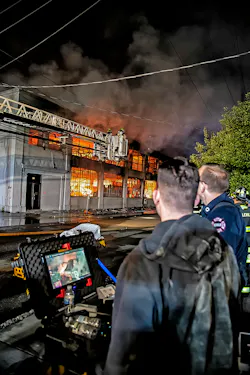
For the fire service, the value of real-time interoperability isn’t about adding more technology to an already demanding environment. It’s about reducing the delay between what is happening and what responders know is happening: a road closure, a second caller reports entrapment, wind conditions shift during a wildland incident, law enforcement identifies a new hazard, EMS discovers more critical patients than what was reported originally. One agency receives updated information while crews from another still operate from the initial report. None of those updates are insignificant.
Modern incidents generate enormous amounts of information. The priority is to ensure that information moves across agencies, ECCs and field responders quickly enough to maintain a shared operational picture while conditions continue to change in real time. That need becomes even more apparent during large-scale incidents, during which dozens of agencies, multiple jurisdictions and thousands of people might be affected by a single event. The larger and more complex that the response becomes, the more important that it is for responders, dispatchers and command staff to operate from the same information. That’s why interoperability increasingly is becoming about more than communication alone. The value of interoperability is measured by how quickly information can move from discovery to action.
One incident, one operational picture
The public already assumes that emergency response operates as one connected system. Responders know that the reality is far more complicated. Major events, large-scale incidents and evolving threats make the direction forward increasingly clear: The future of interoperability isn’t simply about ensuring that agencies can talk to one another; it’s about ensuring that they can operate from the same information at the same time.
Whether the incident is a working fire, a hurricane, a mass-casualty incident or an international event, the objective remains remarkably consistent: reducing the distance between the information that’s discovered and the people who are responsible for acting on it. When conditions change by the minute, coordination can’t depend on delayed updates, manual relays or information that’s trapped within a single agency. The incident already is operating as one event. The information shouldn’t have to catch up.
About the Author
 Keely Heyman
Keely Heyman
Keely Heyman is a public safety leader and speaker who has more than 25 years of experience in emergency communications and emergency services. A former executive director of a regional 9-1-1 communications center, she has served as a dispatcher, trainer, supervisor, EMT and executive leader throughout her career. Heyman is passionate about leadership, workforce development and advancing the future of public safety through technology, education and collaboration.