Data Allows the Fire Service to Finally Prove What the Job is Worth
Key Takeaways
- NFIRS has historically been limited by outdated categories and incomplete data, hindering the fire service's ability to demonstrate its impact. NERIS introduces detailed incident data, enabling departments to connect actions to outcomes.
- The system supports wildfire mitigation efforts by linking prevention measures to actual reductions in property loss and risk, influencing legislation and insurance practices.
- Cultural change is essential; NERIS offers a way for firefighters to see reporting as a tool for professional pride and community safety, not just an administrative chore.
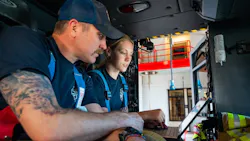
No one joined the fire service because they wanted to write more reports. Yet those reports are how the fire service tells its story—to the council member deciding next year's budget, to the chief justifying a third position on the engine, to the family standing in what used to be their living room asking what could have been done differently.
The fire service has spent 50 years knowing more than it could prove. NERIS is built to reflect what the fire service actually does.
So what does the last full year of NFIRS tell us about where the profession stands and what changes under NERIS?
The next-generation fire service reporting system
More than 18,000 departments fed their incidents into NFIRS, and everyone who used it knew its flaws. The categories were frozen. EMS became the bulk of the work and the codes didn't move. Lithium batteries in EV cars started burning and there was no classification for them. Wildfires sparked in places they had never before and the system had no way to capture cause.
Meanwhile, the fire service kept growing more expensive without the data to show what that investment produced. Budgets tripled. Apparatus costs climbed past a million dollars. And the documents that were supposed to justify all of it couldn't tell you how many people the department rescued last year.
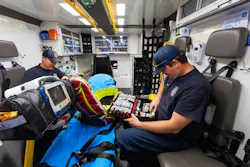
The gap between what the fire service knows from every incident it responded to and what it could demonstrate has been the defining frustration of a generation of fire leadership.
The power of a modern reporting standard
EV and e-bike fire incidents registered 19 out of 31,448 vehicle fires in this year's Fire Index data. Ask the crew that spent four hours on a Tesla in a parking garage whether that number reflects reality.
The U.S. Fire Administration published federal response guidance for EV fires in 2025, and a national survey of more than 1,000 first responders found over 40 percent had never received EV safety training.
That is one data point in one category, and it tells you everything about where the national picture is both clear and incomplete. NFPA's 2024 fire loss report counted 1.39 million fires, 3,920 civilian deaths and $19.1 billion in direct property damage.
U.S. Fire Administration data confirms that EMS calls make up roughly 64 percent of fire department responses nationally. Sprinklers are present in only 7 percent of reported home structure fires, and death rates drop 89 percent when they're in place—a number that has held flat year after year. What NFIRS could only count, NERIS can connect.
Under NFIRS, these findings sat in separate silos. You knew sprinklers saved lives, but you couldn't connect presence to activation to outcome in a single incident record. You knew EV fires were happening but the system had no classification to capture them. You knew property loss mattered but the only figure in the national record was a dollar estimate from the responding crew. NERIS was built to close those gaps: tactical timestamps, actions taken, suppression methods, incident subtypes, mutual aid type and property loss sourced from insurance data. Sprinkler presence connects to activation which connects to outcome. The rescue that justified the third firefighter on the engine becomes provable. The tactical decisions that kept a crew safe on a working fire become visible in the record instead of living only in the officer's head.
The national findings tell the profession where it stands collectively, but no two departments serve the same risk profile. A coastal city dealing with aging high-rises and a rural district covering 400 square miles of wildland-urban interface need different answers from their data, and for 50 years both disappeared into the same national averages. That changes when a department can connect its own incident data to the specific risks in its response area: which building types are producing the most fires and whether code adoption is keeping pace, which hazards are growing fastest and whether prevention spending is aimed at them, whether crews are documenting exposures consistently enough to protect them.
The department-level data is where community health and safety outcomes actually change. A staffing case built on documented rescue counts carries more weight in a budget hearing than an estimate. A code board votes differently when the fire marshal brings cause-and-outcome data from local incidents and a prevention investment becomes defensible when the dollar figure is sourced from an insurance record instead of a crew's best guess.
Wildfires offer a clear opportunity for NERIS applications
Years ago, most fire departments east of the Rockies had never written a wildfire response protocol. That changed. FDNY crews who spend their careers in 80-story high-rises are now figuring out what to do when wildfire burns through their response area, and departments across the country that never trained for wildland incidents are now running them year-round.
In 2025, 77,850 wildfires consumed 5.13 million acres and destroyed more than 18,000 structures, and federal spending remains focused on suppression rather than prevention. The cause field, the single most useful data point for prevention, ends up blank on most records.
Every mitigation measure the fire service recommends to a community has a cost, and NERIS is the first reporting standard that can connect that cost to an outcome.
A $2.28 vent screen can keep embers out of an attic. Sprinklers cost $8 to $9 a square foot against the value of everything they protect. Rebuilding to wildfire safety standards reduces projected losses by 31 percent. The mitigation works. The reporting standard that lets departments validate it—with cause data, outcome data and loss data sourced from insurance records—is now live.
The insurance industry isn't waiting. Carriers are pricing wildfire risk parcel by parcel. Colorado became the first state to require insurers to credit mitigation in pricing and underwriting—passing HB 1182 in 2025—while Oregon, New York, and Washington introduced similar legislation in 2026.
The departments that can document cause, mitigation and outcome at the incident level will carry that evidence into legislative hearings, insurance negotiations and code board meetings.
Reshaping 150 years of culture from within
Getting 29,000 departments to use the new system well is a cultural question as much as a technical one. CAL FIRE, the largest fire organization in the country with more than 1,200 stations, began reporting through the platform in late 2025. The analytics phase is building, but the real question is whether the profession's relationship with reporting changes along with the system.
The fire service has 150 years of culture that treated the report as the chore you did after the real work. Firefighters run into burning buildings to save people, not to spend the rest of the shift afterward documenting it. That culture comes from a profession that values action, trusts experience and has had to justify every dollar it spends to people who don't fully understand what the job demands. Reporting felt like punishment because it mostly was. The data went in and disappeared. Nothing came back that a firefighter or an officer or a chief could use.
Any lasting culture change in the fire service has to come from within. NERIS provides an opportunity to deliver that—preserving the identity and values that define the profession instead of forcing change through the kind of external pressure that puts fire departments in a defensive posture and makes it harder to work with the communities they serve.
When a crew files an incident report and the documentation comes back as the record that kept a station open, the exposure data that covered a cancer claim or the response-time evidence that kept a station from closing, reporting stops being a burden imposed from outside and becomes something the profession owns.
Look at decontamination. A decade ago, washing exposure off after a fire was something the old guard shrugged at. This year's data shows 25 percent of firefighters still didn't document a single decontamination procedure after exposure—but that number is improving, because the cancer data made the connection between what firefighters document and whether they survive, and the culture moved on its own. No mandate did that. The data did. NERIS creates the same conditions for incident reporting across the board. By the time a crew is back in quarters, the record should already be working for them—feeding the staffing case, flagging the exposure, building the evidence their department needs for the next budget cycle.
The fire service has carried this profession on experience, grit and trust for 150 years. Now it has the evidence to match. What comes next is up to every department, every officer, every crew that decides the report is worth getting right, because the people who come after them deserve a profession that's stronger than the one they walked into.
About the Author
 Bill Gardner
Bill Gardner
Bill Gardner is executive director for fire & EMS at ESO, based in Austin, TX. Gardner has more than 36 years in public safety, and is the former fire chief of the Leander, TX, Fire Department, during one of the fastest growth periods in Texas history. He is past president of the Texas State Association of Fire Fighters.
.