Our Symphony of Chaos: Orchestrating Fireground Success
Key Highlights
- The firefighters that incident commanders want are those who give the reverence and credence that's due to the fire, the building and the victims.
- It's the responsibility of the incident commander to direct actions that are based on the conditions that are present and the conditions that are expected, to create the conditions that are favorable to operations and victim survival.
- Fireground incident commanders must provide the support and opportunities for firefighters to act on their willingness to do whatever is needed to execute the mission and for officers to guide their crew to accomplishing the mission.
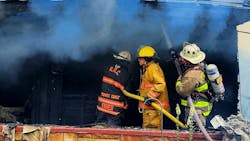
To the public, it appears to be chaos: saws, pumps, sirens, officers barking orders and the crackling of fire. There’s no apparent rhyme or reason to it all. As an incident commander (IC), it’s a beautiful, majestic, and delicate dance of plan, action, risk and adrenaline. When it all goes according to that hastily established plan, it’s philharmonic.
Our degree of fireground success—and likewise our failures—hinge on the same factors. It’s all predicated on having the right people with the right equipment in the right place at the right time possessing the right mindset. If any one of these is lacking, the pendulum begins to swing and the music falters, like a squeaky clarinet ruining a harmony. Although ICs might not be engaging in the firefight actively, they are responsible for setting these factors in place and orchestrating the response.
Right people
To say that having the right people is important is like saying bread is important to a sandwich: It doesn’t do it justice. We all have seen them, and we all know who they are: the firefighters who you want on your crew, the ones who you hope to show up if you have an emergency. They are the professionals, the studious, the trainers. The people who we want are the firefighters who give the reverence and credence that’s due to the fire, the building and the victims. They aren’t reckless; they’re aggressive. They put in the time, sweat and effort to make themselves better. They check their gear; they know their capabilities. They are ready when the call comes in and relish the opportunity to do their job.
They are the companies that show up, geared up, equipment in hand, ready to take on any assignment. Getting these companies in the game early, often and appropriately is paramount to successful outcomes.
These people are known before the tones ever drop. When an assignment is given, it can be taken with relative certainty that it will be accomplished. Barring some extreme circumstance, these people just get the job done.
We also need enough people. Staffing models among departments vary as widely as tactics, but having sufficient staffing to bring to bear is a limiting factor on most firegrounds. Additional companies, heavier box alarms and mutual-aid requests all are options to start to get your players in place. Ideally, when an incident is over, you have a company whose only assignment was to be in a ready state. Thus, if every company on the fireground has a task, you’re overmatched. Get more companies coming. This reduces the workload of the companies that are in place, provides an opportunity for rehab and rotating out, and ensures that there always is a crew that’s ready to go in the event of an emergency. It’s a rough assignment for that particular crew, but it’s a good indicator of whether your staffing matches the incident.
Right place
The right place conveys a multitude of meanings: the correct address, the correct floor, the correct room, the correct assignment.
Initially, this means getting crews to the scene: verifying the address as the actual address of the emergency. Occasionally, through no fault of its own, dispatch might send a run to the wrong company, because a similar address might be in a neighboring district. This causes confusion. It must be identified quickly to minimize response delays.
Getting to the scene safely is a matter for all members. It seems obvious, but we must exercise prudence when we respond; we must make it to the scene to have an effect on the scene. This includes all facets of response, including response routes, speed and clearing intersections.
Once on scene, the right place more aptly becomes assignment centric. Determining what floor(s) are involved, location of known/probable victims and where other crews are operating all factor into our degree of success. If the engine crew stretched to the wrong stairwell or the search crew reported to the wrong floor, operations suffer, and the pendulum starts to swing. If every crew reports to the same floor or same stairwell, there will be a bottleneck, and other areas are neglected until later in the incident.
Coordinating resources in the building is a critical component of effective operations. It ensures that all areas are searched for victims and fire in an appropriate time frame, to give the IC a better picture of the particulars inside of the building.
Right time
Part of the fight-or-flight response mechanism, tachypsychia is the perceived slowing of time, seemingly allowing us to process more information, plan, act and react in a shortened span of time. However, time remains unchanged. It might seem that operations are taking longer than expected, but routinely, it’s our perception of time that creates this imbalance. Despite the temporal sensation, we must function in real time; seconds and minutes are ticking off of the clock. Turnout times, en route times, stretching lines, forcing doors, throwing ladders: All of this occurs before we break the threshold to do the work.
Once inside, the effectiveness of search techniques, maneuvering hoselines, coordinating with other crews, all in a typically unfamiliar environment, are dependent on time. Making a beautiful stretch five minutes late won’t have the effect that you want. Searching for victims after the fire was knocked down and the investigation started likely won’t bear fruitful results. Opening up windows in advance of the attack line can be deadly for unprotected victims and crews that are unprepared for fire activity. It’s all choreographed and must happen at the right time to be useful.
It’s the responsibility of the IC to direct actions that are based on the conditions that are present and conditions that are expected, to create the conditions that are favorable to operations and victim survival.
Right equipment
There’s a school of thought that says, “Do the best that you can with what you have.” Although firefighters are intuitive problem solvers, there’s a limit to the efficacy of this logic. Using a Halligan bar to open up a hydrant is about as effective as using a spanner wrench to take a door. Having the right tool for the job is imperative and heavily influences our probability for mission completion.
- The suppression crew must select the right attack package:
- The right size line to flow the amount of water that’s needed for suppression.
- The right length to make the fire floor and maneuver around obstacles.
- The right tip to flow the volume and pattern that’s desired.
- The right agent to suppress the materials that are present.
- The right path for approach.
The search crew must select the best tools based on chosen tactics:
- The right size ladder to reach additional floors.
- The right tools to force entry. The irons might be the keys to the city, but not all irons are created the same.
The equipment that’s available to crews and their capability to use it effectively and understanding the limitations of the equipment that they are given is the role of the IC. From nozzle flows to the minutia of what style gloves are worn, all contribute to how effectively crews function. A three-piece Halligan doesn’t function the same way that a tuned one-piece does. An automatic nozzle doesn’t function the same way that a smooth bore does.
It might seem to some that the percentage of improvement is minimal, but if we don’t provide crews with the tools that they need, we set them up for failure before the call ever comes in or, at least, make their job unnecessarily more difficult.
Right mindset
We somewhat take for granted the innate nature of firefighters to be action-oriented, willing to do whatever is needed and execute the mission, but that must be developed in crews.
A willingness to place oneself in the path of danger, for the welfare and betterment of others, is a trait that’s inseparable from the fire service. It’s why the public views the fire service in the positive light that it so often does. It’s the business of each firefighter to readily take those actions when the opportunity presents itself, of each officer to guide their crew to accomplishing that mission, and of the IC to provide them with the support and opportunities to act in that fashion.
The decisions that are made by ICs, accepted by the company and implemented by the crews rest on the individual firefighters. We must assign them commensurate with their abilities and their willingness to do the work. There are firefighters who aren’t built for confined-space rescue and those who aren’t amenable to rope access. That doesn’t mean that they aren’t valuable members of an organization, but it does mean that they should be employed appropriately.
It’s incumbent on ICs to select crews based on their best probability of success. Don’t give them a task that they aren’t prepared to execute. That’s a disservice to them and to the community that they serve. Crews must have the capability to perform and be given the opportunity to succeed, supported with the intent to execute.
Harmonious teamwork
When ICs make strategic decisions and create scenarios where the aforementioned factors are present, when they develop themselves and their crews to the degree that the community expects, something truly amazing happens: symphony. The complexity, depth and motion of their work flows as though they did it a hundred times. Prepared and determined crews can operating independently but simultaneously in support of each other: harmonious teamwork that’s geared to a singular purpose, the welfare of others.
About the Author
 Bradley Feely
Bradley Feely
Bradley Feely is a 19-year veteran of the fire service. He is the current training chief for the Cohocton, NY, Hook & Ladder Company and a captain with the Veterans Affairs Fire Department in Canandaigua, NY. Feely’s career began as an Explorer with the Cohocton Fire Department. He also served with the Beaufort/Port Royal, SC, Fire Department and the Maysville, NC, Fire Department. Feely served for nine years in the U.S. Navy as a fleet marine force corpsman. He is the owner/operator of Parabellum Fire Training.