Connecticut's Highway Operations Center Keeps Eyes on Road, Information Flowing
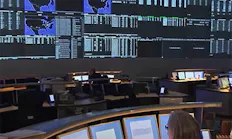
The room is kept dark on purpose with the ambient light mostly coming from the dozens of highway camera feeds stretched across the wall.
Each one shows a different part of Connecticut’s road network. Cars move through interchanges; trucks pass under signs; every screen is watched by operators whose work most drivers never see.
The Connecticut Department of Transportation’s Highway Operations Center in Newington is one of two places where a crash on Interstate 95, a disabled vehicle on Interstate 84, a truck on Route 15, a tree across Route 8 or a wrong-way driver on an exit ramp becomes, in mere seconds, an alert on a highway sign, a post on CTroads.org or a call to state police. Connecticut's other highway operations center is in Bridgeport.
“The primary goal of both centers is traffic incident management and travel information,” said Aidan Neely, manager of the Newington center.
They are staffed 24 hours a day, every day of the year. Each can back up the other if one center loses technology or has to be evacuated. Bridgeport handles much of the I-95 corridor and the Merritt Parkway. Newington handles the northern part of the state and about two-thirds of the calls for service.
The work is part surveillance, part dispatching and part public warning system. Neely said DOT has about 410 traffic cameras and adds about 30 each year. The cameras do not record or connect to any database, but give operators live views of highways, ramps and major roads so they can see what is happening and decide what information needs to go out.
“Our goal is within a minute to a minute-and-a-half of an incident happening that it’s up on our CT Roads website and that it’s going out to those signs, so we can warn travelers there’s something up ahead that’s going to be dangerous to you,” Neely said, adding it helps people know to reroute.
That information also flows beyond DOT. Neely said state police dispatchers can see live camera feeds, and information is fed out to other services, such as Waze or Apple Maps, through a partnership with Transcom, which helps move DOT information into navigation systems.
The room looks like a command center because that is essentially what it is. Operators sit at matching workstations beneath the video wall. The wall can be rearranged, enlarged and divided depending on what is happening. Weather information, wrong-way driver alerts and active incidents can all appear at once.
“We keep it dark and cool in here, but it can get pretty hectic in here some days,” Neely said.
Neely came to the operations center to run its traffic incident management program after years in emergency response. He said he was a firefighter and EMT for 30 years and worked in public works before joining DOT.
The center he inherited eight years ago was smaller and more dated, looking, he said, like something out of the 1970s. The old room was about half the size, with fewer desks and a smaller video wall. The newer space opened in 2020 and was built with room to expand.
For drivers, one of the most dramatic pieces of the system is the wrong-way driver detection program.
During a recent tour, an alarm sounded, an urgent, insistent beeping, but it was not a wrong-way driver. It was likely wind moving the camera or a bird flying past it. The system, Neely said, is intentionally sensitive. The sensors can be triggered by something warm moving the wrong direction on a ramp, but DOT would rather check false alarms than miss a vehicle.
When the system detects a possible wrong-way driver, operators see the alert, pull up the camera, check whether it is real and contact state police through a direct hotline they call the "batphone." The ramp signs begin flashing brightly and obviously at the driver.
“I call that 'the spotlight from God,'” Neely said. “It does a lot to correct people.”
Operators can then follow the vehicle with live cameras and tell police what they are seeing.
The system has given DOT a clearer view of a problem that may have been undercounted before. As of Tuesday morning, the wrong-way systems had recorded 1,368 entries and 1,142 successful turnarounds, not including birds or other false activations. That's an 83.5% turnaround rate since it started in 2023.
The information does more than stop individual drivers. Neely said DOT studies the locations where wrong-way entries happen and looks for possible causes, including lighting, ramp geometry, driver confusion, weather and impairment. In East Haven, he said, changes to signs, markings and sightlines reduced wrong-way entries at one ramp after the state identified a pattern there.
“Until you measure it, you don’t know what you have,” Neely said.
Eva Zymaris, a DOT spokesperson, said the department is also trying to better understand what is happening inside vehicles before crashes occur to then help shape enforcement, education and outreach. She said DOT has a strong partnership with the state toxicology lab.
“That information is incredibly invaluable to better understand what’s happening out there on Connecticut’s roadways,” Zymaris said.
Storms are another high-alert situation, with a separate room dedicated for response to intense weather. Neely said the storm room fills when DOT expects road closures, flooding or damaged infrastructure. During a recent weekend storm, he said the centers handled 266 calls, including 119 reports of trees down in roadways.
To Neely, a fallen tree, a flooded underpass and a crash all create the same basic problem: "non-recurring congestion." Essentially, they block movement and create risk.
Non-recurring congestion is the traffic operators cannot plan for. Recurring congestion is the predictable backup caused by road design, capacity or daily travel patterns. Neely said the operations center lives mostly in the first category. Its job is to spot the unexpected, warn drivers and help clear incidents as fast as possible.
The work can also influence the roads themselves. Neely said engineers sometimes come to the operations center to watch how drivers behave in real time. If operators see drivers braking in the same place, changing lanes too late or struggling through a confusing interchange, that information can lead to new pavement markings, signs or design changes.
“The eye in the sky is great, but it’s only good if you’re using it,” Neely said.
The next generation of the center could include more video sharing, more cameras and possibly drones. Neely said DOT is looking at live drone feeds for major incidents and construction projects. The department is also working toward expanded video sharing that could allow first responders to see camera views while they are responding to crashes.
Still, the center has limits. It can warn drivers about a crash. It can show police where a wrong-way vehicle went. It can send alerts to signs, websites and phones. But it cannot make drivers slow down, move over or treat each other better.
“We could put all these tools in place, but it’s about being kind of courteous to one another out on the roads,” Zymaris said.
On a recent drive home, Neely said he stopped for debris and had his lights on in a marked state vehicle, but cars kept coming instead of moving over. He said he could not get back into his truck for almost 10 minutes. To him, the moment illustrated something the center’s screens and sensors cannot fix by themselves.
“There’s an onus on the drivers in Connecticut to take care of each other and also drive responsibly,” he said.
Neely said the job has changed the way he sees the road. He does not just see a backup while sitting in traffic. He sees driver behavior, conflict points and small decisions that can ripple backward into congestion.
But Neely's job, like the jobs of the operators he works with, is straightforward. It's not his role to change driver behavior or redesign roads or fix potholes.
“Mine’s just to get the incidents cleared as fast as possible and tell everybody about them,” he said.
Zymaris puts the burden of traffic on every driver's shoulders.
“It’s a shared responsibility,” she said. “It’s up to each and every one of us every time we’re behind the wheel to do the safe, responsible thing.”
© 2026 Journal Inquirer, Manchester, Conn.. Visit www.journalinquirer.com. Distributed by Tribune Content Agency, LLC.