Fire Service Pedigree: The Precursor to Success
Key Takeaways
- A firefighter’s pedigree is the collection of people, companies, officers and cultures that shape his or her development. Young firefighters should be intentional about who shapes them.
- Young firefighters should seek out the firefighter who still trains, who still studies and who takes pride in small details and the officer whose company consistently performs at a high level. These relationships form the foundation of professional development.
- Every standard that a member carries was once taught, shown or reinforced by someone else. In time, each member becomes part of that same chain, either strengthening it or weakening it.
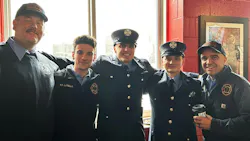
Think of the best firefighter who you know. First, define the standards by which you determine “best.” If you’re struggling to determine that, refer to “What Makes a Good Firefighter?”
Now ask yourself a few more questions. Who taught that firefighter? Who did that firefighter come up under? Who trained the firefighter? Around whom did the firefighter spend his/her early years? Chances are that those people are familiar to you. Chances are those people are respected, too. Very rarely does a firefighter become exceptional while being surrounded by mediocrity. Excellence leaves a trail, and all members of the fire service, from probies to veteran firefighters to company officers to chiefs, should be cognizant of this as they progress through their career, to influence others, their department and the fire service as a whole.
Defining pedigree
Pedigree (noun): the ancestry, lineage, background or development of a person or group.
Most people hear the word and think of racehorses, hunting dogs or family bloodlines. The fire service has pedigrees, too, but they have nothing to do with genetics.
A firefighter’s pedigree is the collection of people, companies, officers and cultures that shape his or her development. It’s the professional lineage that influences a firefighter’s standards, habits, attitude and, ultimately, performance. Every firefighter has a pedigree. The question is whether it’s a strong one.
If you spend time watching documentaries or podcasts or speaking with senior firefighters, certain names always come up, and it isn’t coincidence. These people set a standard—a lineage of firefighters that’s built on instilled principles, background and development that make up their pedigree.
Iron sharpens iron
“As iron sharpens iron, so one man sharpens another.”—Proverbs 27:17
Few verses in the Bible describe the fire service more accurately. Firefighters aren’t developed in classrooms alone. Yes, the academy provides a baseline, but the firehouse builds the firefighter, a fact that’s self-evident upon evaluation of any department. Young members learn how to stretch lines, force doors and care for patients, but more importantly, they learn what’s expected. They learn what’s tolerated, what’s corrected and what’s ignored. Most of this never is formally taught. It’s absorbed.
A probationary firefighter watches how equipment is checked, how training is treated and how officers respond to mistakes. Over time, these observations become standards. Work ethic and pride spreads. Complacency spreads just as easily.
The people who are around us become the standard that we accept and, more importantly, expect. It has long been said by stoics, successful business entrepreneurs and religious leaders that the company we keep is the company that we become. This, too, is evident in the fire service.
The coaching tree
Professional sports call this concept the coaching tree. Consider the National Football League. Great NFL coaches develop assistants who become head coaches. Those new head coaches develop the next generation, and entire systems of philosophy can be traced back through decades of influence. Examples include the Mike Shanahan and Bill Walsh coaching trees, which still influence the NFL today.
The fire service operates the same way. Great officers develop great firefighters. Great firefighters become company officers. Great company officers become chiefs. Standards, expectations and habits are passed down, sometimes intentionally, often unconsciously.
Most firefighters can trace their development back to a handful of influential people. Ask a respected firefighter who shaped him or her, and you usually will hear the same pattern: a few key names, repeated over and over. Every firehouse, shift, company and battalion has a coaching tree. The quality of that tree contributes substantially to the pedigree of its firefighters.
Good pedigrees produce good firefighters
Firefighters don’t develop in a vacuum. When you place a motivated recruit in a company in which training is expected, standards are enforced and pride in the job is real, that recruit likely will improve quickly and carry that mentality forward. Place that same recruit in an environment in which training is optional, effort is inconsistent and mediocrity is tolerated and the outcome often is very different. This is why some companies consistently produce strong firefighters. It isn’t a coincidence; it’s culture. Strong pedigrees reproduce themselves.
The same mechanism works in reverse. When unfavorable traits in a lineage of breeding hunting dogs emerges, the lineage must be interrupted by the breeders to stop the spread of disease, poor genetics or other less desirable traits. The fire service works in the same way. If undesirable traits aren’t interrupted, they spread and create a pedigree of negative attributes. Complacency and negativity spread. Minimal effort becomes normal when it’s surrounded by minimal effort. Over time, poor habits stop feeling like poor habits. They become the standard.
Not every senior firefighter is a mentor. Time on the job doesn’t guarantee leadership. Some firefighters sharpen others. Some dull them.
Building your pedigree
Young firefighters should be intentional about who shapes them. They should seek out the firefighter who still trains, who still studies, who takes pride in small details. Young firefighters should seek out the officer whose company consistently performs at a high level. These relationships form the foundation of professional development. A firefighter’s pedigree isn’t accidental. It’s built through proximity and repetition.
Affiliation and pedigree carry weight and expectation. If a firefighter states that he/she came up under Lt. Smith, and Lt. Smith comes from a pedigree of poor firefighters, the firefighter will be competing with that perception for the entirety of his/her career.
You can’t always control who you work with or come up under, but you can control with whom you affiliate and why.
Becoming part of someone else’s pedigree
Eventually, every firefighter shifts roles. At first, the firefighter is being shaped. Later, that individual is shaping others, even if subconsciously. Probationary firefighters watch how others work. Young firefighters adopt others’ habits. Future officers learn from examples, whether they’re intended or not. At that point, a member no longer is just part of a pedigree. The person is producing one. That reality is unavoidable.
Success in the fire service is rarely an individual accomplishment. It’s the product of a lineage, of firefighters who trained, corrected, influenced and developed those who came after them. No firefighter is self-made. Every standard that a member carries was once taught, shown or reinforced by someone else. In time, each member becomes part of that same chain, either strengthening it or weakening it, one firefighter at a time.
So, what’s your pedigree?
About the Author
 Tyler Whittredge
Tyler Whittredge
Tyler Whittredge is a firefighter/paramedic with the Saratoga Springs, NY, Fire Department who has 12 years of experience in the fire service. He has served in a variety of roles, including volunteer firefighter and firefighter/EMT with the U.S. Department of Energy. Whittredge is an adjunct instructor, a certified Confined Space Technician and an ITRA Level 2 rope rescue technician with Capital Technical Rescue. He holds an associate degree in fire science from Onondaga Community College.