EFO Research Brief: The Role of Fire Chiefs in Community Risk Reduction Efforts
Key Highlights
- Fire chiefs often lack a comprehensive understanding of community risk reduction, which hampers their ability to lead transformative change within their departments.
- Barriers such as limited time, funding, and staff resistance hinder the implementation of effective CRR strategies across the fire service.
- Leadership must embrace a philosophical shift, actively championing CRR to influence organizational culture and community perceptions.

Editor's note: "EFO Research Brief" is a new collaboration between Firehouse.com and the National Fire Academy's Executive Fire Officer Program to highlight the research conducted by students. Each month, we will provide a summation brief of the student's final research capstone spanning multiple fire service topics.
The emergency workload for fire departments nationwide has increased and become more complex and diverse. Resource allocations to meet these demands have not kept pace. The gaps created by these trends drive instability in the fire service and, if left unchecked, could lead to an unsustainable fire service. Typically, fire chiefs employ reactive strategies to address these gaps by incrementally adding staff and equipment or consolidating to gain higher efficiencies.
The foundation of community risk reduction strategies was laid by the launch of Vision 20/20 in 2008 and includes many proactive elements that are designed to reduce emergency responses and mitigate their impacts. Yet, community risk reduction (CRR) strategies are not widely recognized by fire chiefs as the solution to the widening, destabilizing gap between emergency workload and resource allocation.
With this in mind, I explored fire chiefs’ attitudes and perceptions of CRR, their role in leading those efforts, and the barriers they perceive in embedding CRR in their fire departments for my Executive Fire Officer capstone. Semi-structured interviews were held with 12 fire chiefs across Wisconsin to gather qualitative data for this exploratory study. Fire chiefs were chosen specifically because they are ultimately responsible for their department’s culture, philosophy and mindset.
Very little existing fire service research explores CRR leadership or the effects of proactive strategies and upstream mindsets. However, research in leading innovation in the public sector – which community risk reduction clearly embodies – illustrates the importance of several factors for success. These include:
- Innovation implementation stakeholder connections and relationships
- Innovative idea generation and the impacts of workplace generational differences
- A hierarchy of organizational elements—transparency, trust, culture, autonomy, and creative engagement—that innovative organization leaders need to create and support.
Connecting the literature review to the qualitative data generated by the discussions with the participants resulted in several significant themes and recommendations for today's fire service leaders.
Limited understanding
No participant stated that CRR is just another name for fire prevention. While I was happy to hear that none of the participants were stuck in the fire service of 15-plus years ago, it became clear that not all fire chiefs understood “risk” and “community risk reduction” well enough to deliver philosophical shifts or see the concepts as sustainable innovation in the fire service.
Some fire chiefs did define community risk reduction as local, analysis-driven, collaborative, or strategic. One stated, “community is hyper-local…here’s our demographics, here’s our problems, here’s our call volume… Plot that data and really see some trends and address them specifically.” Most of them did not have all the pieces in their definition, however. Still others talked about CRR as something that drives recruitment or something that defines how the department interacts with the public about their services.

Many of the fire chiefs described their leadership style as one that heavily supported staff input, participation and inclusion. While elements of this style can be useful for gaining buy-in of the staff and supportive of new ideas, the approach alone does not lend itself to leading innovation if the understanding of the transformative possibilities of community risk reduction are not well-understood or well-liked by the rank-and-file.
Lack of prioritization and leadership
Even those fire chiefs who had a strong grasp of the fundamental building blocks of CRR did not always articulate their connection to the development and growth of the proactive mindset that is needed to influence departments and municipalities. In this research study, 75 percent of the participants considered themselves supporters of community risk, not actors in the implementation nor the people driving it. Many of the fire chiefs stated that they provide resources to others to conduct and champion CRR and they did not express a need to be change agents.
Several participants commented that the interview was thought-provoking and generated additional ideas about actions to explore within their departments. By the end of the interviews, some fire chiefs appeared to realize they might have to engage more actively in community risk efforts. For example, one said: “So, unfortunately…I might be the cause of some of that [negative mindset]. So, I think maybe that starts with me as more of a [sic] emphasis on community risk reduction, prevention. When I have an opportunity, …I feel like I should probably emphasize the importance of it and why we're doing it. And then, if we do have concrete examples of where our prevention activities saved the life or prevented a fall, …share those messages so that they see the value in it. Then, preventing stuff is just as important as responding to things.”
Implementation barriers to community risk reduction
The barrier to community risk reduction implementation that is forefront in everyone’s minds, not just this study’s participants, is a lack of time and money. As one participant said, “Time is another [barrier] for us because the individuals working on our CRR programming, not surprisingly, are working on a lot of other things, too.”
Another common barrier that was borne out in the data is the mindset of department membership: “Community risk reduction is one of those things that has the potential to have this great positive outcome, and the membership hates it.”
The fire chiefs all know that they have some or a majority of their staff who believe that they are there to train for and respond to emergencies. The fire chiefs all suffer from a malady defined by Dan Heath, an author and proponent of upstream thinking, as “problem blindness.” They accept department members as inevitable rather than viewing this predominant attitude as there’s to address to change their staff’s hearts and minds.
Beyond the obvious barriers, participants talked about the lack of data and other mechanisms to help elected officials, municipal leadership, and the community constituency understand CRR and its impacts. Politicians, municipal leadership, and community members will naturally focus on the elements that get responders to a scene faster because the industry has successfully defined the importance of time in medical incidents, fire spread and extinguishment and search and rescue.
Solutions to remove or mitigate barriers
Some of the departments represented by the fire chiefs interviewed for this study are starting to find success in adding non-traditional roles that focus on CRR implementation. Full- or part-time educators, case managers, community paramedics, and community risk reduction officers are roles dedicated to CRR in one or multiple areas and those departments that have those positions are starting to generate the data that help sustain and grow the efforts and the mindset.
Strong external communication and education about the fundamentals of CRR and its impacts on the department and the community are necessary. A fire chief said, “we need to get some of…the data collection to show what the positive impacts are because that helps reinforce the programming and substantiates future resource allocations.”
Through the discussions, the participants developed a potential solution around more focused internal communication about CRR to assist department members in seeing the value of the efforts and gaining their engagement. Specifically, this group emphasized training and educating existing and potential members. Incorporating more in-depth CRR into company training, officer academies, recruit academies, and initial fire principles instruction.
Recommendations
This exploratory research reinforces that the fire service leader mindset needs a significant philosophical shift to embrace community risk reduction at an individual and organization level. Specific recommendations to underpin this shift include:
- Fire chiefs need to really understand “risk” and “community risk reduction” before setting out to influence the hearts and minds of others.
- Fire chiefs need to embrace their role as “CRR champion,” not just “CRR supporter” or “CRR salesperson.” They are the gatekeepers of their department's mindset. They need to talk about CRR openly and often with their department members, municipal leadership, and the community to raise awareness, emphasize the benefits, and reward innovation efforts.
- Department staff needs to be educated about CRR and its building blocks, not just public education tactics, routinely. This education needs to begin during initial fire service education and the onboarding process to develop the mindset.
- Fire service performance metrics presented to municipal leadership that are centered on outcomes, not emergency response elements need to be established. Developing these might require taking risks to implement programs that will generate data helpful for performance metric refinement.
Members of the fire service are problem solvers and thrive on seeing immediate results from their actions. However, the widening gap between emergency workload and resource availability is a problem that may have a less-immediate solution than leaders are accustomed to implementing. Continuing to add staff, equipment, and shared services may create an unstable future.
This Executive Fire Officer capstone research has shown that implementation of CRR strategies could be the solution for the widening gap. However, it will take time to take root because risk reduction outcomes are not immediate. The research has also shown that CRR will not be able to take root where it is not well-understood, rewarded, or embraced and championed from the very top of the organization.
More EFO Research Briefs:
EFO Research Briefs
- EFO Research Brief: Adapting How We Train Gen Z Firefighters
- EFO Research Brief: Identifying Competency Gaps in the Civil Service Promotional Process
- EFO Research Brief: Overcoming Barriers to Collaboration for Fire Protection
- EFO Research Brief: Retirement from the Fire Service and the Loss of Identity
- EFO Research Brief: The Role of Fire Chiefs in Community Risk Reduction Efforts
- EFO Research Brief: Why Vulnerability Is a Leadership Strength in the Fire Service
About the Author
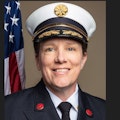 Kelly Hanink
Kelly Hanink
Kelly Hanink is an assistant fire chief for the Grand Chute, WI, Fire Department has been in the fire service for nearly 19 years. She began with the Eden Prairie, MN, Fire Department in 2007 where she moved through the ranks from firefighter to Assistant Chief of Health and Safety then became a fire chief in central Wisconsin. In Grand Chute, she is responsible for community risk reduction and serves as the fire marshal, health and safety officer and accreditation manager. Hanink's professional career began more than 30 years ago as a design engineer in the defense industry. She holds bachelor of science and master of science degrees in mechanical engineering. Hanink holds the Chief Fire Officer designation from the Center for Public Safety Excellence and is a graduate of the National Fire Academy's Executive Fire Officer Program.