Fire Department Community Risk Reduction & Homeless-Related Fires
Key Takeaways
- Although homelessness—and fires that result from such circumstances—once was an urban issue, today, no community and no fire department is immune from the matters.
- Even fire departments that track homeless-related fires might overlook the unobvious, such as a fire in an abandoned structure or in an area where there was evidence of a homeless encampment.
- Standard safety messages and presentations might not be well received by the homeless community. Are there codes and ordinances that can be utilized or adjusted to allow for an increase in safety and care of basic needs while not infringing on a person’s rights?
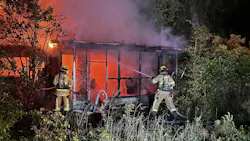
In July of 1975 in Portland, OR, just one year prior to the very first publication of Firehouse, 12 people were killed in a fire at a single-room occupancy hotel (SRO) called the Pomona. It catered to transients and the impoverished. The hotel was located in The Old Town area of the city, which also was known as Skid Row for its numerous cheap hotels and bars.
Fast forward to December 1999 in Worcester, MA. Six firefighters were killed in a fire in an abandoned warehouse that was started by two homeless adults who knocked over a candle during a dispute.
In 2005 in New York City on what is known as Black Sunday, two FDNY firefighters were killed and four were seriously injured (one of whom later succumbed to his injuries in 2011) after they were forced to bail out of a fourth-story window of an illegal SRO that was in violation of fire and building codes.
Any internet search of “homeless” and “fires” will fill screens with news stories of fires, damages, injuries and deaths. What you don’t see much of are proactive solutions to these tragedies.
Complex issue
From fire to EMS response, the fire service always has been involved with the issue of homelessness, and we can anticipate that involvement to not only continue but increase. A 2023 NFPA report that’s titled “Invisible No More” noted, “As the problem of homelessness grows in size and complexity around the world, many cities are reporting spikes in the number of fires affecting the homeless population.” According to a 2024 report by the U.S. Department of Housing and Urban Development, the state of the economy and affordable housing, both hot-button topics in today’s national discourse, are driving the homelessness numbers, which hit record highs in 2024.
What once was considered primarily an urban issue now has spread and is surfacing in suburban and rural communities alike. Today, no community and no fire department is immune from the issue of homelessness, which is compounded further in rural communities that might lack the infrastructure and social services to properly address it.
Traditionally, the fire service deals with fire safety issues through education and codes enforcement. In many jurisdictions, the community’s laws and ordinances allow fire inspectors the right to enter a business and mandate code compliance to correct violations or to start the legal process of forcing compliance up to, and including, fines or closing the business. Those to whom we provide education often requested that information and are receptive to it. In the worst case scenario, they’re indifferent to it but certainly not hostile to it.
I am no legal scholar nor an expert on the U.S. Constitution, but recently, several challenges have come about concerning the rights of the homeless and the Bill of Rights—namely, the First, Fourth, Eighth and 14th Amendments, all of which protect an individual’s freedom from government intrusion. As it applies to this issue, when does a homeless person’s right to be outside, walk, assemble, sit and sleep in public spaces become violated when the government prohibits such activity even in the name of safety? Many attempts by communities to enact well-meaning policies that are intended to increase both community safety and the safety of those who are experiencing homelessness are met with public outcry and lawsuits. To make matters more complex, community governments and lawmakers also face outrage and lawsuits at perceived inaction on the same issue.
The fire service inadvertently has compounded this issue. According to Edward Pinto and Hannah Florence in a 2024 report for the AEI Housing Center, starting in the 1920s, largely because of building codes, the availability of SROs was on the decline, which affected housing affordability, and this, they claim, played a role in modern day homelessness. The requirements for sprinkler systems, fire alarm systems, fire doors, etc., pushed already sky rocketing housings costs even further.
Data & stakeholders
Homelessness most often involves private citizens in public spaces and is a multifaceted issue that has no single solution, particularly when most brush against the rights and freedoms that are afforded to all citizens regardless of their housing status. Although this issue isn’t in the purview of the fire service to solve, we obviously have a vested interest in having a seat at the table of solutions, which is exactly why community risk reduction (CRR) is a perfect tool.
The first step in addressing a risk is to identify it. Are you tracking homeless-related fires, and if so, how are you doing that? A fire in a homeless encampment might be obvious, but how about a fire in an abandoned structure or in an area where there was evidence of an encampment? Are you tracking related EMS data and cross-referencing them with other calls for service? Are your crews educated on the risk, what to look for and what information must be collected?
Once you identify your risk or can provide support that risk is emerging in your community and needs attention, assemble stakeholders who have both a direct and indirect interest in the community’s homeless and their safety. Some might seem obvious, such as law enforcement and social services, but also consider other agencies, including local hospitals and clinics, workers in the mental health community, and nongovernmental organizations, such as The Salvation Army and Habitat for Humanity. Do research to see whether anyone else in your community already is working to address the issue. Seek stakeholders who can provide material support but also those who can provide indirect support, such as important data or insights. By expanding your cotillion, you can provide a more holistic vision and approach that will increase the chances of long-term success.
Without infringing on rights
Are you prepared to address the risk? Standard safety messages and presentations might not work well, or be well received, in the homeless community. Are there codes and ordinances that can be utilized, or adjusted, to allow for an increase in safety and care of basic needs while not infringing on a person’s rights? For example, without banning them altogether, consider providing guidelines for warming and cooking fires and safe distances between shelters. Are there stakeholders or grants that can help to supply health and safety items, from hygiene and bandages to safe heat-generating appliances?
Long-term effort
Firefighters have both an advantage and disadvantage when it comes to working with the homeless and addressing the issue of safety. We come in contact with these communities frequently and on equal ground; they need our help, and we provide what they need when they need us most and do so with care and without judgement. This helps to establish trust and relationships that go a long way in influencing behavioral change.
However, we can’t forget that we also are seen as a government entity that some might feel has contributed to their problem through enforcement of codes and ordinances, which also might lead to mistrust and resistance. Providing successful solutions won’t come down to a simple policy or program but a long-term effort that allows for relationships and trust to develop and grow.
The rising issue of homelessness and community safety is complex and an area in which the traditional approaches of education and codes enforcement aren’t the best answers. This is an issue that must be addressed through the experience, talents and resources that a true CRR approach can bring, which can help to find the delicate balance between providing care and respecting dignity and rights.
Firefighters are on the front lines and can have the biggest effect, not only through service delivery and the relationships and trust that it fosters but through our skills and knowledge of CRR.
About the Author
 Daniel Byrne
Daniel Byrne
DANIEL BYRNE is a community support officer for the Burton Fire District, Beaufort County, SC, and a retired assistant fire chief of training for the Georgia Air National Guard 165th Fire Department. A third-generation firefighter, he holds an associate degree and a bachelor’s degree in fire science as well as a master’s degree in public administration and disaster management. Byrne is an alumnus of the National Fire Academy. He received state and local awards for public relations and educational programs as well as community partnerships and served as a conference presenter and keynote speaker. Byrne is a recipient of the Thomas Carr Community Service Award from Firehouse.