Human Factors in Fires: Bridging History and Prevention in Modern Fire Safety
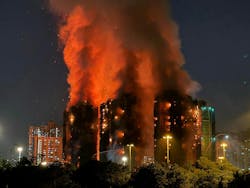
Laying our divisions as humankind aside, one cannot hear the preliminary findings of fire cause at the Wang Fuk Court Apartment (WFCA) complex in the Tai Po suburb of Hong Kong and not wonder if we have indeed forgotten the old adage from Geroge Santayana, “Those who cannot remember the past are condemned to repeat it.” Cliché’, I know, but fitting, given amazing parallels between so many of the world’s biggest fire losses in known history. The Great Chicago Fire, the Peshtigo Fire, the Grenfell Tower Fire in London, the Black Dragon fire in China, the Příbram mine fire, Algerian wildfires in 2021, and even the Station Night Club (see article 1 and article 2) in West Warwick, RI, stand alongside last week's tragedy as monumental reminders of human’s failure to exercise familiar practices learned at the cost of so many innocent lives among us throughout our collective history.
Like most of the world, many of us watched with horror the “breaking news” that appeared across all media outlets last Wednesday, as we here in the United States prepared to be thankful the next day. The videos, the newscasts, the unbelievable stories of rapid fire spread and unknown impacts to life was admittedly overwhelming at times given our chosen profession and, dare I say, “insider knowledge” of fire behavior and survival odds. Fast forward to this week, and preliminary investigation findings accompanied by interior post fire pictures, and word of multiple arrests, have both fire investigators and community risk reduction staff hooked stronger than teenagers to their iPhones.
What can we learn from such a tragedy? How does what we will learn apply to us in our little corner of the planet? What can we share with those we protect to prevent them from such an event? So many questions that may or may not be answered in the coming days, weeks, or months. But ultimately, anyone who has spent more than a day in the fire service knows exactly the cause of this fire and how to prevent it from ever happening again because it has happened before!
Human-caused tragedy
Summoning all the psychic powers in the universe, let's concretely determine the cause of this fire, shall we? Are you ready? You know what it is! You’ve seen and heard it before because you are aware of history, right? The absolute, non-deniable, cause of the Hong Kong fire is either/or man, woman, and/or child. Someone has done something they should not have, or someone has not done what they should have. It really is that simple. The finite details will undoubtedly be discovered, shared, and discussed for generations to come, at least in Hong Kong, if not across the world. But we all know that people will ultimately be found to be the cause. Now, that is all said with no malice or ill will toward anyone. I say that because, if we acknowledge as a collective of people sharing a planet, we can be honest in our forward motion and desires to do better!
So, armed with the knowledge that such a fire can be prevented to a great extent, and if it can’t be avoided for whatever reason, it can most definitely be mitigated for the most part, rendering a similar event more survivable for those involved, what can now be done? Well, we can use our history coupled with current events to continue efforts and perhaps even push harder, in the realm of code enforcement and development. We can share the lessons learned from this fire and all the others, with our entire emergency staff, including EMS, admin, and elected officials. We can furthermore share the same lessons with those we protect.
None of this is new! And that is the disheartening part of this whole story. We have all known for generations, especially here in the U.S., that so much can be done before a fire to stop it before it starts, or at the very least to reduce its impact if it occurs. But we can only conclude that we keep forgetting those lessons, because the same kind of fires continue to occur! The same large loss of life repeats itself community after community and people keep writing about how what happened this week is similar to what happened back in...
Simply put, we must try harder. We must remember that saving lives from fire is more than putting the proverbial wet stuff on the red stuff. We have to review and remind ourselves and our servant family, of the lessons of our collective past. Of course, code enforcement, inspections, public education and outreach, community risk reduction, even recruitment and retention, are in no way the Tik Tok stars of our profession, they still absolutely need to be a solid number of bricks in our foundational wall.
Lessons learned before Hong Kong
At a glance, the WFCA fire has been suspected of starting in and around scaffolding made of bamboo and the netting did not meet safety standards. It is currently surmised that the fire grew rapidly on account of foam paneling that apparently filled windows. Construction materials that did not meet fire safety standards were words used by officials in China. That is something we know all about here isn’t it?
Consider that the MGM Grand Fire is still mentioned in recruit schools all over this great nation. But wait, there’s more. Foam? That sounds familiar, doesn’t it? Anyone recall egg crate foam on walls of a bar during a concert? Does the Station Nightclub Fire ring a bell? More connections to the past can simply be drawn as well. The toll is 151 souls lost in the Hong Kong fire.
There are speculations and reports that fire alarms did not sound in some of the towers. Again, not a new finding for those of us in the know about fire. Here in the U.S. most everyone knows about the alarms that were inoperable in the area of great fire loss at Our Lady of Angels, right? Why then, if we are aware of history, has it not shared, introduced, or at the very least used to the betterment of our lives, to prevent or minimize this event or so many others? A question that could be argued for millennia across firehouse kitchen tables. But it all comes down to history on repeat.
See something, say something
Ultimately, we need to broaden our reach and focus our effort to encourage our entire staffs to “see something, say something.” What if every firefighter in your agency understood the most basic codes and were reminded of them regularly throughout their respective career: paths of egress, fire load, occupancy limits based on use, and a host of others. And then, what if they were encouraged to simply keep their eyes open and respectfully mention potential issues to property owners/managers when observed? Or even simply report findings to the code official? Imagine the fires that could safely be fought before they began and the lives saved if a fire department’s admin professional happened to the manager of the favorite lunch spot that one of the tables happens to be blocking a fire exit? Surely, those administration professionals would need to know that such an occurrence is unsafe and a code violation so some training is needed, but might that make a difference? What if these little conversations occurred multiple times a day as your staff conducted business? Can you imagine!
Crazy ideas, right? No! In fact that they are not even original ideas! Our history has not only shown us common threads amongst the worst fires in mankind’s history, it in some cases/many cases, has gone so far as to give us tools to prevent them from happening ever again! We simply need to be smart enough. committed enough, and care enough to see the future through the lens of our past!
About the Author
Lee Levesque
Lee Levesque is a 30-plus-year veteran of the fire service and veteran of the U.S. Army who currently serves with the Burton, SC, Fire District as a member of the Beaufort County, SC, First Responders Project, which is a community health program that targets opioid overdoses. He holds a bachelor’s degree in fire science and emergency administration and graduated from the South Carolina State Firefighters Association’s (SCSFA) Leadership Institute. Levesque is a past president of the SCSFA’s Life Safety Section. He also served on a number of International Fire Service Training Association validation committees to establish the baseline for emergency response worldwide.