Passing the Torch: Preparing the Next Generation of Fire Marshal Leadership
Key Takeaways
- The fire marshal role has evolved to include complex engineering review, high-hazard oversight, emerging energy technologies, wildland urban interface planning and data-driven community risk reduction programs. Because of this, fire marshals must be strategists, administrators, communicators and policy architects.
- Succession planning for the fire marshal office requires preparing possible people to fill the role to operate at the intersection of operations, policy, technology and public trust.
- The skill set for the fire marshals of tomorrow includes strategic-based decision-making; regulatory and code interpretation expertise; data literacy and performance management; leadership communication and advocacy; operational and administrative integration; change management and organizational adaptability; interagency collaboration and relationship-building; mentorship and workforce development; and professional integrity and ethical leadership.
Across the American fire service, prevention divisions and fire marshals offices stand at a pivotal crossroads. The work never has been more complex. The demands of modern fire protection—spanning engineering, policy and technology—require a level of multidisciplinary leadership that previous generations scarcely could have imagined. However, although the technical landscape evolves, our leadership pipelines too often lag behind. Succession planning remains inconsistent. Mentorship, when present, is informal.
If we fail to prepare the next generation of fire marshals with intention and structure, we will find ourselves rich in tradition but poor in readiness—and our communities will bear the risk.
Expanding role of the modern fire marshal
Gone are the days when a fire marshal’s core focus was limited to inspections and investigations. Today, the badge represents a comprehensive command function that spans complex engineering review, high-hazard oversight, emerging energy technologies, wildland urban interface planning and data-driven community risk reduction programs. To lead effectively, technical mastery is only one piece of the puzzle; fire marshals also must be strategists, administrators, communicators and policy architects.
As agencies prepare for generational transition, the conversation must move beyond experience alone and toward capability. Succession planning isn’t simply identifying the next person in line; it’s defining the competencies that are required to lead in an increasingly complex risk environment. Leadership isn’t defined by holding the seat; it’s proven by preparing someone else to sit in it.
The next fire marshal must be prepared to operate at the intersection of operations, policy, technology and public trust.
Core skill sets for the next fire marshals
The future of fire marshal leadership depends on professionals who bring a balanced portfolio of technical expertise, organizational awareness and strategic leadership. The following skill sets represent foundational abilities that agencies should cultivate intentionally through mentorship, task books and professional development pathways:
- Strategic risk-based decision-making. Demonstrates the ability to evaluate community risk data, to apply recognized workload and deployment principles, and to prioritize resources that are based on measurable effect.
- Regulatory and code interpretation expertise. Applies fire and building codes consistently while exercising sound professional judgment in complex or emerging situations.
- Data literacy and performance management. Uses inspection, investigation and prevention data to drive operational decisions, support accreditation metrics and communicate program value.
- Leadership communication and advocacy. Clearly articulates life-safety needs to elected officials, administrators and the public in language that translates risk into actionable policy.
- Operational and administrative integration. Balances field operations, personnel management, budgeting and policy development within a unified command framework.
- Change management and organizational adaptability. Leads teams through system implementations, regulatory updates and cultural transitions without compromising service delivery.
- Interagency collaboration and relationship-building. Develops productive partnerships with building officials, planners, law enforcement and regional stakeholders to support coordinated risk reduction.
- Mentorship and workforce development. Invests in developing future leaders through structured coaching, task books and intentional succession planning.
- Professional integrity and ethical leadership. Upholds accountability, transparency and consistency in enforcement decisions that affect public safety and organizational credibility.
These competencies aren’t aspirational; they’re operational necessities. Agencies that intentionally build these abilities into their leadership pipeline are positioned better to sustain prevention programs, to defend resource needs and to protect their communities in an increasingly complex risk environment.
Generational crossroads
The fire service is experiencing a profound generational shift. Veteran leaders bring experience and institutional memory; younger professionals contribute education, innovation and data proficiency. The challenge isn’t to choose between them but to bridge their strengths. Unfortunately, too often “That’s not how we always did it” becomes a barrier instead of a guidepost.
Leadership continuity requires recognizing that institutional knowledge and new perspectives are not competing forces; they’re complementary ones. The next fire marshals must understand the traditions that built the profession while possessing the courage to adapt those traditions to modern risk realities.
Mentorship is a mission imperative
Leadership development must be intentional, structured and linked to credentialing. Fire marshals should prioritize mentoring relationships, rotations in leadership, and exposure to policy and budgeting processes. Professionalism is built through guided growth, not gatekeeping.
Mentorship shouldn’t be viewed as an informal courtesy; it’s a professional obligation. Every experienced leader carries a responsibility to prepare the next one. When mentorship is neglected, succession becomes reactive instead of strategic, and organizations are left to scramble to fill leadership gaps rather than confidently advancing prepared professionals.
When tradition becomes obstruction
In some organizations, advancement only happens upon retirement. Innovation is mistaken for impatience, and loyalty becomes synonymous with stagnation. Stagnant leadership doesn’t preserve tradition; it endangers it.
True leadership honors tradition while embracing progress. The willingness to evolve isn’t a rejection of the past; it’s a commitment to protecting the future.
Balancing act: Advocacy, operations and the politics of progress
Within every fire department, a quiet tension exists between operations and prevention—a competition not of purpose but of perception. The suppression side’s visibility often overshadows prevention’s quieter victories. For fire marshals, advocating for staffing and resources requires balancing professionalism and politics.
Prevention staffing isn’t a luxury; it’s infrastructure. Fire marshals must translate data into language that decision-makers understand, leveraging risk assessments, performance metrics and workload analysis to quantify value. Leadership isn’t just about knowing the code; it’s about communicating its worth.
In many ways, the modern fire marshal serves as both guardian and advocate, to protect life safety and to ensure that prevention programs receive the support that’s necessary for them to function effectively.
Courage to lead forward
Fire prevention remains the backbone of public safety. Its success depends on a willingness to evolve. Our duty is to ensure that fire marshal offices across the United States remain dynamic, prepared and forward focused.
Leadership is about continuity. The measure of success lies not in the systems that were built but in the people who we prepare to sustain them.
The torch will pass, as it always does. The question is whether we will pass it deliberately or leave the next generation to pick it up in the dark.
About the Author
 David Stone
David Stone
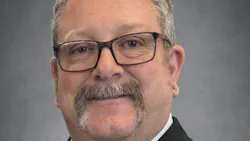
David Stone serves as the fire marshal for New Hanover County, NC, overseeing the community risk reduction branch and a portfolio of prevention, education and investigative programs. A credentialed Fire Officer through the Center for Public Safety Excellence, he also is a certified North Carolina Fire Inspector and Fire Investigator and holds professional recognition from the International Association of Arson Investigators. A retired U.S. Marine Corps gunnery sergeant, David Stone retired after 20 years of service, with his last assignment being in the Aircraft Rescue Fire Fighting Division. Following his military career, he entered the North Carolina fire service. Stone serves on multiple committees within the North Carolina Fire Marshal’s Association and as an eastern director. He also is a member of the Safer Buildings Coalition, where he contributes to the Government Affairs and Codes and Standards workgroups, and serves on the North Carolina Fire Code Revision Committee, where he helps to shape the next generation of fire and life-safety codes across the state.