Who Really Is in Charge? The Cultural Tension at the Heart of Fire-Based EMS
Key Takeaways
- EMS and fire service personnel often interpret "command" differently. If a fire department that provides EMS hasn't definied where authority lies in moments when, for example, a transport decision is required, hesitation, informal negotiation and quiet uncertainty can create tension and undermine the authority of officers who are placed in charge.
- Although fire department standard operating procedures reflect organizational priorities, these priorities might be interpreted differently depending on whether fire or EMS culture dominates.
- Fire departments that fail to recognize and address the cultural differences between fire command and EMS autonomy risk operational conflict, employee dissatisfaction and compromised patient care.
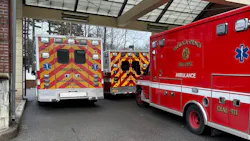
Two responders arrive on scene. One wears bugles, the other a paramedic patch. Both are trained to lead. Who really is in charge?
Since 1980, emergency medical calls that are handled by fire departments in the United States have skyrocketed. Today, a significant percentage of U.S. fire departments provide some level of emergency care. However, this integration of fire and EMS created a pressing question that no simple answer can solve: Who really is in charge when a firefighter/paramedic responds to an emergency?
The rapid evolution of firefighter duties to include EMS left a lasting effect on fire service culture, which is steeped in history and tradition. That said, many fire departments fail to recognize a critical truth: Although the overall goal of emergency medicine and fire response is similar—saving lives—the cultures that underpin success in each field are vastly different.
Different models
The American fire service traces its origins to late-17th-century Boston, with a clear mission: protect life and property. This mission always has relied on a paramilitary command structure, one in which officers make decisions that are based on training, experience and situational information. Authority is clear, visible and largely unquestioned.
Emergency medicine in the United States developed along a very different path. Early forms of prehospital care, including battlefield evacuation during the Civil War, offered minimal standardization. Between the mid-1800s and the 1960s, prehospital care often relied on undertakers, hospitals and funeral homes for patient transport, with little to no medical intervention.
In 1966, “Accidental Death and Disability: The Neglected Disease of Modern Society” (aka The White Paper) highlighted the inadequacies of prehospital care, which led to the establishment of training standards. Nevertheless, responsibility for prehospital care remained fragmented. Today, EMS is provided by private agencies, hospitals, taxpayer-funded entities and fire departments, with each organization emphasizing provider autonomy. EMS personnel are trained and empowered to make clinical judgments independently, guided by protocols and the best interests of their patients. It’s a model that’s markedly different from the top-down command structure of the fire service.
When cultures collide
For centuries, the fire service has operated under a simple principle: There always is an officer in charge. That officer maintains authority unless command is transferred formally. This system provides clarity and accountability not only on emergency scenes but also in day-to-day operations, training and station management.
By contrast, EMS emphasizes individual responsibility and situational leadership. The person who is in charge might vary by location or incident. Around the station, a supervisor might oversee daily tasks; on an emergency scene, the highest-trained medical provider—whether a BLS or ALS clinician—assumes responsibility for patient-care decisions. This cultural emphasis on individual empowerment often conflicts with the traditional fire service hierarchy, particularly on scenes where medical care dominates.
In 2020, 64 percent of fire-related incidents included a medical component, according to the U.S. Fire Administration. This raises a key question: Who is in charge?
The Incident Command System was developed to bring order to multi-agency responses. However, in practice, EMS and fire service personnel often interpret “command” differently. Fire officers often view command as overarching and absolute. EMS providers apply a model by which authority narrows to patient care and can shift with patient needs and provider expertise.
Logically, EMS providers should direct clinical care, but that care still exists within a broader incident that requires coordination, accountability and command.
In theory, these roles should complement each other. In practice, they can conflict.
Consider a routine call: a fall victim who has injuries that fall into a gray area. The patient is stable, but mechanism and presentation raise questions. This could be a transport to a local community hospital, or it could warrant a trauma center based on clinical judgment.
On scene, the paramedic begins assessment and weighs transport options. At the same time, the officer is managing the broader picture, resources, scene flow and overall accountability. The officer knows what units are on scene, which are available for additional calls, which are committed, and which already are en route to hospitals or handling other incidents across the response area. The paramedic and the officer are operating within their respective roles, both acting in the interest of the patient, but the decision point remains: Who makes the call?
This isn’t a high-acuity, chaotic incident. It’s routine, and that’s exactly where the problem exists. If an organization hasn’t defined clearly where authority lies in these moments, particularly when providers operate at the same level of care, such as a paramedic-lieutenant and a firefighter/paramedic or an EMT who’s supervising another EMT, the decision is left open to interpretation.
What follows isn’t always disagreement, but hesitation, informal negotiation and a quiet uncertainty that can create tension among the ranks and, over time, undermine the authority of the officers who are placed in charge.
In these moments, clinical input is essential, but it must exist within a clear command structure. Without that structure, even routine calls can expose deeper cultural fractures.
Situations such as this aren’t uncommon in fire-based EMS systems.
Hundreds of years of fire service tradition suggest that patient care is an aspect of an overarching operation that’s commanded by a fire officer. Is deploying a formal command structure to delineate EMS command impractical for routine calls with multiple operations? In complex incidents, EMS personnel’s focus on patient care sometimes can clash with the broader fire service objective. Although life safety always is the primary goal, the way that it’s achieved might not require direct patient contact, which can create tension and potential inefficiency if EMS providers disagree with that approach.
Navigating the crossroads
Only recently have fire and EMS personnel become integrated into single departments, creating unique cultural challenges. Firefighter/paramedics often navigate dual responsibilities that require clear delineation of authority. Standard operating procedures often reflect organizational priorities, but these priorities might be interpreted differently depending on whether fire or EMS culture dominates.
This no longer is just an operational question; it’s an identity question.
Departments that prioritize EMS autonomy might risk eroding traditional command structures. Departments that fail to integrate EMS within a clear command structure risk fragmentation on scene, where competing priorities can slow decision-making at critical moments. Some organizations opt to maintain EMS as a distinct division that has separate guidelines. Regardless of the path, the choices that are made today shape departmental culture for decades.
The integration of EMS into the fire service presents both opportunities and challenges. Departments that fail to recognize and address the cultural differences between fire command and EMS autonomy risk operational conflict, employee dissatisfaction and compromised patient care.
As fire-based EMS continues to expand, leadership must evaluate carefully how culture influences decision-making, authority and organizational identity. The question no longer is theoretical. When everything is on the line, uncertainty about who is in charge is more than a philosophical problem. It’s an operational one.
About the Author
 Tyler Whittredge
Tyler Whittredge
Tyler Whittredge is a firefighter/paramedic with the Saratoga Springs, NY, Fire Department who has 12 years of experience in the fire service. He has served in a variety of roles, including volunteer firefighter and firefighter/EMT with the U.S. Department of Energy. Whittredge is an adjunct instructor, a certified Confined Space Technician and an ITRA Level 2 rope rescue technician with Capital Technical Rescue. He holds an associate degree in fire science from Onondaga Community College.