The Flipside of Leadership: Leading Generations in the Firehouse
Key Takeaways
- Effective leadership requires understanding and adapting to the communication styles of newer generations, especially given the rapid development of digital language and social media.
- Building trust involves listening to the next generation's questions, ideas, and concerns without immediate judgment, fostering a culture of inclusion and respect.
- Experience, rank, and tradition remain vital, but organizations must also be willing to evolve their methods of onboarding and engagement to meet modern expectations.
Welcome back to The Flipside of the Firehouse. This is where we talk about the things that don't always make it into reports, policies, or training manuals. The real conversations, the tension, the leadership moments that happen in the bay and around the kitchen table. The things that actually shape a crew, for better or worse.
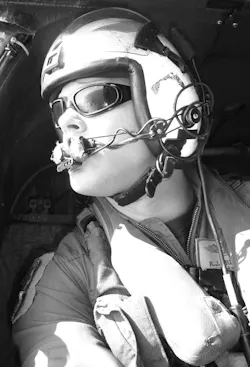
When I was a brand-new search-and-rescue Corpsman in the U.S. Navy, I did not even get a microphone on my first helicopter flights.
Our helmets had an internal communication system that connected everyone in the aircraft. The pilots, crew chief, and experienced rescue swimmers could all talk to one another, but for my first 25 flight hours or so, I could only listen. To be clear, this was completely against regulations. There was definitely a little old-school hazing involved, and nobody should try to convince me otherwise. And to be clear, I was fine with it. But even as the new guy, I understood that there was more behind it than simply making the rookie earn his place.
Part of it was exactly that, though. I was joining a very small community of high-performance, high-risk individuals where trust mattered, and having a microphone was almost symbolic of earning your way into that crew. Before you added your voice, you had already learned the voices there. You listened to how experienced aircrew communicated, how they reacted when something changed, what information mattered, and maybe most importantly, when not to talk. You were expected to understand the community before you started trying to influence it.
The other part was far more serious. Communication during a search-and-rescue mission in a helicopter can be incredibly fast and unforgiving. Multiple people might have been talking while the aircraft was low, the pilots were maneuvering, the crew chief was calling out obstacles, and the rescue swimmer was preparing to leave the aircraft. One unnecessary transmission, one misunderstood call, or one person talking at exactly the wrong moment could step on critical information and put the entire crew in jeopardy. In that environment, knowing when to speak was every bit as important as knowing what to say.
So I listened, watched and learned. And eventually, I earned my way into the conversation.
Experience before influence
That was part of being new in my generation. Some of it was right, some of it probably was not, and some of it would never fly today. But the larger expectation was understood. Experience came before influence. The organization had its own way of doing things, and when you joined, it was largely your responsibility to adapt yourself to it.
I am not sure we can lead the next generation of firefighters and EMS providers the same way.
There was some wisdom in that. There still is. New people need to listen. They need humility. They need to understand that experience matters and that the person who has been doing the job for twenty years probably knows a few things they do not. But when I think about how I would lead that same young rescue swimmer today, I am not sure I would make him wait 25 hours in the aircraft before giving him a microphone.
That does not mean I would lower the standard. It means I would change the way I brought him into it.
I think that distinction is becoming increasingly important for the fire service because we are going through a generational transition that is far more than just age. We tend to simplify these conversations into complaints about millennials, Generation Z, or whatever generation comes next. We joke about work ethics, cell phones, social media, attention spans, and work-life balance. The problem with those conversations is that they usually begin with the assumption that our generation represents the standard and everyone coming behind us is some variation away from it.
I do not believe that. I believe this generation is every bit as thoughtful, caring, capable, and willing to do what is required in fire and EMS as the generations that came before them. What is different is the world that shaped them, the reasons they may have entered the profession, how they communicate, where they place their trust, and what they expect from the organizations they join.
If we want to lead them, we have to understand that world.
Influence and motivation have changed
Many of the people occupying senior leadership positions in the fire service today came of age professionally around 9/11. That period shaped an entire generation of military members, firefighters, police officers, and public servants. Service and sacrifice had a particular meaning. There was a powerful call to something larger than oneself, and many people entered these professions to serve their country or community during a time when service felt especially urgent.
That motivation influenced how we viewed the job. Missing holidays and working terrible hours was part of it. Getting the worst assignments when you were new was part of it. Keeping your mouth shut until you earned your place was part of it. You accepted those things because sacrifice itself was wrapped into your understanding of service. The organization did not necessarily need to explain why everything operated the way it did. You joined the organization, so the responsibility was largely yours to adapt to it.
The firefighter entering our station today may have a very different starting point. They grew up amid economic instability, COVID-19, political division, institutional failures that played out publicly, constant access to information, and an online world where almost every claim can be immediately challenged. They have also watched people leave careers because those careers consumed their lives. When they ask questions about schedules, mental health, family time, flexibility, or why a department operates a certain way, we sometimes interpret the question itself as a lack of commitment.
Maybe it is not.Maybe they have a different definition of what commitment should require.
That creates a legitimate collision with the current state of the fire service. We have departments dealing with staffing shortages and mandatory overtime resulting in retention problems, increasing call volume, burnout, expanding EMS responsibilities, and communities that still expect the same level of service regardless of how many people are available to provide it. At the same time, we are hiring people who place a much greater value on work-life balance and who are far less willing to sacrifice every other part of their identity for their occupation.
There are parts of this profession that cannot bend to that expectation. Emergencies do not care about dinner plans. Cardiac arrests do not schedule themselves around birthdays. A structure fire does not care whether you slept well last night. Firefighters still have to be physically and mentally prepared to perform difficult tasks under terrible conditions, and sometimes service means putting somebody else's needs ahead of your own.
Those standards cannot change.
What can change is our belief that every organizational sacrifice is automatically part of the standard. Sometimes we confuse standards with traditions, and sometimes we defend practices because we survived them rather than because they still serve a purpose. There is a difference between telling a firefighter, "This profession requires sacrifice," and telling them, "You need to sacrifice because I had to." One protects the profession. The other protects our experience.
Leadership's role in adapting to the changes
That is where I think leadership and accountability has to evolve. For generations, the expectation was that the new employee moved almost entirely toward the organization. They learned our language, accepted our culture, followed our communication methods, and adapted to our expectations. I think the next era of fire service leadership requires movement from both sides. The next generation still needs to move toward the profession's standards, but the organization needs to move toward them in how we communicate, teach, engage, and build trust.
That is not being softer. That is being adaptable.
Communication may be the clearest example. Every generation has had slang, music, cultural references, and ways of speaking that irritated the generation before it. What we are experiencing now is different because technology has accelerated the development of language itself. Our newest firefighters communicate through text messages, group chats, short videos, memes, emojis, gaming platforms, social media, and other digital channels that did not exist when many current chiefs entered the service.
That creates opportunities for misunderstandings that we have never dealt with at this scale. A chief may believe an email clearly communicated something to the department. A younger firefighter may wonder why something important was buried in an email in the first place. An officer may interpret a short text response as disrespectful, while the firefighter who sent it sees it as completely normal. A new firefighter may ask "why" to understand context, while an experienced officer hears the same question as a challenge to authority.
Neither person necessarily has bad intentions. They may simply be looking at the same beach ball from different sides.
How today's communications have changed
That means good communication cannot just be about transmitting information. Leaders have to confirm understanding. We need to become comfortable asking people to clarify what they mean and allowing them to ask the same of us. Rank does not magically eliminate misunderstanding, and experience does not guarantee that the message we intended to send is the message somebody received.
Technology complicates this even more because older leaders often think of technology as something that was added to their lives. We remember a world before smartphones, social media, streaming videos, and instant access to almost unlimited information. Many of our newest firefighters do not. Technology is not an accessory to their world. It is part of its infrastructure.
Their phones are a camera, a map, a television, a newspaper, a classroom, a bank, a calendar, a library, an entertainment system, and a primary communication device. Social media is not necessarily somewhere they go after living their real life—is integrated into their real life. Yet the fire service sometimes talks about social media as if ignoring it will somehow make it go away.
It will not and we need to get better at using it.
That does not mean every chief needs to start dancing on TikTok or that the kitchen table should disappear behind a wall of cell phones. It means recognizing that training, recruiting, mentoring, professional development, recognition, culture, and leadership are already happening in digital spaces. The only question is whether our departments and leaders will participate effectively in those spaces.
The role of trust in today's world
That matters because we are also living through a larger shift in trust. People increasingly build trust around individuals rather than institutions. They listen to podcasters, creators, coaches, subject-matter experts, and online personalities because those people communicate directly with them and often feel more authentic and accessible than a large organization does.
We call those people influencers. The fire service tends to roll its eyes at that word, but I think we should reconsider it. An influencer earns attention, develops trust, communicates ideas, and affects behavior. That sounds an awful lot like leadership to me.
Influencer is another word for leader.
The difference is that influence cannot simply be assigned by rank. A badge gives you authority. Bugles give you positional responsibility. Neither guarantees that anybody trusts you enough to be influenced by you. If a 23-year-old firefighter spends hours every week listening to a firefighter online who teaches tactics, fitness, leadership, mental health, or fire behavior, that person may have tremendous influence over how that firefighter thinks about the profession. Meanwhile, the company officer sitting across from them at the kitchen table may have positional authority but very little actual influence.
We can complain about that reality, or we can learn from it.
If our people are looking elsewhere for leadership, maybe our first question should not be, "Why are they listening to that person?" Maybe it should be, "Why aren't they listening to us?"
The answer often comes back to engagement. People want to feel known. They want to understand why their work matters. They want to see where they are going. Those needs are not unique to Gen Z. Most of us wanted the same things when we were young firefighters, sailors, soldiers, paramedics, or cops. The difference is that many of us were willing to wait years before expecting them from the organization. The next generation is less willing to wait, and I am not convinced that is entirely a bad thing.
Finding a place within the fire service
A firefighter asking where they fit into the department's future gives us an opportunity to show them. A firefighter's question about why a policy exists allows us to teach its history and purpose. A firefighter with a different idea gives us an opportunity to examine whether our current approach is actually the best. We do not have to accept every suggestion, change every policy, or turn the station into a democracy. Giving somebody a voice is not the same as giving them the final vote.
That is especially important for experienced leaders to understand. A probationary firefighter does not have the same operational experience as a captain who has been riding the front seat for twenty years, and they should not. Experience matters. Rank matters. Competency matters. There will always be moments in this profession when an order must be followed immediately because someone's life depends on it.
But the kitchen table is not the fireground. We have far more opportunities to listen than we sometimes use.
That is where I come back to that microphone in my helicopter helmet. Making me listen for those first 25 hours taught me something valuable. I learned how an experienced aircrew communicated. I learned when to speak, what information mattered, the rhythm of a mission, and how professionals communicated when things got busy.
I would still teach those lessons to a young aircrewman today. I would still expect humility, preparation, competence, discipline, and respect for experience. I would find a way to give them the microphone sooner so I could hear what they were seeing, too. More importantly, I would want them to understand from the beginning that becoming part of the crew meant eventually contributing to it, not simply surviving long enough to earn permission to speak.
That is the challenge facing the fire service. We do not need to recreate our careers through the next generation. We need to prepare the next generation to carry the profession after we are gone. That requires us to protect the standards that define fire and EMS while being willing to change the methods we use to introduce people to those standards.
So here is my challenge this month. Find one of the next-generation firefighters in your department and sit down with them. Have a cup of coffee, grab lunch and sit at the kitchen table after the rigs are checked. Tell them one of your sea stories because those stories matter. They carry our history, our mistakes, our humor, and our culture.
But when you finish yours, ask for one of theirs.
Ask what brought them into the fire service. Ask what they want from this career. Ask what frustrates them about the organization. Ask where they get their information and who they listen to. Ask what they think the department does well and where they think it could improve. Then resist the temptation to immediately explain why they are wrong, how much worse you had it, or what they will understand after another ten years on the job.
Just listen.
You do not have to lower a single standard to give a young firefighter a voice. You do not have to surrender your experience, your authority, or the traditions that still matter. You have to recognize that leadership is not forcing the next generation to become a copy of ours. It is preparing them to become the best version of themselves while carrying forward the values this profession cannot afford to lose.
Maybe that starts with something as simple as giving them the microphone a little sooner.
And as always…
If something in this column makes you pause…
If it creates an ah-ha moment…
If it causes you to see something differently…
Or if it is something you dismiss now but remember later when you need it…
Then it is doing its job.
That is why I am here.
That is the flipside.
Until next month.
About the Author
 Flip Griffin
Flip Griffin
Flip Griffin is a retired U.S. Navy Command Master Chief with 23 years of service in search and rescue and aviation medicine. Throughout his career, Griffin led teams in high-risk environments where trust, clarity, and accountability were essential and those experiences shaped how he understands leadership long before he ever taught it. After retiring from the Navy, he felt a strong pull to continue serving by sharing what he had learned about leading people under pressure he began sharing his leadership principles in a program called Every Day Leader. That lead to the launch Firehouse Freedom, an effort to take his leadership principles and adapt them to the fire and EMS services, direct and relatable leadership guidance grounded in lived experiences.