The Flipside of Leadership: The Four Visions of Leadership
Key Takeaways
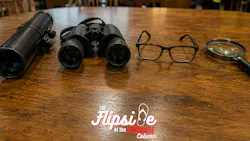
- Effective leadership requires knowing when to switch between four lenses: telescope, binoculars, reading glasses, and magnifying glass, each providing a unique view of your fire department.
- The telescope helps fire service leaders envision the future and prepare for potential challenges, reducing surprises and building resilience.
- Reading glasses emphasize daily leadership habits—from the chief to the company officer—to provide routine evaluations, and maintaining standards through consistent, intentional actions.
Welcome back to The Flipside of the Firehouse. This is where we talk about the things that don't always make it into reports, policies, or training manuals. The real conversations, the tension, the leadership moments that happen in the bay and around the kitchen table. The things that actually shape a crew, for better or worse.
If you've spent any amount of time around leadership books, conferences, or podcasts, you've probably heard someone say that great leaders have vision. It's one of those words we all nod our heads to because it sounds important, but I wonder if we've unintentionally oversimplified what it really means.
When most people hear the word vision, they picture someone standing at the front of the room talking about the future. They think of strategic plans, five-year goals, or ambitious initiatives that promise to transform an organization. Those things certainly matter, but I've come to believe they're only one piece of the puzzle.
🎙️The Firehouse Yak: Flip Griffin – Flipping Fire Service Leadership
After more than two decades in the military, years in aviation search and rescue, and now working alongside fire departments across the country, I've noticed something interesting. The best leaders don't simply look farther than everyone else. They change the way they look depending on what their organization needs at that moment.
The easiest way I know how to explain this is with four simple tools that most of us have used at some point in our lives.
- A telescope
- A pair of binoculars
- Reading glasses
- And a magnifying glass
Each one is designed to accomplish something completely different. None of them is more important than the others, and none of them can replace the others. The mistake isn't failing to have vision. The mistake is trying to solve every leadership challenge while looking through the same lens.
Before we dive into each one, though, I want to make something perfectly clear: this isn't a framework that's reserved for the fire chief.
One of the comments I hear most often during workshops is, "That's easy for a chief to say. I'm just a captain." Sometimes it's a lieutenant. Sometimes it's a battalion chief. Regardless of the rank, my answer is always the same: if you're leading people, these four lenses belong to you.
Depth of vision at every rank
Now, the altitude of your vision naturally changes depending on where you sit in the organization. A fire chief may be using the telescope to think 10 or even 20 years into the future of the department. A deputy chief may be focused on translating that vision into a five-year strategic plan. A battalion chief may be preparing several companies for operational changes that are already beginning to take shape, while a company officer is developing the firefighters who will someday inherit those responsibilities.
The higher you move through the organization, the farther your telescope generally reaches.
Ironically, the opposite becomes true with the reading glasses and the magnifying glass.
Company officers often have the clearest understanding of the daily realities inside the station. They know who's struggling at home. They recognize when morale begins to slip. They notice when standards start drifting long before administration ever hears about it. They also have the unique privilege of seeing young firefighters develop into future leaders one shift at a time.
That's the beauty—and sometimes the burden—of middle leadership. You're expected to lead down while simultaneously supporting the leaders above you. You translate vision into execution while also providing honest feedback back up the chain of command.
No matter what rank you wear, leadership requires you to learn when to change lenses.
The telescope: Dream beyond today's reality
Let's begin with the telescope.
A telescope is designed to help us see things that are so far away they would otherwise be invisible. That's exactly how I think leaders should use it.
The telescope represents our ability to think beyond today's problems and imagine tomorrow's possibilities. It's where organizations begin asking questions that don't have immediate answers but are absolutely worth asking.
- What kind of department do we want to become?
- What legacy do we hope to leave for the firefighters who replace us?
- How can we serve our community 10 years from now better than we serve it today?
Those conversations can feel almost irresponsible when you're dealing with staffing shortages, mandatory overtime, aging apparatus, or budget constraints. It's easy to convince yourself that you'll think about the future once today's problems are solved.
The truth is that today's problems never completely disappear and that's why visionary leaders intentionally carve out time to think beyond them.
The telescope also serves another purpose that I believe is equally important. It prepares us for the possibilities we hope never become reality.
- What happens if 20 percent of your department retires within a few years?
- What if your city experiences significant financial hardship?
- What if your busiest engine company loses an apparatus for months?
- What if your department experiences a line-of-duty death that changes your organization forever?
None of us enjoys thinking about those scenarios. But avoiding difficult conversations has never prevented difficult circumstances.
The purpose of the telescope isn't to predict the future, it is to reduce surprise.
When leaders have already spent time mentally walking through potential challenges, they're far more likely to respond with confidence when adversity eventually arrives. They may not know exactly what they'll do, but they won't be starting from scratch.
Vision isn't about predicting tomorrow, it's about preparing for it.
The binoculars: Steer toward the horizon
While the telescope is focused on distant possibilities, binoculars help us navigate what's already approaching. This is where strategy begins to take shape.
Unlike the telescope, which often asks, "What could happen?" the binoculars ask, "What's most likely going to happen next?"
This is where succession planning lives, where apparatus replacement schedules become real, where changing demographics, community growth, budget cycles, training needs, and staffing projections begin influencing today's decisions.
One of the most common concerns I hear from fire departments revolves around succession planning. Leaders know retirements are coming, but many organizations still find themselves scrambling when those retirements finally happen.
The strongest departments don't simply replace leaders, they develop them.
Professional sports provide a great example. Championship organizations don't build their roster exclusively through free agency. They intentionally develop young talent within their own system while strategically bringing in experienced veterans to strengthen specific areas and fire departments should think exactly the same way.
Every officer should be developing someone who could eventually replace them. Every battalion chief should be mentoring future battalion chiefs. Every chief should be asking who will carry the department forward after they're gone.
Leadership isn't measured by how indispensable you become, it's measured by how prepared your replacement already is.
Great departments don't accidentally arrive at the future. They intentionally steer toward it.
The reading glasses: Master the everyday
If the telescope and binoculars are used periodically, reading glasses are worn every single day. This is where leadership actually lives.
Most of us don't earn trust during major incident but we earn it during ordinary Tuesdays.
Reading glasses represent the countless daily responsibilities that rarely make headlines but ultimately determine whether a department succeeds or struggles. They're the conversations in the kitchen after dinner. The quick check-in with a firefighter who seems quieter than usual. The weekly training that could have easily been postponed but wasn't. The honest feedback that prevents a small issue from becoming a much larger one six months later.
Leadership has always been a profession of repetition. It's the basics, done well, over and over again.
Ironically, that's also what makes reading glasses dangerous. We wear them so often that we stop noticing them. Routine quietly becomes complacency.
We stop evaluating our systems because "that's the way we've always done it." We stop challenging ourselves because everything appears to be working well enough. We convince ourselves that consistency alone equals excellence. It doesn't, it's intentional consistency that creates excellence.
Good leaders regularly clean their reading glasses. They evaluate whether their meetings still matter. They ask whether training is producing better firefighters or simply checking boxes. They revisit standards that may have drifted over time.
Extraordinary organizations are rarely built through extraordinary moments. They're built through ordinary moments repeated with extraordinary discipline.
The magnifying glass: Slow down and look closer
The magnifying glass probably spends more time sitting in the drawer than any of the other tools.
That doesn't make it less important, it simply means it's reserved for moments that require greater attention.
Most leaders immediately think about inspections, investigations, audits, or major incidents when they picture a magnifying glass. Those certainly deserve careful examination, but I think its greatest value lies somewhere else: verification.
There's an old saying that advises leaders to "trust, but verify." Some people argue we've moved beyond that philosophy. I don't think we have. Not when it comes to the magnifying glass.
Trust is essential and verification is responsible.
As leaders develop people, they should absolutely provide greater autonomy and fewer unnecessary check-ins. Micromanagement serves no one well. But occasionally slowing down to verify equipment readiness, training quality, documentation, or operational procedures isn't a sign of distrust.
It's a sign that excellence still matters. More importantly, the magnifying glass isn't just for processes, it's for the people:
- Who's quietly burning out?
- Who's carrying stress they haven't shared?
- Who feels overlooked?
- Who deserves recognition but hasn't received it?
- Who is ready for more responsibility but simply hasn't been asked?
Fire departments rarely struggle because leaders missed one catastrophic problem. More often, they struggle because dozens of small issues went unnoticed for months.
The magnifying glass reminds us that details matter because people matter.
Looking through the right lens
Leadership isn't about spending all your time looking through one lens, it's about knowing when to change them.
Some days your department needs you dreaming with the telescope. Other days it needs you scanning the horizon with binoculars. Most days it simply needs you wearing your reading glasses and doing the ordinary work that keeps the organization moving forward. And occasionally, it needs you to slow everything down, pull out the magnifying glass, and inspect the details that everyone else has overlooked.
When leaders intentionally use all four perspectives, something remarkable happens:
- They begin seeing their organization from every level imaginable.
- They understand where they're headed.
- They recognize what's coming next.
- They stay committed to today's responsibilities.
And they never lose sight of the people who make everything possible. At the end of the day, leadership has never been about having better eyesight than everyone else. It's about having the wisdom to know which lens your people need you to look through today.
Take action on your next shift
Before your next shift ends, find 10 quiet minutes and honestly answer these four questions.
- Telescope: what challenge or opportunity could fundamentally change my crew or department over the next decade, and what conversations should I begin having today?
- Binoculars: what is coming over the horizon during the next one to five years that requires preparation now?
- Reading glasses: what daily leadership habit, routine, or standard have I allowed to become routine instead of intentional?
- Magnifying glass: what person, process, or detail deserves a closer look because I've assumed everything is fine without taking the time to verify it?
The answers to those four questions won't simply improve your next shift. If you continue asking them throughout your career, they'll change the way you lead.
And as always…if something in this column makes you pause…
If it creates an ah-ha moment…
If it causes you to see something differently…
Or if it is something you dismiss now but remember later when you need it…
Then it is doing its job.
That is why I am here.
That is the flipside.
Until next month.
About the Author
 Flip Griffin
Flip Griffin
Flip Griffin is a retired U.S. Navy Command Master Chief with 23 years of service in search and rescue and aviation medicine. Throughout his career, Griffin led teams in high-risk environments where trust, clarity, and accountability were essential and those experiences shaped how he understands leadership long before he ever taught it. After retiring from the Navy, he felt a strong pull to continue serving by sharing what he had learned about leading people under pressure he began sharing his leadership principles in a program called Every Day Leader. That lead to the launch Firehouse Freedom, an effort to take his leadership principles and adapt them to the fire and EMS services, direct and relatable leadership guidance grounded in lived experiences.