'Do More With Less' Is Killing Firefighters, Literally
Key Takeaways
- Squeezing more work from fewer personnel increases injuries, overtime and burnout rather than creating sustainable performance.
- Fire departments should explore alternatives to low-acuity calls, to limit the need to send an engine company, a truck company, a rescue company or an ambulance to every minor complaint or low-priority medical issue.
- Fire departments should stop measuring success by how many vehicles are dispatched and replace activity-based metrics with outcome-based metrics, such as residential fire survival and time to fire control.
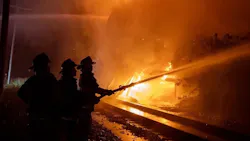
For decades, the fire service has worn the slogan “do more with less” like a badge of honor. It’s signaled grit, resilience, and the ability to get the job done despite shrinking budgets, fewer personnel and aging apparatus. However, grit isn’t the same as sustainability. A culture that elevates output metrics (e.g., call volume, apparatus responses and annual report numbers) above people and equipment is costing us our health, our sleep and, in too many cases, our life.
The most sobering fact is also the clearest warning: Firefighters are dying by suicide at an alarming rate. It reflects cumulative trauma, chronic stress, sleep deprivation, and organizational decisions about how and why we respond.
How did we get here? Budgets tighten while expectations don’t. Call volumes increase. Rather than asking whether every response truly requires every rig and every crew, many departments default to that strategy. In some cases, this approach is used to justify staffing levels or to preserve the appearance of productivity in annual metrics. The result is predictable. Apparatus are driven harder and farther. Preventive maintenance is delayed. Crews operate in a constant state of fatigue. Routine calls become another demand that’s layered onto an already overloaded schedule. Vehicles and people wear out at the same time.
Industry research and fire service publications consistently show that squeezing more work from fewer personnel increases injuries, overtime and burnout rather than creating sustainable performance.
Busy work undermines preparedness
In many organizations, activity itself becomes the objective. Administrative and command-level decisions, which often are rooted in legacy practices and reporting expectations, generate institutional busy work. This includes unnecessary responses, redundant apparatus assignments, and procedural requirements that are designed less around actual risk than around keeping personnel visibly occupied and numbers high. This manufactured busy-ness might protect budgets or make departments appear productive on paper, but it carries a real cost. Fatigue accumulates. Readiness erodes. Underlying staffing and operational problems are concealed rather than addressed. Busy work doesn’t improve preparation or preparedness. It quietly undermines it.
Many firefighters point particularly to the constant stream of low-priority EMS responses as a major contributor to exhaustion. In many departments, this has become one of the largest drivers of fatigue and burnout. Departments and municipalities should be willing to explore alternatives for chronic low-acuity calls, including community paramedicine programs, nurse triage systems, mental health response teams, transportation assistance (e.g., Uber or taxi voucher partnerships) and community risk reduction (CRR) initiatives. Proactive community health programs can reduce unnecessary 9-1-1 utilization and limit the need to send an engine company, truck company, rescue company or ambulance to every minor complaint or low-priority medical issue.
Operational and financial costs
There also are clear operational and financial consequences. Excessive or unnecessary responses degrade readiness. False alarms, duplicate dispatches, and multiple apparatus responses to low-risk incidents consume fuel, add wear to equipment, and increase exposure to response-related crashes and injuries. Municipal analyses and public safety technology providers estimate that each false alarm response costs several hundred dollars. When multiplied by thousands of calls each year, those funds no longer are available for training, behavioral health support, or replacing worn pumps and breathing equipment.
Burnout
Burnout and sleep deprivation aren’t abstract concerns or soft issues. Chronic shift work, mandatory overtime, and the expectation that firefighters simply push through lead to impaired decision-making, slower reaction times, higher rates of cardiovascular events, and declining morale and retention. Evidence consistently shows that stress and overexertion are leading contributors to duty-related medical deaths. Long-term fatigue also drives chronic health conditions that are costly for departments and devastating for families.
What’s sustainable
The shift in perspective to mitigate these things requires leadership courage. It demands that chiefs, officers and municipal leaders challenge long-accepted assumptions about productivity and preparedness. Reducing unnecessary responses, adjusting dispatch models and prioritizing firefighter recovery won’t weaken the fire service. They will strengthen it. Communities don’t benefit from exhausted crews, worn apparatus or agencies that are trapped in reactive cycles. They benefit from departments that are deliberate, rested and focused on true risk. Sustainable service isn’t about doing less. It’s about doing what matters, consistently and safely, for the long term.
What must change now
Stop measuring success by how many rigs rolled. Call counts and apparatus response numbers are easy to report, but they reward quantity over appropriateness. Replace activity-based metrics with outcome-based measures, such as residential fire survival, time to fire control, response efficiency to true emergencies and CRR results. Transparent reporting should explain when and why resources were expanded or reduced, not simply list activity totals.
Adopt intelligent dispatch triage and response leveling. Evidence shows that departments can identify categories of calls where lights-and-sirens or multi-apparatus responses aren’t warranted. Allowing nonemergency responses or single-unit dispatches for low-risk incidents reduces crash exposure and equipment wear without compromising public safety. These changes should be piloted with clear data collection, so outcomes are measurable.
Address false alarm drivers and align incentives. False alarms impose real costs in dollars and crew fatigue. Many jurisdictions successfully reduce repeat activations through education, fee schedules and enforcement. Time and money that are covered through these efforts should be reinvested in training, preventive maintenance and behavioral health programs.
Treat staffing and fatigue as safety issues, not budget footnotes. Relying on chronic overtime to fill vacancies increases long-term costs through injuries, turnover and degraded performance. Staffing models must be data-driven and incorporate predictable rest, recovery time and training. Exhausted crews make more mistakes, and risk-tolerant scheduling is a false economy.
Stop treating mental health as optional. The behavioral health burden in the fire service is well documented. Investment in peer support, confidential counseling, mandatory critical incident follow-up and normalized help-seeking isn’t a luxury. It’s a core safety function. Departments that invest in these areas demonstrate stronger retention, fewer suicides and better operational performance.
A different kind of pride
Pride in the fire service shouldn’t be measured by how exhausted a crew is at the end of a shift or how many miles that a pumper accumulates for an annual report. Pride should be measured by how well a department protects its members, preserves its equipment and delivers the right resource to the right incident at the right time.
Doing more with less sounds noble until reduced staffing, chronic fatigue and deferred investment begin to take a measurable toll on firefighters. Tradition and toughness can be honored without glorifying self-sacrifice. The next generation of firefighters deserves leadership that values sustainable service over unsustainable output. The lives that are at stake demand nothing less.
About the Author
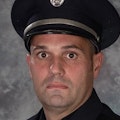 Matthew Koch
Matthew Koch
Matthew Koch has more than 22 years of fire service experience and currently serves as a lieutenant with the Saginaw, MI, Fire Department. He holds a master’s degree in public administration with a concentration in emergency services management and is pursuing a doctorate in emergency management. Koch’s research focuses on the influence of organizational leadership and culture on the resilience, well-being and mental health of first responders.