"I'm Right Where I'm Supposed to Be": An Assistant Fire Chief Reconciles His Retirement
Key Takeaways
- Despite the likelihood of a raise and the possibility of promotions, the assistant fire chief retired, prioritizing his principles and value set.
- Experiencing the line-of-duty deaths of nine fellow members exposed the author to complex post-traumatic stress disorder. Over the 19 years that followed those LODDs, moral injury set in, which was caused by the actions and inaction of fire departments around the world that he witnessed that conflicted with his principles.
- Although eight days of inpatient ibogaine treatment were the most terrifying days of his life, the treatment has allowed the author to heal from those traumas that he experienced and move forward with a positive outlook.
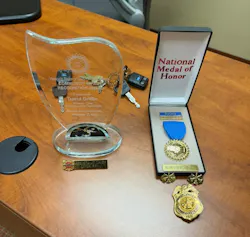
At the time of me writing this column, it’s been a month since I retired from the Charleston, SC, Fire Department and three weeks since I finished an eight-day ibogaine treatment in Quintana Roo, Mexico. I put in 21 years of service to the department that I love, and I will forever be grateful to serve the city where I was born and raised. I now will focus full time on speaking, writing and educating after doing those things part-time for the past 14 years. I must say, it feels absolutely amazing. I now can focus on the purposeful work for emergency services, which I love. I’m thankful to have done my time and for the opportunity to give my all for 21 years. However, it’s time for a new chapter.
My plan was to do 20 years and then focus on speaking and writing. Maybe I should have stuck to the plan? Maybe I’m right where I’m supposed to be? The last year on the job was one of the worst years of my life. I just didn’t feel purposeful over that year or the three previous years as an assistant chief. I remember when I hit the 15-year mark, I planned with my wife to be done at Year 20. Unfortunately, I let the pull of the job and personal progression in the department change my plan. I now understand that the path that I was on wasn’t healthy for me or my family. I retired at the peak of my career, although a raise was on the way as was the possibility of promotions in the future. Why did I retire despite these factors? My principles and value set that I hold near and dear to my heart.
No celebrations
Most people say that when a member of the fire service retires, it’s emotional. It really wasn’t that way for me. I knew that I had to chart a different path with my life to find true happiness and purpose. It’s just not fun for me to do office work. I have too much passion inside of me to let fluorescent lights take my energy all day. I remember coming home from work over the last year and asking myself, “How can I keep doing a job where I feel purposeless and not making a difference in people’s lives?” About eight months ago, I came to the realization that I had to retire, complete ibogaine therapy, focus on speaking and writing, and move to an entirely new city so I could close a chapter that needed closing.
I didn’t celebrate my retirement. How do I celebrate a retirement from a 21-year career during which there were nine line-of-duty deaths and six suicides as well as five people who died from job-related health issues? When I retired, I asked that there be no parties, no “thank you” emails and no visiting my office for goodbyes. I wanted absolutely nothing, because it didn’t feel right based on my principles. I can’t celebrate a career where thousands of lives were changed over the 21 years that I worked.
Moral injury
I found myself suffering over the years not only from complex post-traumatic stress disorder from the death of nine of our firefighters on June 18, 2007, at the Sofa Super Store Fire but also from moral injury over the 19 years that followed. Moral injury is defined by the U.S. Department of Veterans Affairs National Center for PTSD as the intense psychological, social and spiritual distress that results from actions, or inaction, that violate one’s own deeply held moral beliefs and values. It arises from witnessing, perpetuating or failing to prevent acts that violate core ethical codes, which cause profound guilt, shame and betrayal.
My education at The Citadel, The Military College of South Carolina, instilled principles and values in me over my four years there as a cadet athlete. It ingrained beliefs and conviction in those beliefs that are difficult to understand for many people. Couple that intense environment where I learned principled leadership with experiencing one of the worst multiple line-of-duty deaths in fire service history and with the 19 years that followed, including the six suicides and the five deaths from job-related health issues, and you have someone who sees the world and leadership through a lens that’s much different than that of many others. Then, as time passed and I witnessed actions or inaction by departments around the world that are similar to what I witnessed before the tragic incident, I became a leader who is extremely focused on sharing my experience and knowledge.
The perspective that I have is vastly different when it comes to leadership because of the depth of trauma that occurred during my 21-year career. We talk about war time and peace time presidents. It’s the same for firefighters. Some have an entire career of peace time. A larger percentage will experience some type of trauma during their career. But moral injury? This is difficult to overcome, because in most circumstances, we don’t even know that it’s happening.
New purpose
When I retired, there was no fanfare nor celebrations per my request. I returned all of my equipment, Class A, Honor Guard uniform, badge, collar pins, etc. I left Fire Chief Tom Carr’s PPE jacket on my door handle with his bunker pants and boots right next to it in my office. I asked a friend to make sure that the items were properly memorialized.
Now, you’re probably wondering how I could do that. Well, my heart was telling me that I needed to let go of the department for the betterment of my mental health and for the future of the relationships with my family. It’s interesting to note that during my ibogaine treatment, one of the visions that kept arising was telling me to “let go” of the department and the shame that I had for my actions on June 18, 2007, when nine of our Charleston firefighters died at the Sofa Super Store. My treatment showed me very clearly that it was time for me to focus on a bigger purpose and my true calling.
Real leadership
The inpatient treatment was the most terrifying and awakening eight days of my life. However, ibogaine has allowed me to heal from these traumas and now move forward with a more positive outlook on my career and my life. Does the trauma still enter my mind? Rarely, but when it does, now I have a skill set from my treatment that allows me to understand why I’m feeling a certain way and what to do about it. I can thankfully say I don’t miss the job at all. I feel so much more purposeful and fulfilled now.
One could say that I should have stuck to my plan of 20 years. However, the extra year made me who I am today, so I’m thankful for that challenging year of life that taught me so many lessons. I’m right where I’m supposed to be and learning more every day about the positives that I left for the department and also how much my career damaged my life both personally and professionally. That’s not a discredit to anyone or the department. That’s just a fact about the job that we do. It will disrupt your life in so many ways if you let it.
I’m so thankful for this next chapter of life, but most importantly, I’m so thankful for learning exactly what I didn’t want to become. I finally can look in the mirror and see a man who I’m proud of. It’s been a long time since I’ve been able to say that.
About the Author

David Griffin
David Griffin, EdD, recently retired as the assistant chief of administration in Charleston, SC, and is a Firehouse Contributing Editor. He was the operator of the first-due engine on June 18, 2007, when nine of his fellow firefighters perished. Griffin progressed through the ranks in operations in every uniformed position, from firefighter to battalion chief and shift commander to assistant chief, during his 21-year career in Charleston. He has a bachelor's degree in education from The Citadel, a master's degree in executive fire service leadership, and a doctorate of education in organizational leadership and development. Griffin is the author of "In Honor of The Charleston 9: A Study of Change Following Tragedy," among three other books. He is an international speaker and instructor, a certified Chief Fire Officer and Chief Training Officer with The Center for Public Safety Excellence, an IFSAC/Pro Board-certified Fire Officer IV and a graduate of the Executive Fire Officer Program from the National Fire Academy. He is a graduate of Harvard University's Kennedy School of Executive Education program: Senior Executives in State and Local Government and of the Psychology of Leadership program at Cornell University's SC Johnson College of Business. Griffin is the owner of On A Mission LLC, at drdavidgriffin.com.