2026 World Fire Congress Communities of Practice Gather Fire Service Leaders
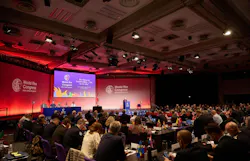
UL Research Institutes’ Fire Safety Research Institute (ULRI) is driving the ongoing Communities of Practice (CoPs) to promote solutions for the most critical global fire safety concerns after the biennial World Fire Congress, which brings together the world's fire leaders. Through monthly topic discussions, shared governance, robust information exchange and direct integration of frontline research, the organized and ongoing CoPs will expedite development.
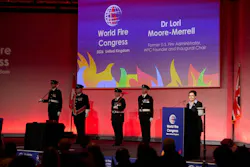
“The inaugural World Fire Congress and Communities of Practice in 2024 established the foundation for sustained and collaborative knowledge exchange, and ULRI is honored to build on that foundation,” said Dr. Lori Moore-Merrell, World Fire Congress founder and chief fire safety strategist for the Fire Safety Research Institute. “Drawing on more than a century of fire research and leadership, ULRI is bringing its scientific rigor into the global conversation, ensuring the dialogue is grounded in evidence over anecdote.”
The World Fire Congress CoPs provide the fire service with a way to exchange information, coordinate on new threats, and implement research and training internationally. Members of ULRI have access to a reliable global network, carefully selected best practices and direct interaction with top academics and their work on topics including climate adaption, EV fire risk, lithium-ion battery safety and evidence-based tactical decision-making. Each CoP will be supported by an Anchor Organization that will provide each Community with established leadership and expertise, as well as the infrastructure required for cross-national collaboration.
The following are the CoPs for 2026–2028 and their Anchor Organizations:
Climate-Driven Large Scale Events: The problem is no longer suppression but rather systemic resilience across all hazards as fire, storm, and flood events surpass projected assumptions, resource capacities and tactical doctrine of even the most well-resourced emergency response services. This community will concentrate on cross-border, all-hazard mutual-aid structures; compound cascade risk from storms, floods and wildfires; and cross-contextual pre-positioning, early warning and evacuation tactics.
Anchor Organizations: California Department of Forestry and Fire Protection (CalFire) and the United Nations Food and Agriculture Organization's Global Fire Management Hub
Artificial Intelligence and Emerging Technology: AI-powered detection, satellite monitoring, autonomous equipment, and smart PPE are examples of emerging technologies that can synthesize massive data streams and provide commanders with unprecedented situational awareness when seconds matter. However, care must be taken because these potent tools still need human oversight and governance. This community will concentrate on determining what works, disseminating evidence-based research findings, narrowing the equality gap, and developing governance and human oversight frameworks for responsible adoption.
Dubai Civil Defense is the anchor organization.
Data: The Foundation of Evidence-Driven Fire Services: Decisions made by fire services are only as solid as the supporting data. However, fire data is still dispersed, inaccurate, and infrequently exchanged across borders or jurisdictions, with severe deficiencies in settings with fewer resources. This community will prioritize minimum feasible data format and standards for low-resource environments, data governance and interoperability and a global fire intelligence ecosystem that benefits all countries.
Anchor Organizations: UL Research Institutes’ Fire Safety Research Institute and Earth Fire Alliance
Fire in Low- and Middle-Income Nations (LMICs): 95 percent of fire-related deaths and burn-related injuries occur in LMICs, making fire one of the world's most unfair killers. The toll is increased by open-flame cooking, dense informal settlements, flammable structures, and inadequately funded emergency services. This community will prioritize community-based fire risk reduction in informal settlements, technology transfer and capacity building, and sincere collaboration that puts LMIC leadership and voices front and center.
The World Bank, Africa Fire Mission and Kindling Safety are examples of anchor organizations.
Firefighting: Tactics and Training: The wildland-urban interface (WUI), lithium-ion batteries, high-rise and informal-structure fires, industrial and chemical risks and large-scale disaster co-response are all contributing factors to the fire service's increasing complexity. Firefighter training and response strategies that are standardized in one country might not be known in another, and many strategies might be cross-border transferable or require modification to meet the particular requirements of a country. This community's main goals are to close the training gap on industrial hazards, WUI and lithium-ion batteries; compare doctrine and exchange incident lessons; and progress simulation and technology-enhanced training toward common standards.
UL Research Institutes’ Fire Safety Research Institute is the anchor organization.
Firefighter Health and Safety: One of the main causes of line-of-duty deaths is occupational cancer, which puts firefighters at risk for some of the most dangerous occupational hazards of any profession. The types of dangers and the safeguards against them are still incredibly disparate worldwide. In addition to advocating for a global standard of firefighter health and safety and disseminating evidence-based findings, this community will concentrate on fostering a common understanding of the dangers associated with cardiovascular disease, mental health, cancer, and hazardous exposure.
The International Association of Fire Fighters (IAFF) and Science Alliance are anchor organizations.
Women in the Fire Service: Globally, women are still disproportionately underrepresented in civil defense and fire services. However, since women carry out 57 percent of all volunteer labor, the obstacles are not related to capacity. This community will concentrate on PPE solutions that are effective for female firefighters, policy and culture change, and recruitment, retention, and leadership routes.
Women in Fire and Women and Firefighting Australasia (WAFA) are anchor organizations.
Fire and Civil Defense in Conflict and Hostile Environments: In many countries today, firefighters and rescue workers work in an environment characterized by long-term instability, hybrid threats, and intentional attacks. These circumstances necessitate novel strategies that go beyond traditional fire doctrine for responder protection, service continuity, and legal protections. In addition to strengthening knowledge of civil defense protections under international humanitarian law and supporting workable plans for preparedness, recovery, and resilience, this community will link agencies operating in hostile or conflict-affected regions.
The International Association of Fire and Rescue Services (CTIF) is the anchor organization.
Moore-Merrell is part of the CoPs leadership, along with CoPs Ambassador Mark Hardingham. Having worked for forty years as a UK fireman, chief fire officer, and former chair of the UK National Fire Chiefs Council.
The CoPs Administrator is Diane Haithcock. As the Director and Program Manager of UL Standards & Engagement (ULSE), Haithcock is in charge of project managers and ULSE Technical Committee chairmen in the United States and Canada for standards pertaining to building materials, physical security, life safety goods and the wildland-urban interface. ULSE provides monthly meetings, research analysis and reports for CoPs members in partnership with ULRI's Fire Safety Research Institute.
The World Fire Congress is a biennial international forum that brings together leaders of fire and emergency services, government officials, researchers and partners to promote evidence-based discourse on fire and life safety issues that communities around the world face, strengthen international cooperation, and share knowledge. In 2024, the first World Fire Congress took place in Washington, D.C. Representatives from almost 60 countries attended the second World Fire Congress, which was hosted by the National Fire Chiefs Council in London on Sept. 8–9, 2026.
The Metropolitan Fire Chiefs Association (Metro Chiefs) serves as the Secretariat for the World Fire Congress, which is run by an international steering council that includes representatives from the host country. Metro Chiefs is a division of the International Association of Fire Chiefs (IAFC) and the National Fire Protection Association (NFPA). The Secretariat maintains international cooperation between events, supports host countries, and ensures continuity between Congresses.
In February 2028, Dubai Civil Defense in the United Arab Emirates will host the next World Fire Congress.
About the Author
 Ryan Baker
Associate Editor
Ryan Baker is a writer and associate editor with prior experiences in online and print production. Ryan is an associate editor for Firehouse with a master's degree in sciences of communication from the University of Wisconsin-Whitewater. He recently completed a year of teaching Intro to Public Speaking at UW-Whitewater, as part of his graduate program. Ryan acquired his bachelor's degree in journalism in 2023 from UW-Whitewater, and operates currently out of Minneapolis, MN. Baker, also writes freelances for the Ultimate Frisbee Association (UFA) in his free time, while also umpiring baseball for various ages across the Twin Cities Metro Area.