Search Is a Command Decision at Residential Fires
Key Takeaways
- Fireground commanders must utilize diverse tactics based on building conditions and staffing to search for occupants at residential fires.
- Modern fire service research validates that aggressive search by firefighters at a residential fire should occur simultaneously with fire attack.
- Fire department truck companies as well as engine companies should train to deploy ground ladders rapidly and use them aggressively when conditions at a residential fire warrant them to save occupants.
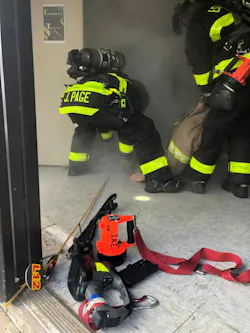
Search must be the priority at every residential fire, because life safety is our first priority. That said, many firegrounds still develop in ways that delay the very tactic that directly removes trapped occupants from the fire environment. We stretch lines, establish a water supply and assign ventilation, and sometimes we wait for another company before beginning the search. The problem is simple: Occupants don’t survive simply because the fire was extinguished. They survive because firefighters find them and remove them. As discussed in “People Before Water” (Firehouse, May 2021), the purpose of water is to create and maintain survivable space. Water saves lives, but water alone doesn’t remove victims from the structure. Search does.
Time is the enemy
The Firefighter Rescue Survey, which contains more than 5,000 documented civilian removals, reinforces what many firefighters have experienced for years. When the first-arriving company locates and removes the victim, survival exceeds 73 percent. When the second-arriving company makes the rescue, survival drops to approximately 62 percent. When the third- or fourth-arriving company effects a rescue, the percentage drops to below 59 percent and 43 percent, respectively.
These numbers aren’t meant to criticize later-arriving companies. They simply demonstrate that time is the enemy. Every minute that passes reduces survivability. The fire grows, smoke conditions worsen, toxic gases increase, and victims become more difficult to locate.
Search isn’t a tactic that occurs after the fire attack. It’s one of the reasons that we attack the fire. Furthermore, search begins long before the dispatch tones sound. It begins with training, equipment selection, staffing and resource allocation. Departments that prioritize search invest in thermal imaging cameras (TICs), portable radios, handheld lighting, ground ladders and realistic search training. They train firefighters in multiple search methods and prepare them to locate victims under a variety of fire conditions.
All methods save lives
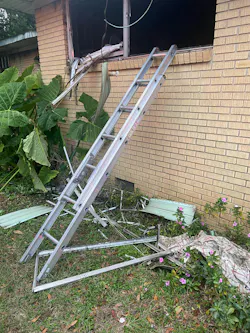
For decades, many departments assigned a two-person primary search team to enter through the front door and conduct a left-hand or right-hand search. This traditional primary search remains effective and continues to save lives, but it no longer can be our only answer. Today’s buildings, today’s fires and today’s occupants require more options.
The Firefighter Rescue Survey provides the fire service with something that it lacked for decades: large-scale rescue data that are gathered directly from firefighters who successfully removed trapped occupants. For example, approximately 40 percent of victims were located during split-search operations. Window-initiated searches, including vent-enter-search (VES) and vent-enter-isolate-search (VEIS), account for approximately 19 percent of documented rescues. Traditional left-hand and right-hand searches continue to locate occupants and account for approximately 23 percent of rescues.
The lesson isn’t that one search method is better than another. The lesson is that all search methods save lives. The building, the fire conditions, the staffing and the occupant’s location determine which search method offers the greatest chance of success. The fireground commander must understand these options and make search—and the type of search itself—a priority.
As discussed in “Fireground Commander: Understanding the Impact” (Firehouse, August 2022), fireground commanders must understand their percentage of effect on the fireground. Nothing affects civilian survival more than rapidly locating and removing trapped occupants does. Search can’t become an assignment that simply is given to whichever company arrives next. It must receive command attention early in the incident.
Many departments assign search to the second-arriving company; in some areas, the assignment comes even later in the box-alarm assignment. The Firefighter Rescue Survey challenges that thinking. If survival decreases as additional companies arrive, we must evaluate who is responsible for the search and when the search begins.
Large urban departments historically placed engine companies and truck companies on scene simultaneously, which allowed fire attack and search to occur together. Many suburban and rural departments still depend on one company to arrive and start fire attack before another company initiates the search. The first-arriving company continues to produce the highest survival rates. This doesn’t mean that the nozzle team abandons the hoseline to search, but it does mean that response models should be evaluated to determine how quickly dedicated search crews can begin to operate.
Coordinated tactics
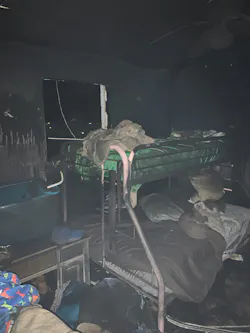
The rescue survey demonstrates something that many of us have seen repeatedly on the street: Nearly 90 percent of the crews that located and removed occupants didn’t have a hoseline. Search teams found the victim while other companies controlled the fire. In other words, operations occurred simultaneously. This directly supports the concepts that are discussed in “People Before Water.” The first- and second-arriving engine companies frequently provide sufficient staffing and booster tank water to begin fire attack while allowing search operations to proceed independently. We no longer should depend solely on the attack crew to stretch a line, locate the fire, advance to the seat of the fire, search the structure and remove occupants.
Certainly, there are situations in which the attack crew locates victims, particularly when staffing is limited, but the data clearly show that dedicated search crews produce better outcomes.
We also must remember that primary search delay reduces survivability. The six-minute window remains one of the most important benchmarks in the rescue survey. Nearly 70 percent of victims survive when they are located and removed within the first four minutes. Even when victims are removed within 10 minutes, survival remains above 60 percent. Frequently, the first two companies to arrive provide sufficient staffing to attack the fire and search simultaneously. As discussed in “People Before Water,” getting both companies directly to the scene and using booster tank water often provide enough firefighters to complete both tasks. The rescue survey supports this approach. Occupants survive when firefighters arrive with enough staffing to put water on the fire and begin to search immediately.
This is where the work that was completed by UL’s Fire Safety Research Institute becomes important. The search and survivability studies demonstrate that coordinated fire attack, search operations and ventilation improve conditions for both civilians and firefighters. Suppression decreases temperatures and reduces toxic gases. Search crews that operate simultaneously with suppression often encounter better conditions while still reaching victims early enough to make a difference. The research also reinforced what firefighters long have observed: Closed doors, isolated rooms, lower elevations and coordinated ventilation matter. Occupants who are behind closed doors continue to survive at significantly higher rates, because those spaces remain more tenable. The studies don’t suggest that firefighters wait for perfect conditions before they search. Instead, they support coordinated tactics that improve survivability while reducing risk.
NFPA 1700: Guide for Structural Fire Fighting further reinforces these concepts by connecting modern fire science to fireground operations. The document emphasizes that life safety remains the highest priority and that fire attack, search, ventilation and rescue must work together to support occupant survival. Tactics must be adapted constantly based on changing conditions, building construction and the effectiveness of current operations.
Science isn’t replacing firefighting experience. It’s validating it. For decades, firefighters have said get water on the fire, search for where people are surviving, stay low and close the door. Research now confirms many of those observations. The fire service doesn’t have to choose between firefighter safety and civilian rescue. Coordinated tactics improve both.
Ground ladders
Ground ladders continue to play an increasingly important role in civilian rescue operations. The rescue survey demonstrates high survival rates among occupants who are removed by ladder. The growth of apartment complexes in nearly every community should force departments to reevaluate their ladder complement and rescue capabilities. Many communities that once consisted primarily of one- and two-story houses now contain three- and four-story apartment buildings. Departments that historically operated 24-foot ladders might need additional 28- or 35-foot ladders to reach upper-floor windows. Short ladders that are dedicated to VES operations have become increasingly common and continue to support rapid victim removal.
Ground ladders are rescue tools. The victim who is hanging from a third-floor window can’t wait for an aerial device that might be several minutes away. Engine companies and truck companies alike should train to deploy ladders rapidly and use them aggressively when conditions warrant.
Tools
Fireground commanders also must understand the resources that are necessary to support search operations. Yes, search requires staffing. Yes, search requires companies to arrive quickly enough to operate simultaneously. However, search requires tools, too.
The TIC remains one of the most important search tools. It isn’t simply a search tool but a size-up tool that provides critical information regarding heat conditions, fire extension and victim location.
Handheld lighting remains equally important for increasing visibility and reading smoke conditions.
Portable radios allow search crews to communicate changing conditions, victim locations and progress reports.
Forcible-entry tools allow crews to reach occupants behind locked doors.
These resources support search and should be considered before the alarm ever sounds.
A command decision
Operational excellence is required to give trapped occupants a chance. Search can’t be a line on a tactical worksheet or an assignment that’s made over the radio. It requires preparation, equipment, training and commitment. It requires firefighters who understand VES, split search, oriented search, ladder deployment, thermal imaging and victim removal. The civilian who’s trapped behind a closed bedroom door has no control over when firefighters arrive, how many companies respond or what tactics are selected. Their survival frequently depends on the operational excellence of the firefighters who answer the call.
Command success comes from placing resources where they have the greatest effect. The Firefighter Rescue Survey now gives us clear direction. The first-arriving companies that operate aggressively and simultaneously continue to save the most lives. As discussed in “Below 2,000: Saving Lives, Civilian Lives” (Firehouse, April 2022), firefighters rescue occupants every day in the United States. The data clearly show that aggressive search operations work. Success builds upon success. Departments that emphasize search continue to improve their rescue capabilities.
The days of assigning search as a secondary function should be behind us. Search deserves immediate time, immediate energy and immediate resources. Search should influence response models, staffing decisions, apparatus equipment, ladder selection and training priorities. The fire service always has said that we risk our life to save lives. The rescue survey, FSRI research and NFPA 1700 provide us with data that support where those opportunities exist and how quickly they disappear. When smoke detectors fail, we can’t fail. Search isn’t simply another tactical assignment. Search is a command decision; it must remain our priority.
About the Author
 Curt Isakson
Curt Isakson
Curt “Ike” Isakson is a 30-plus-year veteran of the fire service. He worked for Escambia County, FL, Fire Rescue for 25 years. Isakson previously worked nine years for the Pensacola, FL, Fire Department, where he was assigned as a company officer on Heavy Rescue 31. Isakson currently is deputy fire chief of Fire & EMS for Bay County Fire-Rescue, which is in the Florida Panhandle. His fire service experience started at a young age as a junior firefighter with the Midway, FL, Fire District; he rose through the ranks to captain. Isakson's identification of the need for a series of special-interest fire conferences spawned the development of County Fire Tactics, which covers officer development, command officers, water on fire, high-rise operations, and leadership and tactics.