Fire Scene: House Fire Hoselines
Like many of the tactics and operations that firefighters perform at various types of structures, there are often several options. Stretching hoselines at structural fires is no exception. Of course, different types and sizes of attack hoselines are used at different types of buildings, and here we’ll focus on the initial attack hoseline at residential house fires.
Wind-driven fires
Let’s first talk quickly about wind and wind-driven fires. Wind-driven fires are rare, and most of us have only operated at one or two. But they do exist and they can impact our initial operations. Wind-driven fires must be actually driving or pushing the fire to cause us to modify our tactics. Further, the wind must be driving the fire against us or against the route that we would normally have entered with our hoseline. If the wind is blowing into our selected entry point, that may very well help our attack. No modifications required. Lastly, if the wind is minor or not causing a dramatic difficulty for the line entering the building, the attack can often still be conducted from the originally selected entry point.
Three scenarios
Let’s now look at a few situations where there is no wind. You have a one-story wood-frame house fire of ordinary dimensions. There is no visible fire out any window or visible inside, but there is a moderate smoke condition emanating from around every window and the front door. No fire location is apparent or reported, and no residents are present. Your crew is pulling the first attack line and are ready to go to work. Where should this hoseline enter the building?
The solid first choice is the front door. The front door at many, if not most, houses gives direct access to all areas of the house. Whether the fire is in the kitchen in the rear or a front bedroom to the right of the entrance, the nozzle team should be able to quickly enter and advance that first line quickly to the fire area. Remember, this is for a fire somewhere in the house but unknown to the entering nozzle team. Also, search teams that enter after the first line are protected by the first line, which is now between the fire and the front door.
But what if you arrive at the same house, but there is fire venting from a single window in the rear yard? It appears to be the smaller kitchen window that has fire showing, and several other windows have smoke pushing from around the unbroken glass panes. We now know where some fire is visible. Where should this first attack line enter the house? My answer: front door—and for the very same reason as it was selected for the first scenario above. Getting into that front door with that first line gives the nozzle team direct and unobstructed access to the kitchen, which at this operation is the known fire location. Additionally, after the hoseline enters and moves toward the fire, they are also rapidly positioning the attack hoseline to the location where it will be between the fire or burned area, which is in front of them as they advance, and the unburned area of the house, which is behind them. That gives any search crews the protection of the first hoseline while they enter and conduct a primary search for any trapped victims.
Next you arrive at a two-story frame house fire with heavy smoke showing from the two front windows on the second floor. No smoke is visible on the first floor and the attack hoseline is being pulled. Where would this line enter this house? Once again, the front door! Not only is quick access to all areas possible, but for two-story homes, the interior stairs are most often at, near or visible from the front entrance. This allows a rapid advance to the fire floor and also secures that stairway immediately so that search teams can advance behind the attack hoseline to the second floor and conduct primary searches.
In sum
The important takeaway here is that the front door—for more than just a couple of valid reasons—should be your primary entry point for your first hoseline into house fires. Think, think, think!
About the Author

John J. Salka Jr.
Battalion Chief
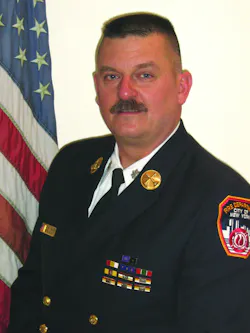
JOHN J. SALKA JR., who is a Firehouse contributing editor, retired as a battalion chief with FDNY, serving as commander of the 18th battalion in the Bronx. Salka has instructed at several FDNY training programs, including the department’s Probationary Firefighters School, Captains Management Program and Battalion Chiefs Command Course. He conducts training programs at national and local conferences and has been recognized for his firefighter survival course, “Get Out Alive.” Salka co-authored the FDNY Engine Company Operations manual and wrote the book "First In, Last Out–Leadership Lessons From the New York Fire Department." He also operates Fire Command Training, which is a New York-based fire service training and consulting firm.