Founder of Project Mayday Initiative, Don Abbott, Dies
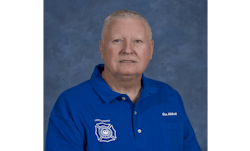
A man who dedicated his life to help prepare firefighters to save themselves has died.
The creator of Project Mayday, Don Abbott, did a deep dive into the subject and shared those findings with thousands.
Just before he died this past weekend, Abbott learned through his daughter that he had been selected to the National Fire Heritage Center's Hall of Legends, Legacies and Leaders (HLLL).
"His daughter said when she told him, he had a big smile. It was a special moment," said Greg Noll, a fellow HLLL member, adding that he knew the significance of the recognition.
Abbott is now among those honored for their contributions to the fire and emergency services and fire protection.
Noll said Abbott will long be remembered for his dedication on many fronts that continued long after he retired from the fire service.
"Without a doubt, Don made a difference. He will be missed," Noll said in a telephone interview Tuesday.
In addition to his work on the Mayday initiative, he and his wife, Bev, created Abbottville, a model of a fictitious town.
At conferences across the country, the couple would assemble their little town on table tops. It was close to HO model railroad size.
“This course is for anyone who would respond to a disaster. It’s for firefighters, EMTs, police officers, public works directors anyone who deals with disasters.” he told a reporter.
Participants were given radios and scale models of the equipment they might need to respond such as fire trucks, ambulances, cruisers and squads. The scenarios varied as well to test the crew's skills.
They made it realistic to get them to think how actions have consequences.
What many don't know, Noll said, is that the Abbotts worked not only with first responders but Major League Baseball and Verizon.
"They were quite a team, he and Bev. They were unique. They left a significant legacy behind," he said, recalling that he enjoyed lunch with his friend in August. "Don was the guy I never heard a negative word about..."
In his article that appeared on Firehouse.com in 2016, Abbott wrote: “Mayday! Mayday! Mayday!”—the three words no incident commander (IC) ever wants to hear. But what do we really know about maydays? Most of us have never experienced one, which relegates us to learning about them through articles or reports on the subject.
"After I made this realization, I decided to do my own investigation into fire service maydays What I found was that no one is really tracking them—why, when and how are they occurring, and what the has response been. So, I decided to pursue this information on my own. Most maydays don’t get much attention unless they result in injuries or death. Therefore, there is not much information-sharing on the how, when and where they take place, or what the rescue results were. The more we know about maydays, the more we can tailor our training so that we can address the aspects of our job where firefighters are most in danger..."
The Mayday Project
For the Mayday project, Abbott interviewed firefighters across the nation about the moment they called a mayday.
He found the overwhelming majority of firefighters in maydays had been worked long hours past their normal shifts, sometimes for consecutive days. Some 77 percent of maydays involved firefighters who were working past their normal hours. Of those, 23 percent involved firefighters who worked for 60 consecutive hours, while 17 percent involved firefighters who had worked for more than 72 consecutive hours, according to a published report.
"People are tired," he told the writer. "A guy I talked to for almost three-and-half hours was working his 71st hour when he had his mayday. And I asked him, 'What did you do?' And he said (he) went on runs, ate and didn't sleep much. Part of the problem is he thought the answer to the problem was Monster energy drinks. No, that ain't the answer to the problem."
But overworked firefighters aren't the only byproduct of understaffed departments, Abbott said. The "elephant in the room that nobody really wants to talk about," as he puts it, is sending firefighters in staff positions out on calls.
"Some departments have elected to put people in staff positions out in the field. Well, that's OK if those staff position people have been keeping up with training. And if they haven't, you're putting the crew that they're going to be on—and them—in jeopardy..."
About the Author
Susan Nicol
News Editor
Susan Nicol is the news editor for Firehouse.com. She is a life member and active with the Brunswick Volunteer Ambulance & Rescue Company, Oxford Fire Company and Brunswick Vol. Fire Co. Susie has been an EMT in Maryland since 1976. Susie is vice-president of the Frederick County Fire/Rescue Museum. She is on the executive committee of Frederick County Volunteer Fire and Rescue Association. She also is part of the Maryland Institute for Emergency Medical Services Systems (MIEMSS) Region II EMS Council. Susie is a board member of the American Trauma Society, Maryland Division. Prior to joining the Firehouse team, she was a staff writer for The Frederick News-Post, covering fire, law enforcement, court and legislative issues.