Plug Pulled on Online Raffles that Pennsylvania Fire Companies Rely On
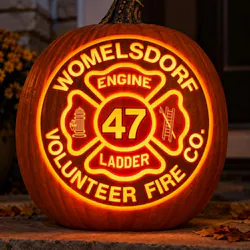
The week of July 5 was a busy and eventful one for the Womelsdorf Volunteer Fire Company.
On July 5, the company announced the winners of the previous week’s online raffles for prizes that included Delmonico steaks (4-pack), a beach dolly, a $150 Amazon gift card, a 15-pack of $10 lottery tickets, a portable sauna with steamer and a Turtlebox Bluetooth outdoor speaker.
According to posts on the fire company’s Facebook page, each raffle consisted of 54 chances, or chips, priced between $4 and $12 depending on the value of the prize. Most sold out almost as soon as the livestreamed drawing was announced.
There were nearly two dozen raffles that week, nothing unusual for the independent volunteer fire company in recent years.
It was an efficient fundraising model, certainly easier than organizing chicken dinners and bake sales to pay for apparatus maintenance, building upkeep and equipment purchases.
Each post included the organization’s Small Games of Chance license number.
Two days after posting the list of winners, the engine crew assisted Marion Township Fire Company on a two-alarm row house fire in the village of Stouchsburg, an event memorialized between announcements for other raffles.
The next day, on July 8, brought this stunning announcement: “RAFFLE NOTICE Effective immediately, the Womelsdorf Volunteer Fire Company has been advised by the PA Liquor Control Board that we must cease operating our raffles. More information will be forthcoming. Thank you, The officers and members of the WVFC”
In the blink of an eye, the faucet through which funds flowed for maintenance of firetrucks, utilities and building upgrades was shut off.
Reportedly acting on an anonymous complaint, the Pennsylvania State Police Bureau of Liquor Control Enforcement, which enforces liquor laws and the Local Option Small Games of Chance Act, determined that the company’s online raffles violated the law.
The LCE issued a warning rather than a citation that could have carried a fine, officials said. The company was told to cease the online raffles, and it complied.
Womelsdorf wasn’t alone. In Schuylkill County, Good Intent Hose Company in Llewellyn was ordered to stop its online raffles.
Terrible timing
The timing couldn’t have been worse for local fire companies, which increasingly are asked to do more with limited funds. It came less than a month after the state Supreme Court issued its landmark ruling that so-called skill games are slot machines, which are legally permitted only in licensed casinos and truck stops.
The Womelsdorf company operates a club, which it refers to as the social quarters, in a separate building that includes a bar and dining area, a bowling alley and a bingo hall.
The social quarters housed several Pennsylvania Skill games, another source of revenue before the state Supreme Court ruled the machines were not permitted under the law.
Prior to 2020, Womelsdorf, like many independent volunteer fire companies in Pennsylvania, relied on traditional fundraising efforts such as annual fund drives, chicken barbecues, hoagie sales and Friday night cookouts to help pay for apparatus, equipment, maintenance and utilities. It gets limited annual funding from the borough and Heidelberg Township, which is in its primary service area.
That all came to a screeching halt during the early months of the COVID-19 pandemic, when large gatherings were discouraged or outright prohibited. Fire companies adapted by conducting raffles virtually through Facebook, and for years the practice drew little scrutiny.
“When COVID came around, they kind of relaxed that because nobody was getting any money,” said Carl Liptak, president of the fire company’s social quarters.
Womelsdorf and other Pennsylvania fire companies used financial technology such as Square to securely process credit and debit card payments. The law requires payments for raffle tickets be accepted by cash, check or money order.
That wasn’t the only problem. Under the law, they’re supposed to be held at the same place as the license holder. The Womelsdorf social quarters, which holds the Small Games of Chance license, isn’t on the same premises as the fire company, where the livestreamed drawings were done.
“It’s a bunch of antiquated laws,” Liptak said, noting the legislation became in 1988, well before the modern-day internet and mostly cashless transactions.
In a follow-up Facebook post to its announcement, the fire company was unapologetic. WVFC and every other organization that has conducted online raffles has understood the legal uncertainty surrounding them, it said.
“We believed the benefits these raffles provided to our community outweighed the risk that they could be interpreted as violating existing liquor or gaming laws, potentially resulting in fines or the loss of licenses,” it said.
Law out of date
Technology has evolved far faster than state law governing raffles, pull-tabs, 50/50 drawings, and other small games of chance. The state does not specifically prohibit online raffles because they were never contemplated when regulations were written, Liptak said.
While several bills have been introduced in Harrisburg to address issues concerning small games of chance, none had reached Gov. Josh Shapiro’s desk until last week.
Senate Bill 416, which was unanimously approved by the Senate and signed by the governor, signature, allows cashless payments for raffle tickets. The measure permits fire companies, youth sports leagues, VFW posts and other eligible nonprofits to accept electronic payments, including credit cards, debit cards and online platforms such as PayPal and Venmo. The bill, however, does not authorizing online gaming or livestreamed raffles.
Last year lawmakers in the House introduced companion legislation that would permit eligible organizations to sell raffle tickets virtually and livestream small games of chance. The measure has languished in the Gaming Oversight Committee for more than a year.
House Bill 962, introduced by Rep. Ryan Warner, a Fayette County Republican, would allow organizations to use internet-based conferencing software applications to reveal winners. It would establish rules for online raffles, including a requirement for organizations to use available technology to ensure no out-of-state residents participate, and it would bar the use of slots and video gaming devices in identifying the winner.
The bill’s co-sponsors include Republican Reps. Eric Weaknecht, a Lower Heidelberg Township Republican, and Tim Twardzik of Schuylkill County.
Rep. Johanny Cepeda-Freytiz, a Reading Democrat and member of the Gaming Oversight Committee, said she shares the concerns of fire companies and other nonprofits that have lost revenue sources while awaiting legislative action.
As the Oct. 13 deadline approached for the removal of skill games from many nonprofit establishments approaching, Cepeda-Freytiz said there is a heightened sense of urgency among some lawmakers because volunteer fire companies, veterans organizations and fraternal clubs stand to lose significant funding.
“They’re going to be financially hurt,” she said.
Cepeda-Freytiz said she is among several legislators pushing for action and that updating the Small Games of Chance law could be one of the more achievable issues for lawmakers to address while continuing broader debates over skill games.
A bigger issue
For Womelsdorf officials, the issue is about far more than raffles and gaming laws. They say the fundraising model allowed the department to make critical investments that otherwise would have taken years to accomplish.
Chief Bob Martin said revenue generated through the raffles helped fund projects that previously seemed out of reach. Among them was the refurbishment of the company’s ladder truck. Rather than purchasing a new truck costing roughly $2 million, the department was able to rebuild its existing apparatus for about $200,000.
“There were things that we were able to do that we’ve never been able to do,” Martin said.
He said it would take years to accomplish those projects through traditional fundraising alone.
Since stopping the raffles, the company has turned the matter over to its attorney while it evaluates alternative fundraising and licensing options, Martin said. One possibility under review involves operating under a county-issued Small Games of Chance license that would be regulated locally rather than through the Bureau of Liquor Control Enforcement.
“We’re investigating options,” Martin said. “Our big hope is that the legislation changes.”
Martin, who has spent 22 years as the fire chief, said the additional funding allowed the company to replace aging equipment and improve firefighter safety. At one point, he said, some gear had deteriorated to the point where replacement was urgently needed.
While the department has made significant progress, Martin said much of its equipment remains expensive to maintain and replace.
“This is the best financial place that we’ve actually been in since I took over,” he said. “We’re finally able to do things and get stuff and keep the guys safe.”
© 2026 the Reading Eagle (Reading, Pa.). Visit readingeagle.com. Distributed by Tribune Content Agency, LLC.