Listen to Your Own 9-1-1 Call: The 'Widow Maker'
Key Takeaways
- Because cardiovascular disease is one of the most significant threats to firefighters and because its effects might not be uncovered in conventional physical examinations and blood work, firefighters can't be of the mind that "heart attacks are something that happens to others."
- The Coronary Artery Calcium (CAC) test is a crucial test for firefighters, given the health risks that they face because of the demands of the job.
In the world of firefighting, we often pride ourselves on our physical strength, resilience and ability to face danger head on. However, there’s a critical aspect of our health that many of us overlook: our heart health. Although the common perception is that burns and smoke inhalation are the leading causes of firefighter fatalities, cardiovascular disease is, in fact, one of the most significant threats to our life while we are on duty. The emotional and physical demands of our job can trigger acute cardiovascular events, which makes it imperative for us to prioritize our heart health.
Humbling reminder
My journey began on March 25, 2023, while I was working out of town in North Carolina. Like many paid-on-call and volunteer firefighters across the United States I have a full-time job. (I have more than 30 years of experience with the Monroe Township, MI, Fire Department, and I have spent more than 25 years as a construction safety manager at Aristeo Construction.) Throughout my career, I have undergone 30 years of physical exams, none of which revealed any heart issues. My blood work always has been within normal limits, with no red flags or warnings. However, on that particular day, as I climbed the three flights of stairs to my apartment, I suddenly felt an unexpected wave of fatigue wash over me.
Two weeks prior, I experienced some unusual symptoms that I dismissed as pneumonia, which I suffered from during my time in the Marine Corps. I visited a clinic, and although my vitals were normal, a chest X-ray revealed a shadow on my lung. The doctors concluded that it was pneumonia and started me on antibiotics.
Little did I know that the real issue was far more alarming: fluid building up in my lungs, a symptom of a deteriorating heart condition.
As firefighters, we often pride ourselves on our ability to push through discomfort. We train hard and always are ready to help others, yet we frequently ignore our own health. We respond to countless heart attack calls and witness firsthand the consequences of ignoring early warning signs. When it comes to our own body, we downplay our symptoms and convince ourselves that heart issues are something that happens to others.
Later that night, my breathing worsened. Each breath became heavier, and a nagging thought crept into my mind: Perhaps my pneumonia was spreading. Dismissing it as just another rough patch, I decided to head to the ER. As I walked in, a nurse recognized the urgency in my condition and immediately rushed me for evaluation. My heart rate was racing: over 160 beats per minute.
The ER staff quickly initiated cardioversion, which is a procedure that I saw many times before. It didn’t work. My heart continued its rapid, erratic rhythm, and I was informed that I needed to be transferred to a cardiac unit. The catch? It was Friday night, and no cardiologist would be available until Monday morning. The weight of those words sank in as I faced the terrifying uncertainty of whether I would live to see my family again.
After a long, stressful weekend, the cardiologist concluded that I needed an immediate triple bypass because of what’s known as the “widow maker,” which is a condition that has a survival rate of only 2 percent.
I thought to myself, I’ve run marathons, worked out regularly and had a clean bill of health for 30 years. How could this be happening to me?
Before I went into surgery, my wife and one of my sons were by my side. (My other son was in Michigan.) I believe that the conversations that my wife, who is a nurse, had with my cardiologist helped to save my life.
I still have the text messages in which I expressed to both of my sons, who now are firefighter/paramedics, how much I love them and how proud I am of who they have become.
Before I went into surgery, I told my sons to make sure that they take care of Mom if I don’t make it. Think about that for a moment.
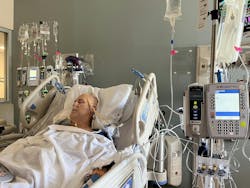
On March 29, 2023, I underwent triple bypass surgery. Waking up in the ICU, connected to tubes and machines, I was struck by the reality of my situation. I always considered myself healthy, and yet here I was, fighting for my life. My heart surgeon expressed disbelief that I survived, attributing my resilience to my overall health. After 11 days in the hospital, I returned home on April 6, 2023, feeling incredibly grateful for the unwavering support of my family, my fire department and the management team at Aristeo Construction. Their encouragement during this time made all of the difference.
My wife became my caretaker, which she embraced with strength and selflessness. During that time, I was unable to do the simplest things for myself. Her strength and selflessness in those moments at the hospital and at home left me with a profound sense of humility, one that words scarcely can capture. It was a humbling reminder of how fragile life can be and how deeply we depend on each other, particularly in times of vulnerability.
CAC test
I share my story not to seek pity nor gratitude for my service but to emphasize a critical message: We must prioritize our health. We often urge others to listen to their body, yet we neglect to do the same for ourselves.
Don’t be the firefighter who ignores the warning signs. Take them seriously. Get checked. Talk to your doctor. Don’t brush it off.
Almost exactly one year before my open-heart surgery, I had a conversation with a friend who works at Toledo ProMedica and administers the Coronary Artery Calcium (CAC) test. We discussed the importance of the test. (Little did I know how significant it would become in my health journey.) He provided me with the information to set up the test, but I procrastinated. (A year later, I found myself contemplating whether I would live or die.) The CAC test is a crucial tool for anyone, particularly firefighters, who face unique health risks because of the demands of their profession.
The need for proactive health measures can’t be overstated. Firefighters are experiencing cardiac events at all ages at an alarming rate, and early detection is key to preventing tragedy. The CAC test is an important, noninvasive, powerful diagnostic tool. When combined with an annual physical examination, the CAC test provides valuable insights into your cardiovascular health. When it comes to your health, particularly for firefighters, being proactive is crucial. The test isn’t just a recommendation; it’s a necessity that could save your life. Knowledge is power, and CAC test empowers you to make informed decisions about your heart health.
Consider this: A CAC test costs a fraction of what a funeral costs. More importantly, it’s about the emotional toll on your family and your department. Regardless of your age or health status, get a baseline CAC test. The test typically highlights family history, lifestyle choices and other common risk factors, yet it overlooks a unique risk profile: being a firefighter. This job is tough, but it’s not tougher than your health.
Early detection
I am profoundly grateful for the support I received from my family and friends. The CEO and management team at Aristeo Construction stood by me during this challenging time, to ensure that my family and I were taken care of at every step and facilitating my safe return home to Michigan.
Don’t ignore the signs. Get checked. Speak up. Listen to your body. Early detection is vital, and the CAC test should be a part of your routine health care.
This message is for every firefighter, every construction worker and anyone who pushes themselves to the limit. Your life is worth more than the grind. Your family needs you, and your fire department family needs you. Don’t be the hero who saves everyone else but forgets to save yourself. I told myself every excuse in the book, until the day that my body decided for me.
I realized how close I came to never seeing my family again. I love my jobs as a firefighter and as a construction safety manager. I swore an oath to serve and ensure the safety of those around me, and none of that would matter if I weren't here to fulfill that promise—because I almost wasn’t.
I got lucky. I got a second chance. Take your second chance now, because not everyone gets one.
About the Author
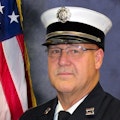 David Nadeau
David Nadeau
David Nadeau is a captain and the health & safety officer with the Monroe Charter Township Fire Department, which is located in Monroe, MI. He has three decades of service in emergency response and safety management. Among the certifications that Nadeau holds: Firefighter 1, Firefighter 2, Fire Officer 1–3, Incident Safety Officer, EMT, Incident Management All-Hazards Training, Tactical Combat Casualty Care, and Ice Rescue Technician Training. He also is senior safety manager with Aristeo Construction and a veteran of the U.S. Marine Corps.