The Most Important Meal of the Day
Key Takeaways
- Time-restricted eating (conuming all of one's calories within a 10-hour window) is particularly important for firefighters. Eating breakfast is vital to this.
- Eating dinner around 6 p.m. permits firefighters to calorie-fast for 14 hours before eating breakfast.
- A fruit smoothie with added protein and low-sugar yogurt, eggs, steel-cut oats or cottage cheese (paired with berries, avocado or a light drizzle of honey) are worthwhile breakfast options for firefighters.
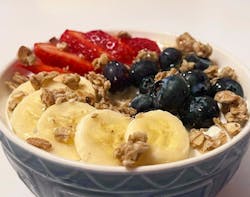
Firefighters have a diverse range of opinions and habits about breakfast. Some rely on traditional options, such as cereal, muffins, granola bars or bagels. Others reheat dinner from the night before. Finally, a number of firefighters choose to skip the meal because of a busy lifestyle or a time-restricted eating schedule.
Is there any truth to the adage that breakfast is the most important meal of the day? Perhaps there is.
Energy
New research proves the importance of breakfast. One study demonstrates that consuming breakfast (with 20 percent–30 percent of one’s daily calories) links to reduced fat storage in older adults. Participants in the study also saw lower triglycerides and improved HDL cholesterol.
One possible explanation for these results is that eating a nutritious breakfast prevents snacking on calorie-dense treats to fight hunger and maintain energy levels, as reported in “Breakfast energy intake and dietary quality and trajectories of cardiometabolic risk factors in older adults (Karla-Alejandra Perez-Vega, et al, Journal of Nutrition, Health and Aging, December 2024). A second study, “The Effects of Breakfast and Breakfast Composition on Cognition in Adults” (Rachel Galioto and Mary Beth Spitznagel, Advances in Nutrition, May 2016) shows that a healthful breakfast improves memory and cognitive function.
A healthful breakfast also can improve one’s energy levels. Firefighters’ first intake of calories “break the fast” from their last meal. Eating breakfast kickstarts the metabolism. Eating breakfast also creates an opportunity for you to choose a nutritious, disease-preventing meal. By contrast, a high-sugar, high-calorie and/or ultra-processed option can slow one’s metabolism or trigger cravings for more unhealthful foods.
Diet do’s and don’ts
With any discussion about diets, it’s important to identify one’s individual wellness goals. Losing weight and building muscle are common goals. However, longevity and disease prevention should be top priorities for any firefighter. This is because heart disease and cancer are significant causes of firefighter deaths in the United States. In fact, studies show that nearly half of all line-of-duty deaths are caused by myocardial infarctions. Studies also show healthful dieting can prevent myocardial infarction, stroke, diabetes and other diseases (“Studies Detail Heart Risks for Firefighters,” Bridget Kuehn, Circulation, August 2021). Therefore, it’s important to treat food as medicine that prevents the greatest threat to our health as firefighters.
A healthful eating plan should include fiber-rich vegetables, fruits and whole grains. Lean meats, poultry, fish, beans, eggs, fat-free or low-fat dairy products, and nuts are excellent sources of protein. Omega 3 fatty acids, which commonly are found in seafood, can reduce arterial plaque accumulation that causes cardiovascular disease. Probiotic foods, such as yogurt, kimchi and cottage cheese, can balance the gut microbiome and prevent disease. Adequate consumption of water helps to maintain cognitive function. Finally, it’s critical to avoid saturated and trans fats, sodium and added sugars. One also should be wary of chemical additives, such as emulsifiers, preservatives and food dyes.
Time-restricted eating
Eating breakfast can be compatible with time-restricted eating. This is the practice of consuming all of one’s daily calories within a 10-hour window and fasting for the remaining 14 hours every day. Research that was conducted in conjunction with the San Diego Fire-Rescue Department shows that time-restricted eating has huge benefits for firefighters, including a decrease in VLDL particle size, improvements in mental health, reduction in alcohol consumption and improvement in blood sugar (“Feasibility of time-restricted eating and impacts on cardiometabolic health in 24-h shift workers: The Health Heroes randomized control trial,” Emily Manoogian, et al, Cell Metabolism, October 2022). Eating an early dinner (perhaps at 6 p.m.) allows a firefighter to eat a healthful breakfast (perhaps at 8 a.m.) after a calorie fast of 14 hours. Given the research that’s mentioned above, this might be a better choice than eating a late dinner and skipping breakfast.
Breakfast options
Several specific healthful breakfast options are ideal for a firefighter. Low-sugar yogurt, eggs, steel-cut oats and cottage cheese can be paired with berries, avocado or a light drizzle of honey. When convenience is critical, one can opt for a fruit smoothie with added protein, such as low-sugar yogurt or peanut butter.
Varying routines with different breakfast foods can be beneficial for gut health.
Another great tip is to listen to your body to see the effect of certain foods on energy levels, cognitive function, cravings and digestive effect.
Multiple benefits
A healthful breakfast can be an important part of a firefighter’s diet. Good breakfast choices can control weight, help cognitive function, accelerate metabolism and prevent cravings later in the day. Nutritious foods choices include fiber-rich fruits and vegetables, protein-rich lean meats and probiotics combined with adequate water consumption.
Variety is key, and it’s a good idea to track changes in your body when beginning new habits and eating different foods.
About the Author
 Brian Crimmins
Brian Crimmins
Brian Crimmins is the chief of the Hoboken, NJ, Fire Department. He has a bachelor's degree from Boston College and a Master of Public Administration from John Jay College. Crimmins serves on the Health and Safety Committee of the New Jersey Career Fire Chiefs Association.