What Volunteering at the Special Olympics Taught a Fire Chief

In June, I served as the emergency operations manager for Bocce during the 2026 Special Olympics USA Games at the Larson Center on the University of Minnesota campus. Going into the week, I thought I knew what to expect. My role was to support the venue, coordinate with the medical and operations teams, address problems and help keep everyone safe.
From June 20–26, 2026 Special Olympics USA Games brought together over 3,000 athletes, 1,500 coaches and 10,000 volunteers from all 50 states.
After more than 25 years in public safety, including as an assistant fire chief, that kind of planning and issue-solving was familiar to me. What I did not expect was how much the week would change my understanding of the Special Olympics.
Expectations were not reality
Before this week, I thought of the Special Olympics primarily as an athletic competition for people with intellectual disabilities. That understanding was not necessarily wrong, but it was incomplete. I had not fully considered what it meant to the athletes, families, coaches and volunteers involved.
Once I was there, I began to see that the competition was only one part of a much larger experience.
The athletes came ready to compete. They prepared for this opportunity, were proud to represent their states and wanted to win. They were kind and respectful, but they were also serious athletes. I realized that I had previously placed too much emphasis on their disabilities and not enough on their preparation, skill and competitiveness.
Their sportsmanship was one of the things I noticed most. Athletes encouraged one another, congratulated their opponents and treated the volunteers with respect. There were times of excitement, frustration, nervousness and pride. The same emotions you would expect at any major sporting event. What stood out to me was how often the athletes remained supportive of one another, even while competing hard.
My assignment also gave me a close look at the amount of work required behind the scenes. Spectators see the competition and awards, but they do not always see the medical planning, transportation, security, communications, scheduling, accessibility needs, volunteer assignments, equipment movement, meals, hydration and weather planning.
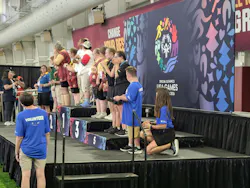
I was responsible for only one venue and one part of the overall operation, but even that required constant communication and coordination.
The volunteer experience
Large events rarely go exactly as planned. Schedules change, questions come up and unexpected problems need handling. What impressed me was how quickly people responded and how often the answer came back to the same basic question: What does the athlete need? That focus helped guide decisions throughout the venue. The operation worked because the people involved understood who they were there to support.
The volunteers were a major reason everything came together. I have worked alongside volunteers for most of my adult life, through more than 25 years in public safety, 17 years with Golden Valley, MN, Little League and 10 years volunteering with the American Lung Association. I understand what it takes to give up evenings, weekends and family time for something you believe in. Because of that experience, I do not use the phrase “service before self” lightly. During the Games, I saw it demonstrated every day.
Volunteers arrived early, stayed late and handled whatever needed doing. They guided athletes and families, moved equipment, cleaned tables, answered questions, coordinated schedules and solved problems that most people never noticed. They came from many different backgrounds, including students, retirees, healthcare professionals, law enforcement, event staff and families. I did not see people worrying about titles or recognition. I saw people notice what needed to be done and move to help.
Reflection on the positive impact
By the end of each day, I was tired, but I also felt exceptionally positive. Public safety work trains us to look for risks and anticipate what might go wrong. We spend a great deal of time dealing with staffing challenges, conflict, budgets, emergencies and the next problem that needs our attention. That mindset is necessary, but it can also narrow your view if you are not careful. The Special Olympics gave me several days to see people quietly doing good work, athletes supporting one another and families sharing moments they will remember for years.
No single dramatic moment made the week meaningful. It was the collection of smaller moments: a volunteer helping someone find the right court, an athlete congratulating an opponent, an encouraging coach, a family celebrating after a match and the appreciation everyone had for those helping. I went to the Larson Center believing I was there to support the Special Olympics, and I am proud of the work our team did. However, I came away with a better understanding of what it gave to everyone involved.
I expected to spend the week helping others. I did not expect how much the experience would give me in return.
About the Author
 Steve Baker
Steve Baker
Steve Baker retired as an assistant fire chief after 24 years in the fire service, including 10 years as a chief officer and 19 years as a training officer. He spent 18 years with the West Suburban Fire Academy and six years as a Blue Card instructor and coordinator for Hennepin and Carver counties.
Steve also served 26 years as a paramedic, including 16 years as a tactical paramedic. For 12 years, he has been an instructor and board member for the Regional Response to Active Shooter program, helping prepare public safety professionals to respond to large-scale violent incidents.