Technical Rescue Gear Purchasing Do’s & Don’ts for Fire Departments
Key Takeaways
- Technical rescue team members need as much mobility and dexterity as possible when they enter confined spaces or collapsed structures. Fire departments that buy gear from the same manufacturer from which they purchase their structural turnout gear just because it’s easier might risk a disservice to members of the team.
- Before looking at any gear, fire departments and technical rescue teams must determine the types of incidents that are common for them, to create a tailored approach that best meets the needs of responders. Defaulting to off-the-shelf options might jeopardize members’ safety and effectiveness.
- It’s key that the purchasing processes for technical rescue gear include end users in developing specifications, evaluating products, and conducting hands-on testing or trials.
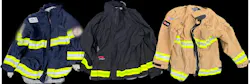
Structural collapse, trench rescue and heavy vehicle extrication incidents require gear that’s designed for the hazards that the responses present. For departments and teams that respond to these incidents, purchasing technical rescue gear is more than just selecting the newest and/or least expensive option. A well-designed purchasing plan considers the mission, applicable standards and total cost of ownership and incorporates end-user feedback.
Structural vs. technical rescue
Two key distinctions when purchasing technical rescue gear is that it isn’t structural turnout gear and no single ensemble works in every situation.
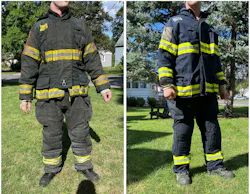
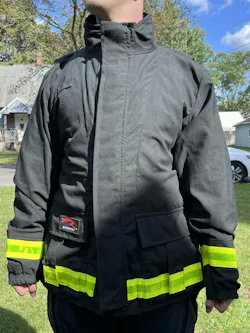
Technical rescue incidents present different risks than firefighting operations do. Rescuers need as much mobility and dexterity as humanly possible when they enter confined spaces or collapsed structures. Buying gear from the same manufacturer as your turnout gear just because it’s easier might be a disservice to members of the technical rescue team. Technical rescue gear serves a very different purpose than turnout gear does and should be purchased for that particular purpose. For example, a firefighter who performs a prolonged operation inside of a collapsed structure must be able to crawl, climb over objects and package patients. Structural turnout gear makes this next to impossible and makes the rescuer work harder and sweat more, potentially making the operation even more hazardous. Less weighty technical rescue ensembles make the job significantly easier. These ensembles are breathable, can incorporate reinforced knee and elbow padding and reinforced seat areas, and might provide flame, heat or flash resistance that’s appropriate for the anticipated hazards.
Buy for the mission
Before looking at any gear, departments and teams must determine the types of incidents that are common for them. If a team doesn’t provide structural collapse response, it probably doesn’t need a full complement of urban search and rescue gear. This sounds like a no-brainer, but we often see teams purchase this gear simply because it’s available and easier to buy off the shelf. That said, with a little homework, teams can create a more tailored approach that better meets their responders’ needs and fits their budget better.
If a department only responds to rope rescue incidents, it should focus on technical rescue helmets, eye protection, gloves that are designed for rope rescue operations (i.e., resist friction while maintaining dexterity) and harnesses that meet the team’s needs. In rope rescue, standard station wear often is sufficient.
If a department responds to confined space incidents, it can build on the above by adding lightweight, flash-resistant coats and pants for technical rescue team members when they enter a hazardous atmosphere.
In the structural collapse world, the ensemble should be supplemented with additional knee and elbow protection. Hearing protection also should be ramped up, and many helmet manufacturers incorporate this protection into their products.
Essentially, finding the appropriate level of PPE comes down to matching the gear to the hazard. Relying on structural firefighting gear at a technical rescue incident might include unnecessary weight, heat protection and bulk that might make the member less safe.
Standards
Standards should serve as the foundation for any technical rescue gear purchase. Depending on the discipline, departments or teams might need to consider different requirements or recommendations from organizations, such as NFPA, Occupational Safety and Health Administration and American National Standards Institute. Be sure that you look at the correct standards. For example, NFPA 1970: Standard on Protective Ensembles for Structural and Proximity Firefighting, Work Apparel, Open-Circuit Self-Contained Breathing Apparatus (SCBA) for Emergency Services, and Personal Alert Safety Systems (PASS) covers structural firefighting gear, while NFPA 1950: Standard on Personal Protective Equipment for Technical Rescue Incidents, Emergency Medical Operations, and Wildland and Urban Interface Firefighting addresses technical rescue gear ensembles. This was formerly covered in NFPA 1951: Standard on Protective Ensembles for Technical Rescue Incidents before the consolidation of several PPE standards.
However, compliance with a standard isn’t just a one and done. Manufacturers’ instructions and recommendations are equally important. Any technical rescue gear must be used, inspected, maintained and taken out of service in accordance with a manufacturer’s recommendations.
Involving the end user
One of the most important—and often overlooked—steps in purchasing technical rescue gear is involving the responders who will use it. We repeatedly have seen gear purchases that were made entirely by administrative staff that failed to meet the needs of operational members.
Technical rescuers take immense pride in understanding what they do; excluding them from the gear-ordering process is a critical misstep.
It’s key that purchasing processes include end users in developing specifications, evaluating products, and conducting hands-on testing or trials.
Establishing a committee for this task could be very beneficial.
Whenever possible, agencies should arrange demonstrations and field testing before committing to a large gear order. Additionally, if your agency works in very warm or very cold weather, the gear should be tested to ensure that they are adequate in that regard as well.
During field testing, end users should evaluate overall weight, durability, ergonomics, storage and ease of donning. Ensure that those who are involved in the field testing put their thoughts in writing and in a standardized form.
Some of elements, although important, are somewhat subjective. This process also adds another key dimension: Personnel become invested in the equipment before it even arrives.
Total cost of ownership
The purchase price of gear is only one component of total cost of ownership. Agencies should evaluate the cost of the gear over its lifespan. A product that costs less initially might require expensive customization to meet agency needs and might need to be repaired or replaced more often than will more expensive gear that’s of higher quality. In other words, the latter might last longer and provide a better long-term investment.
Grant funding deserves some attention here, too. A grant might cover the initial funding, but agencies are on the hook for repairs, cleaning and replacements after the grant ends. Take this into account at the time of purchase.
Personnel are No. 1
Ultimately, purchasing technical rescue gear is an investment in a team’s operational capability. The best investment is the one that meets the team’s mission and allows the team’s most prized component, its rescuers, to do their job safely and effectively.
A successful gear purchasing process begins with a needs assessment, standards research, end-user involvement and hands-on evaluation. Remember, the best PPE is designed and certified for the hazards of the assignment. When agencies approach this as a long-term, capability-building process, they can avoid costly, unnecessary expenditures while ensuring critical gear is readily available when it’s needed.
Our thanks to Corey Santmyer for assistance with the photography.
Product Spotlight
Multifunctional Boot
Certified to NFPA 1950: Standard on Personal Protective Equipment for Technical Rescue Incidents, Emergency Medical Operations, and Wildland and Urban Interface Firefighting, the TerraCross Multifunctional Boot from FireDex helps firefighters to stay ready without changing footwear between calls. It delivers confident traction andbreathable waterproof performance across unpredictable terrain and diverse response environments.
Technical Rescue Gear
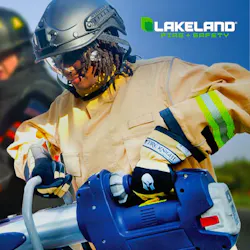
Now certified to NFPA 1950: Standard on Personal Protective Equipment for Technical Rescue Incidents, Emergency Medical Operations, and Wildland and Urban Interface Firefighting, Lakeland Fire + Safety Technical Rescue Gear delivers the protection, durability and mobility that responders need for demanding rescue operations. Designed for comfort and freedom of movement, the gear is available in multiple styles, colors and configurations to meet a department’s and team’s needs.
CBRN Protective Suit
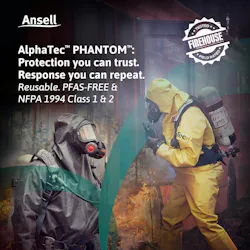
AlphaTec PHANTOM from Ansell is a reusable, repairable CBRN protective suit that’s engineered for emergency response, hazmat and tactical operations. Certified to NFPA 1994: Standard on Protective Ensembles for First Responders to Hazardous Materials Emergencies and CBRN Terrorism Incidents Class 1 & 2, the suit combines advanced protection with mobility and comfort. It’s available in front- or rear-entry zipper options, fixed or interchangeable glove attachment systems and color selections between yellow or black to support operational needs.
Product Spotlight
Multifunctional Boot
Certified to NFPA 1950: Standard on Personal Protective Equipment for Technical Rescue Incidents, Emergency Medical Operations, and Wildland and Urban Interface Firefighting, the TerraCross Multifunctional Boot from FireDex helps firefighters to stay ready without changing footwear between calls. Built for comfort, durability and protection, it delivers confident traction, breathable waterproof performance and all-day support across unpredictable terrain, long shifts and diverse emergency response environments.
https://bit.ly/418O0eu
Technical Rescue Gear
Now certified to NFPA 1950: Standard on Personal Protective Equipment for Technical Rescue Incidents, Emergency Medical Operations, and Wildland and Urban Interface Firefighting, Lakeland Fire + Safety Technical Rescue Gear delivers the protection, durability and mobility that responders need for demanding rescue operations. Designed for comfort and freedom of movement, the gear is available in multiple styles, colors and configurations to meet a department’s and team’s needs.
engage.lakeland.com/rescue-ems
CBRN Protective Suit
AlphaTec PHANTOM from Ansell is a reusable, repairable CBRN protective suit that’s engineered for emergency response, hazmat and tactical operations. Certified to NFPA 1994: Standard on Protective Ensembles for First Responders to Hazardous Materials Emergencies and CBRN Terrorism Incidents Class 1 & 2, the suit combines advanced protection with mobility and comfort. It’s available in front- or rear-entry zipper options, fixed or interchangeable glove attachment systems and color selections between yellow or black to support operational needs.
tinyurl.com/alphatecphantom
About the Author
 Jeffrey Mondo
Jeffrey Mondo is a fire protection specialist with the New York Office of Fire Prevention and Control (New York State Fire) and is assigned to the Technical Rescue Branch. He also is a rescue team manager with New York Task Force 2 Urban/Technical Search and Rescue (NY-TF2). Mondo is an adjunct instructor at Onondaga Community College who is assigned to the fire protection technology program.