Cancer Awareness Month Reinforces the Importance of Reducing Firefighter Exposure
Key Highlights
- Firefighters face elevated mortality risks from certain cancers compared with other workers.
- Cancer prevention requires multiple exposure-control practices throughout a firefighter’s career.
- Diesel exhaust can introduce hazardous gases and fine particulate matter into fire stations.
- Source-capture systems remove diesel emissions directly at the apparatus tailpipe.
- AirHAWK systems help reduce airborne contaminants that remain inside the station.
- Real-time monitoring provides ongoing insight into indoor air quality and station conditions.
- Multiple layers of protection can support firefighter health and cancer prevention efforts.

Cancer prevention remains an important occupational health priority for the fire service. A new American Cancer Society study followed more than 470,000 firefighters over 36 years and found 58% higher mortality from skin cancer and 40% higher mortality from kidney cancer compared with other workers. The study also found that prostate and colorectal cancer risk increased with longer time in the profession.
These findings reinforce the importance of reducing exposure to carcinogens throughout a firefighter's career, including exposures inside the fire station.
Building a Comprehensive Cancer Prevention Strategy
Cancer prevention involves multiple exposure-control practices, including gross decontamination, routine gear cleaning, clean cab initiatives and improved station air quality.
Because firefighters spend extended periods inside the station between calls, controlling airborne contaminants there is another part of reducing cumulative exposure. Diesel apparatus exhaust can introduce hazardous gases and fine particulate matter when vehicles are started or returned to the bay, making source capture an important control. These toxins can then get circulated throughout a fire station's HVAC if not properly captured and removed.
Reducing Exposure Inside the Fire Station
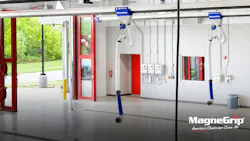
Diesel exhaust can enter the station environment whenever apparatus are started or returned to the bay if emissions are not captured at the source. Source-capture exhaust removal systems help remove diesel emissions directly at the tailpipe before contaminants spread throughout the station.
Even with source-capture technology, some airborne contaminants can remain suspended inside the station environment. AirHAWK Air Purification Systems continuously circulate station air through a multi-stage filtration process designed to capture airborne particles, gases, and other contaminants. Ultraviolet treatment helps address microorganisms such as bacteria, viruses, and mold spores before purified air is returned to the facility.
Complete Clean Air Solutions
Reducing firefighter exposure requires a comprehensive approach. Addressing diesel exhaust at the source while improving indoor air quality throughout the station helps departments create healthier environments for their crews.
Source-capture exhaust removal systems remove diesel emissions directly at the tailpipe during apparatus operation. Air purification systems help reduce airborne contaminants that remain inside the station environment afterward, while air quality monitoring provides ongoing insight into indoor air conditions.
By addressing station air quality through multiple layers of protection, departments can support firefighter health and strengthen their overall cancer prevention efforts.
For more information about MagneGrip products or to get no-cost grant assistance, visit magnegrip.com/no-cost-grant-assistance or call 1-800-875-5440.