Fire Station Planning: Getting It Right From the Start to Avoid Costly Mistakes
Key Takeaways
- Early planning and professional guidance are essential to avoid costly redesigns and operational issues in fire station projects.
- Balancing cost and long-term value—considering quality, sustainability, and longevity—is key to successful facility investments.
- Too many opinions and unclear roles can hinder project progress; a focused, well-structured team improves outcomes.
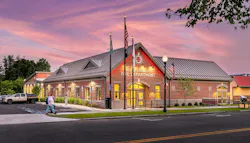
Fire and police departments, plus municipalities across the country are making critical decisions about facility design and construction, often with the best intentions, but without the full picture. The result can be costly: lost time, budget overruns, and unnecessary frustration for the people working to move these projects forward.
In today’s complex design and construction environment, what owners think they know can be just as risky as what they don’t know. Seemingly practical choices made early in the process can lead to unintended consequences later, affecting everything from daily operations and long-term maintenance to challenging public perceptions and project success.
Some of the more difficult decisions require an understanding of the difference between cost and value. The lowest upfront price is not always the best investment, and a qualified design partner can help owners make informed decisions that support their mission, protect taxpayer dollars, and deliver facilities that serve first responders and their communities for decades to come.
Early missteps can create larger problems
Sometimes, even the best intentions can create larger, unexpected issues down the line. Knowing when a feasibility study is needed can help guide the project to proper site selection, operations-based programming, accurate budgeting, and other necessary professional reports (geotechnical, drainage, hazardous materials, etc.), are all essential to the development of a new, renovated, or repurposed station, and each is connected to a larger strategy. Early decisions made without the right information or guidance can create significant challenges later in the process. If key decisions are made too quickly, rely on incomplete information, or lack input from a qualified design team, they can lead to inefficiencies, costly changes, operational limitations, and long-term maintenance concerns.
That’s why making the right choices for your facility is key from the start. A successful public safety facility begins with a solid planning framework that reflects how a department operates today and how it plans to evolve in the future. When the foundation of the design plan is thoughtful and well-informed, the project is better positioned to stay on budget, avoid unnecessary redesigns, and support its responders and the communities they serve.
Early planning missteps can include starting with floor plans before setting goals, underestimating site constraints, ignoring zoning and building codes, and commonly, sharing the belief that a larger building committee will automatically lead to better results. In practice, this “the more, the merrier” philosophy does not always translate into better outcomes. Too many opinions, unclear roles, and a list of competing priorities can slow the design process, create confusion and frustration, and ultimately pull the project away from its core goals.
Value or Cost?
Let’s face the facts: in 2026, the cost of building a new public safety facility will likely be higher than anyone would like. But that reality makes it even more important for owners to look beyond the lowest upfront costs. While the least expensive option may appear attractive at first, it rarely delivers the best long-term value.
While cost importantly focuses on making reasonable decisions in the short term based on hard numbers, value is determined by a series of long-term considerations, including quality, longevity, sustainability, and efficiency. Your qualified professional can assist in educating and presenting your project to the public. They understand the public forum and how to present in concise, easy to understand terms and can help eliminate confusion and tamp down on misinformation.
To ensure a successful project that aligns with your goals, it is crucial to strike the right balance between cost and value. Just as it would not make sense to plan for a facility that is far outside your budget, it is equally important not to sacrifice the key elements that will strengthen the facility’s capabilities and support its long-term success.
Your goal should not be to spend less. It should be to strategically invest in a resource that will remain functional and support your community for decades to come.
How an Experienced Design Team Can Support
If you’re planning to develop a new, renovated, or repurposed station, it is never too early to include a qualified design team in the conversation. Even if your exact goals for the building are not finalized, experienced designers can help facilitate early discussions, clarify key points, and ultimately turn those initial ideas into a practical plan.
A qualified design team does more than present architectural options. They help owners balance cost, operational needs, long-term value, and project goals while providing informed, professional recommendations that support the best possible outcome for the facility.
In one real-world example, a fire department received a generous donation of seven acres of land and initially believed it had secured the ideal location to bring a new station to life. However, a closer evaluation revealed significant site constraints, including narrow access from a side road, wetlands, a limited buildable area, and the site’s location in a floodplain. Without qualified guidance early in the process, the department could have invested in a site location that increased costs, limited functionality, led to the development of a white elephant, and ultimately, may not have been a viable site for the facility.
Land is arguably one of the most important investments a fire department will make. Beyond the purchase itself, site-related considerations may need to include surveys, geotechnical reports, drainage studies, environmental reviews, hazardous materials assessments, and more.
Overlooking due diligence on a site because of ignorance is not an acceptable defense and hoping nobody will notice is even more dangerous. For that reason, the first step a department should take is to engage architects and engineers who possess a key understanding of fire station building projects. If other key consultants are required for your situation, these professionals can also help you find and contract the right team.
About the Author
 Dennis A. Ross
Dennis A. Ross
Dennis Ross, AIA, is a Technical Advisor and past Emergency Services Market Director at H2M architects + engineers. Previously, he was a founder and co-owner of a nationally recognized, award-winning firm exclusively dedicated to the design of emergency response facilities across North America. He has over 40 years of focused experience in construction and development, which allows him to assess projects from multiple points of view.
He is NCARB certified; a member of the American Institute of Architects, National Fire Protection Association (NFPA), and the International Code Council; licensed in 14 states; and an honorary member of the Kingston Fire Department. His expertise in public forums, project management, land use, budgeting, construction and focus on solutions to difficult problems has enabled him to knowledgeably write and speak on a variety of emergency services station design issues. Dennis has authored many articles and presented at even more conferences. In 2001, he received the Business Council of New York State’s and National Federation of Independent Business’ annual award for “New York State Small Business Advocate of the Year.”
Dennis is currently serving on the NFPA Technical Committee on “Emergency Responders Occupational Health,” which is tasked with developing a new Standard for Contamination Control, NFPA 1585. Dennis led the task group for Chapter 5, Emergency Services Organization Facilities. In 2022, he was appointed to the NFPA - Architects, Engineers, Building Officials (AEBO) commitee as an Executive Board Member.