7 Measures That Define Effective Security Around the Fire Station
Key Takeaways
- Fire stations face threats from theft, intrusion, natural disasters, and internal vulnerabilities, requiring a balanced security approach.
- Implementing Crime Prevention Through Environmental Design principles, including security cameras and access controls, can enhance safety without hindering response times.
- Designing reinforced structures, storm shelters, and fire protection systems like sprinklers helps mitigate risks from natural and human-made hazards inside firehouses.
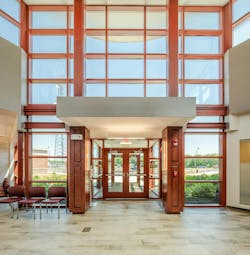
What is security? For many, the word equates to safety and there is no shortage of safety guidance for the fire service. It is primarily focused on the risks associated with response and training and these situations account for 79 percent of firefighter injuries.
According to data from the National Fire Protection Association, an estimated 53,575 firefighter injuries occurred in the line of duty in 2024. Of those, 49 percent were attributed to injuries occurring at the scene of emergency calls, 19 percent during training, and 11 percent during collisions involving fire apparatus while responding to or returning from incidents. Often neglected, safety at the firehouse itself is where an estimated five to 10 percent of firefighter injuries happen. But, security extends beyond injuries.
Today’s fire station security encompasses protection from injury, fire, storms, intrusion, theft, burglary, assault, civil disturbance, and vandalism, while providing for firefighter physical and mental wellbeing, safe response, resiliency, and public interaction. Firehouses could be made into impenetrable fortresses, but that approach is neither practical nor cost effective.
Every choice has trade-offs. The key to security without sacrifice is maximizing positive results while minimizing negative impacts. So, what causes vulnerability at fire stations? What measures can these facilities take to remain secure without sacrificing response times or breaking the budget?
Don’t sacrifice functionality
Fire stations are community buildings by nature, integrated into the neighborhoods they serve with frequent egress and ingress of personnel and apparatus. Volunteer stations are often empty during calls or extended periods.
Firefighters need clear, quick, unobstructed paths to immediately access apparatus and respond from the station. Members must keep keys readily accessible to ensure rapid, unimpeded response. This need, coupled with a tradition of keeping bay doors open during hotter months, creates opportunity for a security breach.
Practical solutions that preserve functionality might include motion alarms and cameras at the bay doors to detect unauthorized individuals, mechanical fans, ventilation systems, or HVAC systems in the bay to allow doors to remain closed. Consider standard operating procedures that indicate bay doors should not be left open if unattended.
Preventing intrusion, theft, burglary, and vandalism
Fire stations are targets for burglary. The most common items stolen include personal belongings, extrication tools, Halligan bars, saws, ventilation fans, radios, thermal imaging equipment, go-bags, electronics, compressors and generators. Even apparatus is a target, such as in 2020, in Butte County, CA, where a perpetrator stole a brush truck from a locked, but unoccupied volunteer station, driving it through the overhead door causing significant damage to the station and vehicle. The vehicle was found abandoned miles away.
The addition of an alarm system and integrated security camera system would be a practical security solution to guard against such threats. Stations can be designed to separate public functions from response functions. This should include, wherever possible, separation of public and responder site access.
It's also important to recognize that exterior security alone doesn't address the core issue: many crimes occur inside the building, once people have already gained access. All the exterior security in the world won’t mean a thing if someone gains access into the building through a security loophole.
For example, many stations now have electronic access systems at doors, though it is common to omit the Door Position Sensor (DPS). A DPS alerts users to doors that are not fully closed or propped open. Combine this with the ability to remotely view security cameras. Remember, most incidents are crimes of opportunity. It is here that Crime Prevention Through Environmental Design (CPTED) is an invaluable tool.
Concepts of natural surveillance, natural access control, territorial reinforcement, and property maintenance using lighting, fencing, plantings and path management can help make fire stations far more secure without sacrificing functionality and budget. Professionals who routinely design fire stations are intimately familiar with CPTED.
Securing personal vehicles
Another alarming trend occurs just outside the station: responders’ personal vehicles are targeted in thefts. In some reported cases, bad actors have called in false emergencies, waited for personnel to leave the station, then entered parking areas to steal items from vehicles. It's important for firefighters to not worry about their personal vehicles while responding to an emergency. To address these concerns, departments are installing non-scalable fencing around designated firefighter parking areas.
Proper lighting and strategically placed cameras further enhance security. Thoughtful traffic flow design is also essential for clearly distinguishing public entrances from those intended for first responders.
Harden against natural disasters and civil disturbances
All fire stations should have some degree of hardening based on an analysis of the likely threats to be encountered. Extra protection needs to be provided if the fire station is part of a shared public safety facility. Walls, roofs, doors, and windows are resistant to water intrusion and wind. Consider using impact resistant windows.
Laminated glazing serves to protect against both natural and human hazards while allowing transparency and natural light. A department doesn’t need to sacrifice openings to the outside to remain secure. Cost-effective high wind roofing and roof edge systems that can withstand up to 215-mile-per-hour winds are available. Include backup generators in secure enclosures and redundant mechanical systems for important spaces in the station such as the public safety answering point or emergency operations center.
It is essential that the public areas of a station convey a welcoming atmosphere, even when designed to withstand significant threats. Consider that stations are often open to the public providing essential health and safety services to communities through educational programs, events, and open houses. Isolate public and response functions with hidden security features.
For example, the City of Poughkeepsie’s public safety facility in New York features a public lobby and entry with direct access to a community room. The facility was designed to welcome the public while supporting current fire and police operations behind ballistic protection that is hidden in solid walls, ballistic doors and ballistic windows. In addition, the lower exterior windows are reinforced and frosted to limit visibility into sensitive building areas while still permitting generous natural light.
Twenty states require storm shelters in new fire stations if the fire station is in the 250-mile-per-hour tornado design wind speed zone as shown in ICC 500: ICC/NSSA Standard for the Design and Construction of Storm Shelters. The requirement extends to ventilation and power protected to the same level as the shelter. Planning for this early in the design phases will provide the best balance of security with the minimum amount of sacrifice.
To balance security, consider reinforcing only what is necessary. Such design principles were implemented for the new Saratoga County, NY, public safety facility. The core of the building design included a reinforced PSAP and EOC to withstand the impact of an F3 tornado. Fortified portions of the building include reinforced ballistic walls up to 22 inches thick and special tornado resistant doors and access corridors. Other portions of the building were designed to be sacrificial.
Built-in fire protection
NFPA statistics indicate approximately 150 station fires occur annually. Protect against this threat by building with non-combustible construction and utilizing sprinkler systems. The fire department is an advocate for sprinklers in other buildings; as such, it should set an example by making sure its own facility is fully sprinklered. While some states do not require hood suppression systems over the stove, all departments should consider this security upgrade.
Injury prevention
The easiest way to prevent in-station injuries is to follow the recommendations of the Federal Emergency Management Agency document, "Safety and Health Considerations for the Design of Fire and Emergency Medical Services Stations.” This reference guide covers essential safety and health factors for station construction and renovation and emphasizes creating environments that minimize risks to firefighters while supporting their physical and mental well-being. This guide offers useful suggestions for clearances, space organization, minimum sizing, slip and fall prevention, proper separation, and hazard reduction.
The importance of natural light
From both practical and wellness perspectives, it’s vital that firefighters have access to the outdoors and maintain clear views outside. When a station is fortified in a way that limits natural light, it can negatively affect firefighters’ mental and physical well-being.
Many stations now seek to add daylight and biophilic design elements to help connect personnel to nature and reduce stress. Similarly, stations are also dedicating space for decompression rooms and outdoor gardens to support firefighter health and wellness. An April 2018 report from the Ruderman Family Foundation revealed that public safety personnel are five times more likely to suffer from post-traumatic stress disorder and depression than the general public.
Stress and anxiety can come in many different forms for firefighters and first responders, including exposure to traumatic events, stress related to job security and budget cuts, and concerns over being understaffed. With so many factors contributing to heightened anxiety, stress, and depression, it’s essential that fire stations serve as a calming and restorative space, as well as an environment that is both secure and open.
Conclusion
In many ways, security presents a paradox. How do you secure the building without compromising response times? How do you focus on the safety of first responders within a building, while acknowledging the benefits of natural light and outdoor access?
While these are critical questions, strategic design solutions can help ensure stations remain secure without sacrificing functionality, public accessibility, aesthetic appeal, budget, or the essential elements that support firefighters’ well-being.
About the Author
 David J. Pacheco
David J. Pacheco
David J. Pacheco, AIA, NCARB is director of operations, senior architect, and senior vice president of H2M architects + engineers and was previously co-owner of a nationally recognized, award-winning architectural firm dedicated exclusively to the design of emergency response facilities across North America. Pacheco has personally designed or evaluated more than 200 fire stations, receiving accolades for his practical and aesthetically pleasing creations that respond sensitively to client needs, budget, codes, the environment, and the community.
Pacheco is licensed in 14 states and certified by the National Council of Architectural Registration Boards. He is a fire commissioner and vice-chair for Niskayuna Fire District No. 1 and an active member of the Grand Boulevard Fire Co. He chairs the Strategic Planning, Installation/Inspection Dinner and Finance committees and co-chairs the Recruitment and Retention committee. He is an active member of the ASTM E54 Committee on Homeland Security Applications.
As adjunct professor at Rensselaer Polytechnic Institute, he teaches the specifics of architectural practice. He has regularly served as an instructor on firematic issues and authored/co-authored articles, books, and national standards. He has been a juror for national fire station design awards. Pacheco has cum laude degrees in both architecture and building sciences.