Fatigue Over Technology: Is it Real in the Fire Service?
Key Highlights
- Technology has significantly improved fireground safety but can also contribute to information overload if not managed properly.
- Visual displays and simplified user interfaces are more effective than complex data presentations during high-stress incidents.
- Understanding the limits of technology and building trust through firefighter training are essential for effective adoption and use.
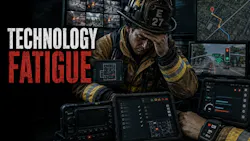
Forty years ago, fire crews responded with little more than a radio, local knowledge of where they were going, and experience. Today, there are live feed cameras, CAD updates, GPS routing, preemptive traffic control systems, digital preplans, radio traffic, digital command boards, wearable tech, and apparatus tech, all of which are put in place to assist the responders. There is no doubt that technology has helped save lives but as we pile on more layers of technology, has it become another source of firefighter fatigue?
Before you think I am suggesting that technology is bad, or causing harm, I want to shift this to ask how much technology input can firefighters reasonably absorb and process before it starts to reduce performance.
Without a doubt, the amount of information available to responders has grown exponentially in the past decade and that exponential growth is only evolving and compounding as technologies are quickening their development. So, how do you balance the lifesaving aspects of technology without overwhelming those who the tech is designed to help? The answer is not always simple but throughout my time working with students at Indiana University on researching firefighters’ adoption and user experience with technology, there were some simple concepts to understand.
First, the more critical the incident, especially one that caused increased adrenaline or emotional response, the less firefighters could process input from technology sources. Second, visual display methodologies were far more effective than any amount of writing. And third, user interfaces needed to be simplistic, have limited options, and prioritize what the responder thought was necessary.
As a department adds layers of technology, these sources of information begin competing for attention and from my experience, most of it becomes noise that gets tuned out even though it may be the most important thing to help you become successful on an incident scene. So, the truth is, while all well intentioned, unless a department spends the time to understand the people using the tech, the processes that happen in a real-life emergency response, and the limitations of the technology they purchase, it may be a significant waste of resources that can be ignored.
Understanding fatigue
Before the chief starts blaming the people for poor adoption, it is important to understand the science behind fatigue and dismissal. Humans can only process so much information before their performance declines. While there are no recent fire service-related studies, there are several in the healthcare setting that could apply. One in particular looked at healthcare staff that were exposed to varying degrees of medical system alerts. Those that received constant alerts for non-critical information were more likely to miss the one that was critical and, in some cases, fatal for a simulated patient.
When you consider every notification that the average firefighter receives personally and professionally it does not take long to realize that most of it is wasted.
Fireground discipline is one of the best ways to combat this fatigue, overload, and eventually complacency. Simple things like ensuring no PASS alarm goes off without a real emergency, acknowledging every radio emergency button activation, or keeping communications concise can help reduce overload. The question then shifts focus on what about all the other sources of information and alerts? Again, this will be based on each department’s baseline of operation for their personnel.
How to beat technology fatigue
If a department is just starting its tech journey, adding MDTs, or a digital preplan solution; they need to be sure they are intentional with its execution. If a department is already in full swing for tech use, the thought needs to shift to consolidating information sources into an easy to view and navigate option. Ideally, a singular operation platform with minimal buttons for interaction, and visual representations for the information being conveyed. Having systems with a ton of information is great for longer or more complex scenes but for the daily operations, bread and butter responses, narrow down the information to the most important thing. A few examples of what I mean:
- Fire alarm activation – building layout, alarm panel location, fire alarm zones.
- Medical call – exact location, type of issue, door/gate codes.
- Structure fire – known fire/life safety hazards, nearest hydrants, utility shutoffs, entry/egress points, occupancy load, building layout.
- Active aggressor – building layout, on site camera systems, staging areas, triage collection points.
Essentially, just as we tailor our response to each type of emergency, we should consider tailoring the information and alerts for each incident type.
Another aspect of technology is learning its limitations and being able to trust it. If a firefighter picks up a piece of tech without this baseline understanding of its operation, limits, and purpose, it will not be used to its fullest potential. Without trust, every input received from that piece of tech must undergo psychological scrutiny even if it is only subconsciously reviewed. This also adds to the potential for burnout and overload. Unlike limiting the volume of input in the previous issue addressed, this problem can only be overcome by repetition, training, and a personal commitment to using the technology provided. Ultimately, if the firefighter does not take the time to use it under lessened or simulated stress, when the stressors hit, it will get bypassed or forgotten.
Limiting exposure to unnecesary alerts
The final issue to address is overreliance and overexposure on/to technology. When technology surrounds you and it truly becomes a part of the way you live, work, and operate it is easy to forget it is there and always adding input to your life. Always getting alerts on every call your department responds to seems like a great option, especially for volunteers but unless you are on duty, have a duty to act, or are on call, do you need to know about every call 24/7? Is there a way to limit your exposure and only be notified while on duty or just for the calls to your assigned station/apparatus?
This is where notification fatigue becomes a real problem. On my personal phone, rarely will I pick it up without having to clear more than three notifications. As a fire chief, there were always more than that, some important but most were not important. Do not disturb mode, adjustments to notification settings on our response app, and even disabling notifications restored my ability to get a full night sleep unless it was truly something critical. Basically, do yourselves a favor and truly evaluate each notification you get, how time sensitive it is, and whether it will require an action from you before you allow it to use up some of your limited capacity for thought.
Whether caused by too much information from too many sources, not being able to trust the tech, or over stimulation by notifications, technology fatigue is real and needs to be reviewed and addressed before it leads to complacency and burnout. Being purposeful with technology, constantly evaluating ways to consolidate, and setting healthy boundaries are all great ways to avoid these issues.
About the Author
 Jason Moore
Jason Moore
Jason Moore is a 23-year veteran of the fire service who began his career with the U.S. Air Force as a fire protection specialist. Moore is involved with the International Association of Fire Chiefs’ Technology Council and is a founding member/associate director of the Indiana University Crisis Technologies Innovation Lab (IU Red Lab). He delivered presentations on implementing technology, using technology for community risk reduction and best practices to justify funding for innovative programs. Moore was the keynote speaker at FireFusion 2024 and is a member of the Firehouse Editorial Advisory Board.