The Most Innovative Fire Apparatus Are Built With Intention
Key Takeaways
- Some of the best fire and rescue apparatus features aren’t flashy, but they make the job safer and more intuitive for firefighters.
- Often, the trailer on tractor-drawn aerial fire vehicles is the most customizable part of the rig. Departments should take advantage of that flexibility to build an apparatus that truly fits their needs.
- Void areas in fire apparatus, such as around wheel wells and under seats inside of the cab, can be used to store essential equipment.
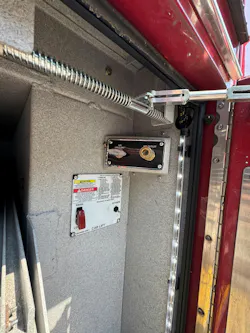
Fire and rescue apparatus form the backbone of our operational capability. The way that we plan and develop them has a direct effect on how effectively we serve the community. It demands clarity, realism and the kind of ingenuity that firefighters always have relied on. Too often, departments skip this foundational step, because they feel pressured by timelines or budgets.
Departments also might skip planning and development because of the availability of “off the line” or “in-progress” builds. These rigs come with many elements already selected or built. Although such vehicles can suit some agencies’ needs, one must remember that the concept leaves limited room for customization. If you don’t define your jurisdictional needs first, you risk accepting a rig that is almost, but not quite, right, and “not quite” becomes a daily frustration for the next 20 years or more.
Once you establish your core requirements, you can shape the apparatus around them. This is where planning becomes both technical and creative.
Strategically relevant
After building the fundamental concept for your jurisdiction, you can expand your thinking to include mutual-aid partners and surrounding communities.
Does your ladder truck complement neighboring departments’ aerial capabilities? Does your rescue rig fill gaps in regional tool caches? Does your pumper support water supply operations beyond your town? These considerations help to ensure that your apparatus isn’t just functional; it’s strategically relevant.
When a department purchases a rig that already is in progress, by the time that it sees the spec sheet, half of the decisions are locked in. This makes it more difficult to adapt the rig to unique needs or to incorporate creative solutions.
Departments often struggle here because personnel changes. In career departments, members retire or transfer. In volunteer departments, the door constantly revolves with new members and new ideas. If something on the rig isn’t ideal, people adapt, complain or work around it.
Development requires intentionality. You must capture good ideas, evaluate them and incorporate the ones that make sense. Firefighters always have been masters of improvisation, and the apparatus should reflect that.
Small concepts, big benefits
Some of the best features that are on apparatus aren’t flashy. They’re simple and smart. and they are built to solve everyday problems.
Morristown, NJ, Fire Department (MFD) Ladder 1, which is a Pierce tractor-drawn aerial (TDA), offers several examples of small decisions that make a big difference.
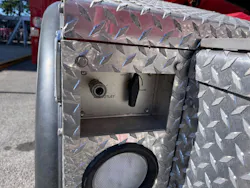
An air outlet that’s tucked inside of a tractor compartment allows firefighters to fill equipment without exposing the connection to weather or damage.
Wheel chocks are mounted on the rear tractor fender instead of hung under the body. The latter approach makes the chocks susceptible to being smashed on curbs, rocks and snowbanks.
The department also addressed one of the most overlooked issues on tillers: the drain. By piping it through the center of the fifth wheel, water is directed away from operators.
Another strong example comes from the new FDNY Seagrave tillers. The rigs’ onboard air line quick-connect is mounted on the exterior of the tractor but recessed into the body, so it remains protected from bumps and everyday wear. It’s a different approach from the MFD’s interior‑mounted outlet, but it solves the same problem: keeping the air connection accessible yet shielded.
Thinking outside the box
Vented compartments are another smart feature. Saws, fuel cans and other equipment that traditionally live in compartments that are prone to fumes or heat buildup benefit from dedicated ventilation. It’s a small detail that improves safety and reduces wear on the equipment.
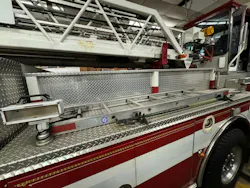
When developing the trailer on a tiller or TDA, departments must think carefully about what to mount and where to mount it. Some trailers have full compartments along both sides of the rig. Others mount ground ladders externally on both sides, such as what’s found on a pumper. Some choose to cut down compartments to increase visibility for the member who operates the tiller.
In certain designs, the cut‑down section becomes a perfect place to mount a small vent-enter-search ladder.
All of these decisions depend on operational priorities, staffing and environment. Often, the trailer is the most customizable part of a TDA.
Departments should take advantage of that flexibility to build something that truly fits their needs.
Access maximized
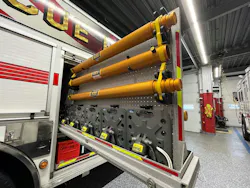
Mounting larger equipment, such as struts, requires even more forethought. Struts, hooks, poles and similar tools don’t belong tossed into a compartment. They need a dedicated space that allows quick access and safe removal.
Iselin, NJ, Fire Department’s Rescue 11‑3 is a great example of clever thinking about tool storage. The department specified a compartment for stabilization equipment that has vertical pull‑out trays. This allows crews to work off either side of the apparatus. The concept is efficient and organized and built with purpose. Stabilization equipment can be bulky. Nevertheless, when needed, it should be quickly accessible. Designing a compartment that’s specifically for it is one of the smartest decisions that a rescue company can make.
Small improvements add up
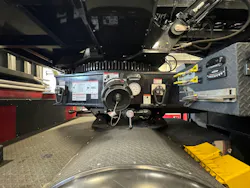
Departments continue to find creative ways to use engineered voids and dead space. Most manufacturers offer recessed exterior mounts for hooks and water cans, to keep those items accessible without cluttering the cab. Some apparatus makers cut compartments around wheel wells for extinguishers or SCBA cylinders, to maximize storage without compromising structure, with Seagrave’s TDAs being an example.
Some apparatus use voids that are located under the seats inside of the vehicle’s cab.
Both methods work, and both demonstrate how departments can use otherwise wasted space to store essential equipment. Sometimes, it’s as simple as an opening that has a strap or a small compartment that has cradles and a door.
On pumpers, something as simple as attaching cross-linked polyethylene (PEX) piping to a manual master intake valve drain keeps water off of the pump operator.
Anticipating future needs
All of the examples that are noted above highlight a core truth: Ingenuity doesn’t require major redesigns. It requires awareness, creativity and a willingness to challenge “the way that we always have done it.”
Further, apparatus planning isn’t a one‑time event. It’s a continual cycle of reevaluating what you have versus what you will need. Build times stretch years, and the rig that you order today will enter service in a different operational environment. Buildings change. Jurisdictions evolve. Staffing models shift. Technology advances. Planning for the future means building apparatus for what you need and where your department is going.
The best apparatus are built with intention. They reflect the realities of the jurisdiction, the experience of the firefighters who will operate them and the foresight to anticipate future needs. Whether it’s a recessed air outlet, a dedicated stabilization bay or a clever use of wheel‑well voids, the small decisions matter. They make rigs safer, more efficient and more durable. They ensure that the apparatus remains an asset for the next generation of firefighters.
About the Author
 Robert Policht
Robert Policht
Robert Policht, who is a Firehouse contributing editor, is lieutenant of Ladder Co. 2 of the Passaic, NJ, Fire Department. He assisted with developing and establishing the department’s response to human vs. machine incidents and is attached to the Fire Investigation Unit. Policht started his career as a volunteer and has served as a chief of department. He taught at the Bergen County, NJ, Fire Academy and is a member of the NJ Division of Fire Safety's Fire Threat Task Force. Policht has a master’s degree in emergency management and homeland security from Arizona State University and has been published in several trade publications. He is a founder of and contributor to Flow and Vent, which is a website that's dedicated to fire and rescue training.