From Fire Response to Fire Prevention: How Detroit Uses CRAIG 1300 and ArcGIS to Drive Community Risk Reduction
Key Takeaways
- Each residential fire that’s investigated by the Detroit Fire Department (DFD) contributes data, including ignition source, cause, location, occupancy type, injuries, fatalities and contributing factors, into a CRAIG 1300 platform and can be visualized through ArcGIS mapping technology. The dashboards allow department leaders to identify trends geographically, to reveal patterns that otherwise would remain hidden.
- The city of Detroit's fire investigation efforts now influence education campaigns, deployment decisions, neighborhood outreach and long-term planning.
- Securing elected and appointed officials' buy-in for a data-laden fire prevention program such as that of the city of Detroit can be achieved by providing clear explanations of the technology, how it can support residents and the ability to project tangible results.
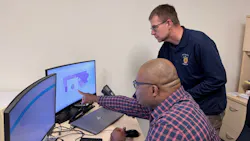
For generations, the fire service has measured success by how quickly it arrives after disaster strikes. Today, the Detroit Fire Department (DFD) is asking a different question: What if we could prevent the emergency from happening in the first place?
The crux of that question became the foundation of Detroit’s community risk reduction (CRR) program. The citywide initiative combines fire investigation data, geographic information systems (GIS) and predictive analytics to identify fire risks before they become emergencies.
Although community education remains an important component of the program, the real innovation lies behind the scenes. Detroit is leveraging CRAIG 1300, ArcGIS and detailed fire investigation data to fundamentally change how it deploys prevention resources, to allow the DFD to focus on the neighborhoods, hazards and populations that need it most.
The result is a modern, intelligence-driven approach to fire prevention that mirrors the data-driven evolution that many fire departments already embrace in emergency response.
Turning fire data into action
Every fire investigation provides valuable information.
Historically, fire investigation reports documented what happened after an incident occurred. Today, Detroit is using those same reports to predict where the next fire is most likely to happen and to try to prevent it.
Each residential fire that’s investigated by the DFD contributes data, including ignition source, cause, location, occupancy type, injuries, fatalities and contributing factors. Rather than allowing that information to remain buried in reports or spreadsheets, it’s integrated into the city’s CRAIG 1300 platform and visualized through ArcGIS mapping technology.
The dashboards allow department leaders to identify trends geographically, to reveal patterns that otherwise would remain hidden. Instead of treating the city as one large jurisdiction, Detroit now examines fire risk neighborhood by neighborhood—even block by block.
The system identifies where accidental residential fires occur most frequently, what causes drive those incidents and where prevention efforts are likely to have the greatest effect.
For Detroit, one trend immediately became clear: Electrical fires are the leading cause of accidental residential fires citywide. That finding doesn’t simply become another annual statistic. It directly influences the department’s prevention strategy. Neighborhoods that experience higher rates of electrical fires receive tailored education that’s focused on overloaded circuits, aging electrical systems, extension cord misuse and even advice on when residents should consult licensed electricians.
Cooking fires, careless smoking and appliance misuse receive similar targeted messaging in neighborhoods in which those hazards are most prevalent. Rather than delivering one-size-fits-all fire safety presentations, the DFD delivers information that residents are statistically most likely to need.
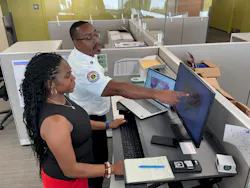
From reactive to predictive
DFD Executive Fire Commissioner Chuck Simms says that this technology represents more than a new dashboard. It reflects a shift in the department’s philosophy.
“The Detroit Fire Department is known for our highly skilled firefighting, but the future of this work depends on preventing fires,” Simms says. “CRAIG 1300 and ArcGIS allow us to transform thousands of individual fire investigations into actionable intelligence. Instead of asking where the last fire occurred, we’re asking where the next one is most likely to happen—and then getting there first.”
That proactive mindset became possible because of years of operational improvements throughout the department. The DFD responded to 3,237 structure fires in 2025, with 1,471 of them requiring firefighting operations. Although structure fires found on arrival declined by approximately 50 percent since 2017—in large part because of a significant reduction in vacant homes across the city—fire-related injuries increased significantly in 2025. This statistic alone reinforces the need to invest as heavily in prevention as in response.
For department leadership, declining fire volume created an opportunity rather than a reason for complacency.
Critical role of fire investigations
The success of Detroit’s CRR strategy begins with the Fire Investigation Division.
Every origin and cause determination provides another data point that strengthens the DFD’s understanding of community risk.
Chief of Fire Investigations Dennis Richardson believes that investigators no longer simply document fires; they’re helping to prevent future ones.
“Every investigation tells a story,” Richardson explains. “When you combine hundreds of those stories, patterns begin to emerge. Those patterns allow us to identify recurring hazards, recognize trends and provide our prevention teams with information they can use to reduce future incidents. That’s where investigations have become one of the most valuable prevention tools we have.”
This approach elevates the traditional role of fire investigations. Instead of existing primarily within the investigative process, findings now influence education campaigns, deployment decisions, neighborhood outreach and long-term planning.
In many ways, the investigation now doesn’t end when the report is completed. Instead, it becomes the starting point for prevention.

Visualizing risk across an entire city
The integration with ArcGIS provides perhaps the most powerful component of Detroit’s strategy. Interactive maps display fire causes, incident density, historical trends and risk concentrations in ways that can be understood immediately by both firefighters and community partners.
Rather than reviewing pages of statistics, department personnel can identify visually clusters of electrical fires, neighborhoods that are experiencing increased cooking-related incidents and areas of repeated appliance misuse. Those maps become operational planning tools. Community presentations are scheduled where they’re needed most. Smoke alarm installations can be prioritized. Educational materials can be customized. Resources are allocated based on measurable risk rather than assumptions.
Detroit Fire Marshal Don Thomas says that’s exactly how prevention should work.
“Community risk reduction is most effective when it’s guided by evidence,” Thomas states. “Technology allows us to understand the specific hazards facing each neighborhood instead of relying on generalized messaging. When we know what risks residents are actually facing, we can deliver prevention efforts that are far more meaningful and, ultimately, far more effective.”
Building a data culture
CRAIG 1300 was introduced to Fire Marshal Division leadership at the Michigan Fire Inspectors Society Conference as a tool for CRR. The most critical feature was the capability for the mySidewalk community data platform to utilize census data as well as internal data to create multiple platforms to perform community risk assessments. The DFD received positive feedback from another local fire department about how it was able to use CRAIG 1300 to help to prevent fires.
That said, technology alone doesn’t prevent fires. Success depends on creating an organizational culture that values data as much as tradition.
Detroit’s CRR initiative requires collaboration across multiple divisions, including fire investigations, the Fire Marshal Division, fire operations, community relations, training and executive leadership. This ensures that information flows throughout the organization rather than remaining isolated within individual units. This cross-functional approach reflects a broader evolution that’s occurring throughout the fire service.
Departments increasingly collect enormous amounts of operational data. The challenge is no longer gathering information; it’s converting that information into action. Detroit’s use of CRAIG 1300 and ArcGIS demonstrates one way to bridge that gap. Instead of allowing reports to accumulate in databases, the reports become living tools that guide prevention strategy every day.
Advice for departments considering CRAIG 1300 and ArcGIS
Securing the buy-in of elected and appointed officials can be achieved by providing clear explanations of the technology, how it can support residents and the ability to project tangible results.
Ensuring that there are staff members who are dedicated to analyzing the data and leading any CRR program is vital to the program’s success. Having someone who’s dedicated to regularly reviewing these data through the CRAIG 1300 platform helps to identify vulnerabilities and to strengthen the development of targeted education.
Additionally, this transition to a prevention-first model requires not only department buy-in but community engagement and involvement. Building, developing and strengthening relationships within the community help to amplify messaging and overall support for prevention.
Outreach remains the biggest challenge, as prevention only happens when people are educated.
A model for the future
Often, CRR is associated with smoke alarm installations, school presentations and neighborhood meetings. Those activities remain essential, but Detroit’s experience suggests that the future of CRR might be less about adding new programs and more about making existing programs smarter.
Fire investigators already collect valuable information. GIS platforms already exist. Departments already possess years, sometimes decades, of incident history. The opportunity lies in connecting those resources into a unified prevention strategy.
For Detroit, that strategy represents a significant evolution in how the department defines public safety.
Emergency response always will remain the DFD’s core mission, but if its team can use data to prevent even a fraction of future emergencies before the 9-1-1 call ever is made, the effect might ultimately prove even greater than the response itself.
The next generation of fire service innovation might not be measured solely in faster response times or new apparatus but rather by the emergencies that never happen.
About the Author
 Corey McIsaac
Corey McIsaac
Corey McIsaac is the director of media relations for the Detroit Fire Department, where she leads and executes media campaigns and strategies for the department. Prior to her appointment in September 2024, she served as deputy director of media relations for Detroit Mayor Mike Duggan. McIsaac spent 20 years in TV news at Detroit’s NBC affiliate, WDIV. During her time in TV news, she worked closely with many public safety organizations in Detroit. McIsaac earned a Bachelor of Science in Broadcast Journalism and a Bachelor of Arts in Political Science from Syracuse University.