Third-Party Building Compliance Reporting: Elevating Fire Departments' Community Risk Reduction Efforts
Key Takeaways
- A fire department’s community risk reduction process is only as good as the information that feeds it. With third-party inspection, testing and maintenance (ITM) reports, a department can prioritize, act and prevent better than via paper-and-pen record-keeping.
- Across a sample of approximately 100 authorities having jurisdiction, compliance with building codes, fire sprinkler testing, etc., that results from third-party ITM averages about 89 percent.
- After the Seattle Fire Department centralized the inspection, testing and maintenance reporting process through a web-based platform, it received 253 fewer building system-malfunction alarms in a six-month period compared with the same time frame a year earlier.
There is no honor in fighting a fire that could have been prevented.” This might be the simplest way to define all of our roles in protecting property and lives.
On March 4, 2023, someone deliberately set fire to two areas of a food-processing plant in Louisville, KY. It could have been a catastrophe. Instead, the sprinkler system suppressed the fire, damage was minimal, and no one died.
Here is the part that matters for anyone in prevention: Had that fire started a few weeks earlier, the outcome might have been very different. Beforehand, the Louisville Fire Department identified the local risk, collaborated with stakeholders and put a process in place that surfaced a critical impairment in the building’s sprinkler system. Because action was taken and the system was back in compliance within days, when the fire came, the building was ready.
That is the whole argument for third-party compliance reporting in a single story. The tools that let a department know what’s happening inside of the buildings that are in its response district are the same tools that get firefighters through the door, sometimes literally, before the box alarm ever comes in.
Gap nobody recognizes
The fire service has been remarkable at suppression: faster response times, better training, extraordinary systems. Somewhere between codes written in blood and a largely reactive posture, we kept losing the thread, and lives kept paying the cost.
Consider the reality in most jurisdictions: fire alarms untested in years; sprinkler systems carrying unresolved deficiencies; property owners who have no idea that they’re out of compliance; and fire officials who have no efficient way to find out. The data existed, somewhere, but they weren’t connected, validated or actionable. The gap never was in our intentions. It was in our infrastructure.
More than half of fire protection system failures trace back to a lack of inspection, testing and maintenance (ITM). The scale of the hidden risk isn’t abstract. Across the systems that now are tracked through third-party reporting, roughly one in 10 carries an open deficiency. Those numbers should stop us in our tracks. The single greatest predictor of whether a system works is entirely within our control: compliance.
The ‘inside door’
Community risk reduction (CRR) is a process, one that identifies and prioritizes the risk that’s in our own backyard and then deploys strategic resources to reduce how often the risk occurs and how badly it hurts. Further, a CRR process is only as good as the information that feeds it.
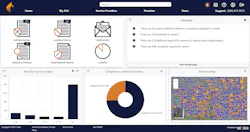
This is where third-party ITM compliance reporting earns its keep. When ITM reports flow through a neutral, web-based platform rather than a filing cabinet, scattered paper becomes a live picture. Which buildings have fire protection systems, which were inspected, which carry open deficiencies and which never filed at all? That visibility is transformational. With it, a department can prioritize, act and prevent.
The scale is real. Across roughly 100 jurisdictions that use this model, more than 661,000 fire protection systems are tracked and more than 834,000 ITM reports have been processed. For the typical department, that means visibility into about 1,900 systems—approximately 40 for every 1,000 residents—that it previously had no line of sight into at all.
I call it the inside door, and it matters operationally in every building that we protect. In a high-rise or a sprawling “groundscraper,” where aerial reach stops around the eighth floor and crews fight from the interior, the fire service surrenders its exterior options and depends entirely on the building’s own systems. However, the same principle holds at the strip mall, the corner restaurant and the small assembly hall: Knowing whether a standpipe passed its flow test, a fire pump is in compliance or a system was commissioned turns a building from a black box into a structure that we already understand. That awareness drives our response, if a response even is needed at all. The data that predict those failures already live in ITM reports, and compliance reporting is how we reach it—and through it, the building—before we arrive.
Connecting people to info
Of course, technology matters, but it isn’t the point. The point is what it connects: fire departments, inspectors, building owners, and the service providers who are in and out of buildings continually and often know the buildings’ true condition better than anyone else does. I ask service providers pointed questions: “Where should I not go to have lunch? Where should I not stay when I’m traveling?” Invariably, they know.
When those stakeholders share a single connected system, everyone gains situational awareness that nobody could assemble alone. That’s the real work: people, process and technology operating together. The best practice at the heart of CRR isn’t the software but the relationships and workflows that it makes possible.
Sustainable compliance
Standing up a platform is the starting point, not the finish line. Sustainable compliance that holds at a durable 90 percent or better across a jurisdiction comes from the services that are layered on top: report review for code-ready accuracy, deficiency remediation, contractor onboarding, structured outreach to nonreporting properties and preplan data that follow the building.
The durability is measurable. Across approximately 100 authorities having jurisdiction, compliance averages about 89 percent. Compliance doesn’t decay once the services layer is in place: roughly 87 percent after seven or more years.
The biggest objection: The data create awareness of problems that a department doesn’t have the capacity to follow through on. When a department learns that it has hundreds of properties that are out of compliance and deficiencies that are sitting unaddressed, that knowledge becomes a liability if no one has the staff to act on it. Awareness without capacity isn’t progress; it’s exposure.
That’s precisely why services are the significant difference and why a platform alone never was the answer. The right partner brings the people and capacity to drive the outreach, review the reports and chase the deficiencies that a department can’t staff on its own. Across the dataset, roughly 320,000 outreach calls have been placed to chase nonreporting properties and drive remediation, or nearly five contacts for every premises.
That support doesn’t add work. It removes it, freeing a department to cut the redundant manual processes that quietly consume its people and to do more with the staff that it already has.
This support doesn’t just raise compliance. It changes how a department deploys resources and prepares for incidents and how much confidence a community can place in the systems that are built to protect it.
How the statistics trickle out
Once data are connected, they don’t sit still. A tracked false alarm pattern points inspectors to a system that needs attention before it burns response resources that the community counts on elsewhere. A deficiency logged today becomes a code enforcement conversation tomorrow. Compliance feeds enforcement, engineering, education, economic incentives and emergency response.
Seattle shows what that looks like in practice. Recently, system-malfunction alarms climbed approximately 17 percent over five years. After the Seattle Fire Department centralized its reporting and gained real-time visibility with clear follow-up paths, the trend reversed. From January through July of the first year of the program, 253 fewer malfunction alarms were recorded compared with the same stretch the year before.
This is the quiet power of getting compliance right. It rarely makes the nightly news, but it’s the difference between arriving blind and arriving informed. Compliance isn’t a checkbox. It’s the connective link to everything that we do in fire and life safety. Of all that lies outside of our control in an emergency, it is squarely within it. The technology exists, and the data make the case. What it takes now is the will to connect the dots.
About the Author
 Jill Cotton
Jill Cotton
Jill Cotton is a leader in fire and life safety, bringing more than 20 years of expertise at the intersection of technology, community risk reduction and code compliance. She is the executive vice president of Brycer, which is dedicated to helping communities to reduce risk. Cotton leads strategic growth, authorities having jurisdiction (AHJ) partnerships, and industry engagement for the company; its platform, The Compliance Engine, drives third-party inspection, testing and maintenance compliance for fire departments and AHJs. Previously, as president and co-founder of InspectionReportsOnline.net, she helped to build one of the industry’s first third-party reporting platforms. Cotton holds a bachelor’s degree in communications from Marquette University and a master’s degree in education from Aurora University.