As Firehouse Sees It: The Mission
In 2000, the Assistance to Firefighters Grant (AFG) program was created to improve the equipment and training of career, volunteer and combination fire departments. I had the honor and privilege of serving early on as one of the original grant criteria committee members. The committee’s goal was to help establish and/or redefine the scoring criteria to prioritize the grant applications most deserving of federal assistance to fund the essential tools, equipment and training necessary to provide basic fire protection for their respective communities.
When I was first asked to participate, I wasn’t exactly sure what role I would play or how my efforts would help serve our nation’s fire service. But after several days of meetings, breakout sessions and in-depth discussions with fire service leaders and representatives from around the country, the true value of our work became remarkably clear. We had just set the criteria for the federal government to invest $500 million to help support our brother and sister firefighters in a profound way.
At the time, I can remember the members of the committee joking about how it felt to spend $500 million in two days. But joke as we may, we never lost sight of the impact of the grant process. Some departments were going to be able to purchase their first sets of PPE in decades. Others would finally be able to afford modern, compliant breathing apparatus. For some departments, this would be the saving grace they had long been searching for.
Looking back I can honestly say this was one of the most rewarding experiences of my career.
Sixteen years later, as I read the NFPA’s Fourth Needs Assessment of the U.S. Fire Service, I find myself asking, how can it be that after more than $7 billion of federal support, 49 percent of all fire departments still have not formally trained all of their personnel in structural firefighting? How can it be that 69 percent of the departments reported having SCBAs that are 10 years old or older? How can it be that more than 72 percent of departments reported crewmembers operating in PPE that’s 10 years old or older?
Truth be told, you don’t have to look far to find the answer. Fire departments from coast to coast are struggling desperately to meet the basic needs of their communities. And while the billions invested have provided for some remarkable improvements, there’s still much work to be done.
The mission of every fire department in the country—career, volunteer, urban, suburban and rural—is exactly the same: to preserve and protect the lives and property of the citizens and visitors of their communities to the best of their ability, given the resources provided. And to the credit of our firefighters, we have always found a way to achieve our mission. But the times are changing, and the tools, equipment and training we require to achieve our mission are growing increasingly more expensive and, in some cases, beyond our financial means.
To some it might seem appropriate to point fingers and direct blame at our political administrators and federal officials for not providing us with the proper funding. But casting blame or pointing fingers only serves to quell the emotions of the individual. As public servants, we must ask ourselves first and foremost, have we done everything we can to support the cause? Have we shared, publicized and promoted our successes, and told our politicians and other stakeholders how these funds have benefited our departments and the citizens of our communities? Have we provided the documentation and statistical support to justify the expenses we’ve incurred? Have we stayed connected to those who have benefited from our services and asked for their support in acknowledging the merits of our work? Have we reached out to our surrounding agencies—fire, EMS, police, etc.—to ensure that the funds we’ve been provided benefit the masses and not just a few?
The fire service is unlike any other profession in that our mission remains the same, but the means and methods by which we achieve that mission continue to change. While it may not seem fair or rational for us to need to constantly battle for the dollars we need, the alternative is simply not an option.
About the Author
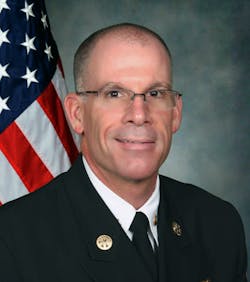
 Timothy E. Sendelbach
Editor-in-Chief
Timothy E. Sendelbach is a 30-year student and educator of the fire and emergency services, and former editor-in-chief for Firehouse. He has served as an assistant fire chief with the North Las Vegas, NV, Fire Department, as the chief of training for Savannah (GA) Fire & Emergency Services and as assistant fire chief for Missouri City, TX, Fire & Rescue Services. He is a credentialed Chief Fire Officer and Chief Training Officer and has earned a master’s degree in leadership from Bellevue University, bachelor’s degrees in fire administration and arson and an associate’s degree in emergency medical care from Eastern Kentucky University.