EFO Research Brief: Identifying Competency Gaps in the Civil Service Promotional Process
Key Takeaways
- The Executive Fire Officer research identifies a significant gap between promotional exam content and the practical leadership skills required of fire officers.
- Experience, mentorship, and observing effective leaders are crucial for developing today's fire service leadership competencies outside formal testing processes.
- Many officers feel unprepared for administrative and personnel management responsibilities post-promotion, which can impact organizational performance.
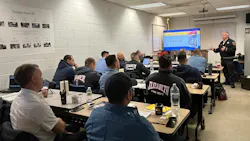
Editor's note: "EFO Research Brief" is a collaboration between Firehouse.com and the National Fire Academy's Executive Fire Officer Program to highlight the research conducted by students. Each month, we will provide a summation brief of the student's final research capstone spanning multiple fire service topics.
The responsibilities of the modern fire officer extend far beyond managing a company at an emergency scene. Today’s company officers must make sound tactical decisions while also supervising personnel, resolving conflict, documenting performance, administering department policies, mentoring firefighters, communicating expectations, and navigating the human dynamics of the firehouse. The question is whether the systems used to select those officers adequately prepare them to perform all those responsibilities.
Within the Elizabeth, NJ, Fire Department (EFD), promotion to fire captain occurs through the New Jersey Civil Service Commission promotional process. The process includes a written multiple-choice examination and two oral assessment exercises designed to evaluate fireground decision making, communication, and supervisory skills in simulated situations. Although the process provides a standardized method for ranking promotional candidates, my Executive Fire Officer capstone research paper examined whether passing that process equates to being prepared for the broader responsibilities of company level leadership.
The research was not intended to argue that tactical knowledge or standardized promotional testing lacks value. Rather, the purpose was to identify potential gaps between the competencies evaluated during the promotional process and those required of officers once they assume supervisory responsibility. That distinction matters because a promotional examination can determine who performs best within an examination process. Officer development must address a much broader question: Is that individual prepared to lead?
Examining the gap in leadership
The study used a qualitative research approach involving 20 active captains in the EFD. All participants had been promoted through the New Jersey Civil Service Commission process and possessed firsthand experience transitioning from firefighter to first level supervisor. Participants completed eight open ended questions addressing leadership competencies, promotional preparation, developmental gaps, and the potential organizational consequences of promoting officers without structured leadership preparation.
Responses were coded and analyzed thematically, resulting in six primary themes. The findings revealed a consistent concern: Much of what officers believed prepared them to lead occurred outside the formal promotional process.
Thirteen of the 20 respondents emphasized that their leadership competency developed primarily through experience, mentorship, and observing respected officers. Participants described learning from effective captains, emergency scene experience, and the examples provided by leaders they had worked for throughout their careers. Experience clearly matters. No classroom program can completely reproduce the lessons learned from operating at incidents, handling difficult conversations, supervising a company, or watching an experienced officer manage a challenging situation.
The problem is what happens when experience is the system. When development depends on being assigned to the right officer, working at the right company, or voluntarily finding a mentor, preparation becomes inconsistent. Some future officers may receive exceptional development while others receive very little.
Preparing for the test vs. preparing for the position
One of the strongest findings involved the perceived effectiveness of the promotional process itself. Fifteen of the 20 respondents reported that the civil service promotional process did not adequately prepare them for the practical and interpersonal responsibilities of becoming an officer. Participants frequently described the examination as measuring memorization, study ability, tactical knowledge, or the ability to provide an expected response rather than demonstrating overall leadership readiness. That does not mean tactical preparation should be minimized because company officers must be capable fireground decision makers. The issue is that tactical competency represents only one component of the position.
Fire officers also must manage conflict, communicate expectations, maintain accountability, evaluate personnel, understand policies and procedures, develop firefighters, document incidents, address performance problems, and understand their role within the larger organization. Those responsibilities do not disappear because they are difficult to measure on a standardized promotional examination. The research demonstrated this disconnect clearly.
Eleven of the respondents described being unprepared for administrative responsibilities following promotion. Identified challenges included incident reporting, training documentation, sick time procedures, disciplinary issues, labor agreements, departmental ordinances, and records management responsibilities. These may appear less dramatic than making decisions at a working fire, but they are part of the daily work of a company officer. Failure in these areas can affect personnel, accountability, organizational consistency, morale, and ultimately operational performance.
When development is left to chance
Fourteen respondents identified the absence of a formal or structured departmental officer development or mentoring program. Some had benefited greatly from informal mentorship, but those opportunities were largely dependent on individual relationships and assignments rather than a standardized organizational process. That finding may be among the most important lessons from the research. Good mentors are invaluable. Informal mentorship should be encouraged, but mentorship by chance is not an officer development system.
A department should be able to identify what it expects a future company officer to know and do before that member receives the badge. Those expectations should include tactical competency, but they also should address leadership, personnel management, emotional intelligence, communication, administrative responsibilities, documentation, organizational policies, ethics, and decision making.
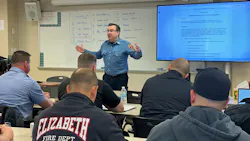
National officer development models reinforce this broader approach. NFPA 1020: Standard for Fire and Emergency Services Instructor, Fire Officer, and Emergency Medical Services Officer Professional Qualifications establishes professional qualifications encompassing responsibilities that extend into supervision, training, human resources, administration, and incident management. Other professional development models similarly combine education, experience, mentorship, evaluation, and continued professional growth. The promotional examination and officer development system therefore should not be viewed as competing processes. They serve different purposes. One selects candidates for advancement while the other prepares people to succeed after advancement.
Consequences extend beyond the officer
Nine respondents identified operational, organizational, or cultural consequences associated with promoting officers who lacked adequate preparation. Participants described issues involving inconsistent leadership, diminished trust, resentment among experienced firefighters, poor handling of supervisory situations, operational mistakes, and varying levels of compliance with officer direction.
Leadership deficiencies rarely affect only the individual officer. A poorly prepared company officer influences an entire company. Inconsistent expectations create uncertainty. Poor communication creates frustration. Mishandled personnel problems damage trust. Weak command decisions can create operational risk.
Conversely, a prepared officer can influence an organization far beyond his or her formal span of control. Effective company officers establish expectations, develop personnel, reinforce organizational values, build trust, and serve as the connection between senior leadership and firefighters operating at the company level. That makes officer development more than an educational initiative. It is an organizational readiness issue.
Moving from promotion to preparation
Thirteen of the 20 participants offered recommendations for improving officer preparation. Suggestions included increased experience requirements, fire officer education, administrative and procedural training, SOP/SOG education, incident report writing, mentorship, and formal department wide officer development programs.
For departments operating within civil service or other externally controlled promotional systems, changing the examination process may be difficult or outside the department’s authority. Developing people is not. Departments can establish a structured officer development pathway before promotion and continue that process afterward. A program could incorporate a task book or milestone-based system aligned with NFPA 1020, mentorship, scenario-based leadership exercises, administrative training, personnel management discussions, policy review, incident command development, and formal feedback following promotion.
The objective should not be to teach candidates how to pass the promotional examination. It should be to develop firefighters who are ready to assume responsibility when their opportunity comes. This study was limited to 20 captains from a single municipal fire department, and the results should not automatically be generalized to every civil service agency or promotional system.
The findings are based on participant perceptions rather than independent measurements of officer performance. Even with those limitations, the findings raise a question worth considering throughout the fire service. What are we doing between firefighter and fire officer to intentionally prepare someone to lead? Promotion may provide the title and authority. Experience will continue to develop officers throughout their careers. But organizations should not leave the foundation of leadership development to chance. Passing the test should be the beginning of the transition, not the entirety of the preparation.
About the Author
 Patrick L. Wirkus
Patrick L. Wirkus
Patrick L. Wirkus, EFO, CFO, MIFireE, is a battalion chief with the Elizabeth, NJ, Fire Department and founder of Division Command Training, LLC. He has more than two decades of fire service experience, with a focus on fireground operations, incident command, officer development, and division-level supervision. Wirkus holds a master’s degree in Fire Executive Leadership and Emergency Services Management from Columbia Southern University and is a graduate of the National Fire Academy’s Executive Fire Officer program. He holds the Chief Fire Officer designation from the Center for Public Safety Excellence and is a Member of the Institution of Fire Engineers. A published fire service author and instructor, Wirkus focuses his research and professional work on strengthening officer development, improving fireground command and supervision, and preparing current and future fire officers to lead effectively in increasingly complex operational environments.