EFO Research Brief: Recruitment and Retention of Generation Z in Small Fire Departments
Key Takeaways
- Supportive leadership, teamwork, and a strong organizational culture are primary motivators for Gen Z firefighters to join and stay with a fire department.
- Work-life balance, including alternative shift schedules like 24/72, is more important to Gen Z than overtime or higher pay, impacting retention strategies.
- Prioritizing wellness initiatives and structured career development can significantly improve recruitment and long-term retention in small fire departments.
Editor's note: "EFO Research Brief" is a new collaboration between Firehouse.com and the National Fire Academy's Executive Fire Officer Program to highlight the research conducted by students. Each month, we will provide a summation brief of the student's final research capstone spanning multiple fire service topics.
Fire departments across the nation are having trouble recruiting and retaining qualified firefighters. Many small career departments face an even greater challenge because they are competing with departments that may offer higher pay and greater promotional opportunities. Fire departments have historically relied on pensions, job security, and compensation, which are now becoming less effective in recruitment and retention.
My Executive Fire Officer Applied Research Project examined how small departments can more successfully recruit and retain Gen Z firefighters. Using a convergent mixed-method design, data was collected from nine comparable Metro Atlanta fire departments through a survey of 29 Gen Z firefighters and a semi-structured interview with 11 of those firefighters. The research was aimed at identifying what motivates this newer generation to enter the fire service, what influences them to remain with their organization, and what changes should be made for departments to continue being competitive.
Where do the key barriers lie?
The research found that the greatest barriers are not necessarily recruitment issues; they are organizational issues. Many fire departments are still operating under organizational models and workplace expectations that worked for past generations, but not for the newer generation. While these approaches were successful in the past, Gen Z is expecting a different experience.
Emerging barriers:
- Traditional recruitment methods are failing to communicate what Gen Z values most.
- Work schedules and mandatory overtime are contributing to early burnout of this newer generation.
- Departments often focus on compensation but overlook the department's culture and leadership challenges.
- Inconsistent leadership and accountability issues reduce trust and increase turnover.
- Departments may lack a clear career path, mentorship, and structured development.
Key findings
Participants identified supportive leadership, teamwork, the feeling of belonging, and organizational culture as primary reasons to join and remain with an organization. Competitive pay is important, but firefighters describe the department’s culture as the main factor that determines long-term commitment.
Work-life balance
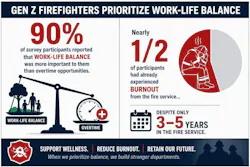
Ninety percent of the survey participants reported that work-life balance was more important to them than overtime opportunities. Nearly half of the participants had already experienced burnout from the fire service, despite only having three to five years in the fire service. The interview participants frequently described fatigue that resulted from high call volumes, mandatory overtime, and little to no recovery time. Most said they are interested in exploring alternative shift schedules, particularly the 24/72 shift schedule, due to the increased recovery time. This also gives them an opportunity to spend more time with family and friends, ultimately increasing their quality of life.
Departments that prioritize employees' overall wellness may see a significant improvement in recruitment and retention.
Employees may be the best recruiters
Word of mouth was identified as the primary recruitment method, with social media being ranked second.
Participants said that recruitment materials should clearly reflect the department's pay, benefits, retirement package, promotional opportunities, shift schedules, and anything that promotes the department's culture. If this is not clearly communicated, they may not apply.
Current employees who are satisfied with their department’s organizational culture will share their experience with their social networks, which has become a strong recruitment tool for fire departments.
Leadership and retention
Gen Z values leaders who openly communicate, explain the reason why decisions are made, empower officers, and are approachable. Inconsistent leadership, poor accountability, and lack of transparency rank among the most significant reasons firefighters consider leaving their department. Research suggests that firefighters are often retained by leaders rather than
department policies.
Career development and long-term commitment
Participants consistently expressed the importance of having clearly defined career ladders, realistic training opportunities, mentorship, and ongoing professional development.
Gen Z wants to understand not only how to perform the job, but also how to prepare for the future. Departments that visibly invest in their employees’ growth strengthen organizational commitment and improve long-term retention.
Recommendations
Fire service leaders should consider several practical actions based on these findings.
- Build recruitment strategies using the overall work experience of current employees and encourage positive word-of-mouth recruiting.
- Clearly communicate compensation, benefits, shift schedules, promotional opportunities, and organizational culture during the recruitment process. This includes social media flyers and advertisements.
- Evaluate staffing models and shift schedules, particularly the 24/72 shift schedule, to improve work-life balance and reduce burnout.
- Expand wellness initiatives to address physical fitness, mental health, and fatigue management.
- Invest in leadership development focused on communication, transparency, accountability, and mentorship.
- Create structured career development programs with a clearly defined career ladder.
- Develop formal mentoring programs that connect experienced firefighters with new
members. - Continue embracing professional social media platforms to showcase department culture, training, and community service.
Conclusion
Gen Z is not redefining the mission of the fire service; they are redefining what is expected from fire service organizations. This research demonstrates that successful recruitment and retention require more than competitive pay. Fire departments that intentionally cultivate supportive cultures, invest in leadership development, prioritize employee wellness, and create meaningful career opportunities will be better positioned to attract and retain the next generation of firefighters.
For small fire departments, this represents an opportunity rather than a disadvantage. Small fire departments may not always be able to compete with monetary benefits, but they can compete by creating workplaces where firefighters feel respected, supported, and empowered to build long-term careers.
As the fire service continues to evolve, the departments that adapt to the expectations of newer generations will be the organizations best prepared to sustain their workforce and continue providing a great service to their communities.
About the Author
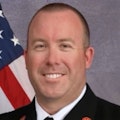 Sam Anglin
 Sam Anglin
Sam Anglin is the Division Chief of Training for Peachtree City, GA, Fire Rescue. With nearly 19 years of fire service experience, including the past 12 years with Peachtree City Fire Rescue, he has served in a variety of operational and leadership roles focused on training, officer development, organizational improvement, and emergency management. Anglin holds a Master of Science degree in public safety with a specialization in emergency management and a Bachelor of Science degree in fire science. He is also a graduate of the National Fire Academy's Executive Fire Officer (EFO) Program. His professional interests include leadership development, organizational culture, workforce development, and recruitment and retention strategies that strengthen the future of the fire service.