Texas A&M Studying Impact of Shift Work on Firefighters' Health
FRISCO — For Bryson Porter, life cycles through a three-day rhythm.
One day he’s sprinting into burning buildings on his 24-hour shift as a Frisco firefighter and paramedic. The next 48 hours, he’s off, mowing his lawn, caring for his 11-month-old daughter and catching up on sleep.
For the last few weeks, he’s been doing it all while wearing a health tracker on his wrist that monitors his sleep quality, heart rate and other health indicators. Porter is one of 115 Frisco firefighters participating in a yearlong study by an East Texas A&M University lab on how different schedules affect first responders’ health.
For the first six months of the study, firefighters will work the 24/48 schedule and in April, they will switch to a schedule where they will work 24 hours, take 72 hours off, work 48 hours and then take 72 hours off.
With data from the study, the Frisco Fire Department will decide which schedule strikes the right balance of giving firefighters more flexibility while optimizing their health and fulfilling the city’s needs, said Jake Leeper, the department’s deputy chief of administration.
Departments in North Texas and nationwide are turning away from the 24/48 schedule, interim Frisco Fire Chief Clay Carpenter said.
“Firefighters are looking at different schedules to better balance their home-work life,” Carpenter said at an October City Council meeting.
Plano is transitioning to a 24 hours on, 72 hours off schedule. This year, Allen moved to the same schedule that Frisco is testing. Fire departments in McKinney, Lewisville, Denton, Prosper and Celina run on a 48-on, 96-off schedule.
A few months ago, several Frisco firefighters advocated for the 48/96 schedule at City Hall, saying the four days of recovery would give firefighters more time for their personal lives and improve the department’s morale and retention.
At the time, City Manager Wes Pierson said the department was considering alternate schedules and expressed concern about the fatigue and risks associated with firefighters regularly working 48 hours straight.
The science of scheduling
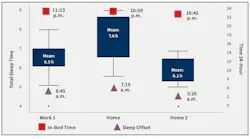
When firefighters work 24-hour shifts, they don’t necessarily stay awake the whole time. They go to sleep at the fire station around 10 p.m., Leeper said, knowing they might have to respond to an incident in the middle of the night. At 7 a.m., a new group of firefighters relieves the first group.
Michael Oldham, an assistant professor at East Texas A&M who is leading the study, compares working the 24/48 schedule to having “Sunday scaries” every three days. Firefighters often experience disrupted sleep the night before a shift and might not get to sleep during their shift.
Oldham’s research uses a wearable tracker from the brand WHOOP to collect data on the firefighters’ heart rate, physical strain and sleep recovery score. The city also paid for 59 firefighters to get six blood tests over the course of the yearlong study to test their cortisol and testosterone levels.
Comparing schedules
In April this year, more than 20 firefighters and their families attended a Frisco City Council meeting and asked leaders to consider the 48/96 schedule instead of the one day on, two days off schedule they currently work.
Leeper said the city instead chose to test a third schedule to see how a 48 hour work period and a 72 hour rest period would affect firefighters, information that would give them insight on a variety of schedules.
He said department officials were also concerned about the safety of firefighters only working 48-hour shifts.
“There’s no question that we believe a 96-hour rest period would be a benefit compared to a 48-hour rest period that they’re currently doing,” Leeper said. “The 48-hour continuously assigned work period, day after day after day … was something that was in question for us.”
Leeper said changing schedules would not cost the city extra because firefighters still work the same number of hours over a monthlong period. He emphasized department officials would take another look at switching once the study concludes.
Changing the fire service
Porter, the firefighter, said the WHOOP band data has given him insight into his health. For example, when his sleep recovery score is in the 20th percentile it takes anywhere from three to five days to catch up on sleep. He said he is hopeful the study can give people a better idea of how sleep deprivation affects firefighters.
“We already deal with a higher chance of cancer and heart attacks,” Porter said. “I think it’ll help change the fire service.”
© 2026 The Dallas Morning News. Visit www.dallasnews.com. Distributed by Tribune Content Agency, LLC.