Improved Sleep for Firefighters: A 48/96 Shift Schedule
Key Takeaways
- The transition to a 48/96 shift schedule with an 11:00 a.m. start time by the Roswell, GA, Fire Department (RFD) led to firefighters reporting an average increase in total sleep time of 41 minutes per night.
- The clearest operational finding of the RFD’s shift schedule change was firefighters no longer started their tour fatigued.
- When they were surveyed, 84 percent of spouses and partners of RFD firefighters believed that their partner’s mental health improved after the shift schedule change.
Most firefighters know the routine: The alarm clock goes off early in the morning, you move quietly, grab coffee, load your gear and drive to the station while the others who are in the household still are asleep. You might be ready to work, but are you rested enough for the job?
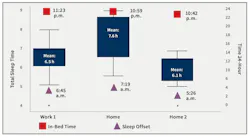
In Roswell, GA, we decided to stop guessing. Under our old 24/48 schedule with an 8:00 a.m. start, the average firefighter woke around 5:30 a.m. on commute mornings and got only 6.1 hours of sleep the night before the tour. The issue wasn’t toughness or commitment. The schedule itself created a deficit before the shift began.
The 8 a.m. start time wasn’t based on modern fatigue science nor the realities of today’s all-hazard fire service. It survived because it was familiar. Over time, tradition became policy.
Sleep Improved study
The fire service is good at managing visible risks: smoke, heat, collapse zones, cancer exposure, highway scenes and violence. Fatigue is more difficult to see. It builds quietly, shift by shift, in the people who are riding the apparatus. Sleep must be treated as a firefighter safety issue, not a comfort issue.
Roswell’s work began with questions that were raised by firefighters and a willingness to test long-standing practice. Dr. Joel Billings, who is an assistant professor at Embry-Riddle Aeronautical University, showed that firefighter sleep is shaped by call volume, schedule structure and start time. His 2022 research found that some of the shortest sleep occurred before commuting to work from home, which is driven largely by early wake times that are tied to shift start and end times.
That raised a practical question: Could changing the start and end times be a no-cost, systems-level way to improve sleep opportunity? Roswell put that theory into practice.
That question became the Sleep Improved study, which is a longitudinal partnership between the Roswell Fire Department (RFD) and Billings. Before the change, the RFD held town halls with crews, shared Billings’ research, explained the trade-offs and made clear that this was a test: change, measure, listen and adjust. The department also reviewed address, traffic and commute data by ZIP code, including 10:00 a.m., 11:00 a.m., and noon options, to identify a start time that could reduce travel burden without disrupting sleep.
From June 2024 through early 2026, the study tracked the transition to a 48/96 schedule with an 11:00 a.m. start from a 24/48 schedule with an 8:00 a.m. start. It included follow-ups, paired medical evaluations, wrist-worn sleep trackers, and daily surveys on sleep, fatigue, mood and depression.
Early results showed that home sleep improved but work-night sleep didn’t. We treated that as feedback, not failure. The department adjusted training schedules, modified wake-up practices and measured again. At 12 months, the data told a stronger story:
- Monthly commute times were reduced by an average of 60 percent (seven hours), which gives RFD firefighters more time for themselves and their family.
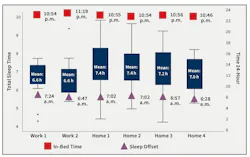
- Self-reported total sleep time rose a statistically significant 41 minutes per night. Mean sleep time, which was measured by wrist-worn sleep trackers, improved to 7.0 hours per night from 6.7 hours.
- Home sleep improved to 7.2 hours per night from 6.9 hours.
- Commute-night sleep, or the last night before the shift, improved to 7.0 hours per night from 6.1 hours.
- The dramatic swings between work nights and home nights largely disappeared.
In plain terms, the pattern flattened. Firefighters no longer were shorting sleep before the tour and trying to recover later. Sleep became more consistent, more normal and more sufficient.
Statistically significant improvements
A 41-minute gain might not sound dramatic until you do the career math. Across 25 years, that’s roughly 6,200 additional hours of rest that a firefighter otherwise never would recover. More importantly, the group crossed the seven-hour threshold that’s recommended by the American Academy of Sleep Medicine.
The clearest operational finding was this: Firefighters no longer started the tour fatigued. Under the 24/48 schedule with an 8:00 a.m. start, validated daily survey data showed elevated tiredness on work and commute mornings. Under the 48/96 schedule with an 11:00 a.m. start, those measures shifted toward feeling rested. That isn’t just wellness; it’s readiness.
The health and wellness findings moved in the same direction. Statistically significant improvements included:
- Self-reported wake time on the morning of the commute to work shifted to 7:00 a.m., and wake time on the morning that firefighters ended their shift was 7:27 a.m.
- Poor sleep quality, which was measured by utilization of the Pittsburgh Sleep Quality Index, dropped to 36 percent from the previous 67 percent.
- High fatigue scores fell to 10 percent from 40 percent.
- Positive depression screenings dropped to zero from 12 percent.
- Mood shifted significantly toward a more pleasant, less negative state.
Other results were favorable, though not statistically significant in this sample:
- Positive post-traumatic stress disorder screens dropped to 10 percent from 19 percent.
- High-risk sleep apnea screens fell to 32 percent from 40 percent.
Among 24 firefighters with paired medical evaluations, body fat decreased, triglycerides dropped by more than 46 points and VLDL, which is a cholesterol marker that’s associated with cardiovascular risk, improved significantly.
We also surveyed 32 firefighter spouses and partners, because a schedule that improves operations but creates strain at home isn’t a complete solution.
Their responses were largely positive:
- 90 percent reported overall satisfaction with the schedule change.
- 84 percent believed that their partner’s mental health improved.
- 78 percent reported greater help at home.
- More than 70 percent said that their partner was more present when the person was off duty.
The lesson
The 11:00 a.m. start wasn’t perfect. Not every measure improved; aerobic fitness testing declined, although likely on testing differences, and morale slipped one step while staying positive. The most common concern was less family time on transition days, and that matters. A 48/96 schedule also might not fit agencies that have heavy overnight call volume, long transports, frequent mandatory overtime, staffing instability or commute patterns that erase the recovery benefit.
The lesson isn’t that the city of Roswell found the universal answer. The lesson is that the process is transferable. The RFD took a firefighter-raised question seriously, reviewed the research, worked with outside expertise, communicated openly, tested the change, measured the results and adjusted after implementation.
In February 2025, the RFD received the Senator Paul S. Sarbanes Fire Service Safety Leadership Award. That recognition belongs to the men and women of the RFD who were willing to test, measure, listen and adjust.
This wasn’t a perfect study. The sample was modest, actigraphy completion was lower than hoped, and the findings reflect one department’s experience. However, the method is replicable, the data are real, and the direction is clear.
Will a 48/96 schedule with an 11:00 a.m. start work everywhere? That is the wrong question. The better question is what is your current schedule based on? If the answer is tradition, convenience or “we have always done it this way,” can you afford the cost?
The diseases that kill firefighters accumulate quietly, shift by shift, in bodies running chronically short on sleep. We can’t remove every hazard from this profession, but we can stop manufacturing the ones that we built ourselves.
Don’t guess. Measure. Our firefighters have earned that much.
Product Spotlight
Station Alerting
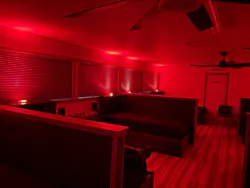
The BunkAlert from EaseAlert wakes the right crew with the most effective, least-disruptive alerts to late-night calls. Featuring an adjustable haptic motor and ramping red LEDs, it reliably wakes even the heaviest sleepers without the heart-pounding startle of traditional tones. A built-in touchscreen enables unit-specific alerting, to ensure that only assigned crews are awakened.
Bed Frame Set
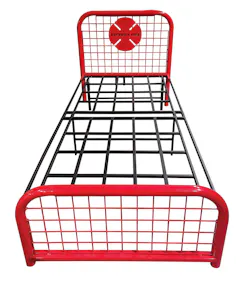
Create a clean, organized sleeping space with GearGrid’s Bed Frame Set. Built from durable, American-made steel, it elevates mattresses off of the floor to improve airflow, simplify cleaning and maximize under-bed storage. Designed for demanding fire station environments, it delivers long-lasting strength, easy maintenance and dependable performance day after day.
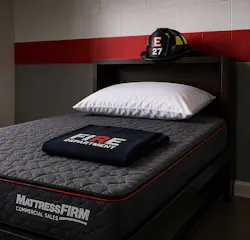
Mattresses & Bedding
Mattress Firm Commercial Sales is proud to support fire departments nationwide with dependable, cost-effective sleep solutions that are designed for those who serve around the clock. As one of the nation’s largest bedding purchasers, we offer wholesale pricing, nationwide delivery and dedicated account support. From renovations to new builds or replacements, we help to create comfortable spaces that promote restorative sleep and readiness.

Bunkroom Furniture & Mattresses
FireStationFurniture.com offers a line of bunkroom furniture and mattresses that help crews to maximize their rest time, so they are ready when the tones sound. The company’s Firefighter, Engineer, Lieutenant, Captain and Chief mattresses all are Made in the USA. They are handcrafted from the finest materials to ensure quality and durability. Each features different construction and offers a unique feel, from more “comfortable” for those who are looking for a softer feel to more “supportive” for those who are looking for a firmer feel. We offer both all-foam and “hybrid” foam and spring construction. The company also offers a variety of beds (half-bunk or full-bunk, twin or twin XL), with options in wood, steel and laminate construction. A variety of storage options make efficient use of the available space.
About the Author
 Joseph Pennino
Joseph Pennino
Dr. Joe Pennino is deputy city administrator for planning, performance and innovation for the city of Roswell, GA. He previously served as fire chief and emergency manager for the Roswell Fire Department. Pennino coaches executives and public safety leaders and hosts The Leadership Shift podcast. He holds a doctorate in public administration from Valdosta State University and is a certified Project Management Professional.