Building Fire Stations Through Uncertainly: Navigating Budgets in a Challenging Market
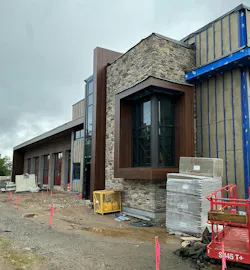
Whether you’re building a new station or renovating an existing one, establishing a reliable budget is often the most critical and challenging step toward a successful project. Unforeseen challenges during planning and construction phases can be difficult to anticipate, particularly in a challenging economic environment where their scope and financial impact are increasingly unpredictable.
This challenge has only intensified over the past year, as shifting tariff policies and rising material prices have contributed to higher bids, schedule changes, and construction cost overruns.
During uncertain times, project owners should get creative and utilize budgeting resources available to help offset unforeseen costs, such as design and owner’s construction contingencies. Ultimately, factors such as the balance between hard and soft costs, project timing, geographic location, and fluctuating material prices will significantly affect the overall budget. By accounting for these variables early, and working with qualified project teams, owners can better anticipate challenges, evaluate alternative options, and make informed decisions that will lead to the best possible outcomes.
What’s included in your budget?
To understand the total project budget, it is important to examine the individual cost categories it includes. Among those breakdowns is the key distinction between hard and soft costs. While hard costs make up the tangible, physical expenses of a project soft costs are the indirect expenses that can occur before, during, and after construction, such as professional fees, administrative costs, permitting and special inspection fees, and insurance rates. Soft costs also include items such as furniture, fixtures, and equipment, often called “FFE.” Together, these totals combined to make up a budget’s total cost.
Despite their differences, both hard and soft costs become more difficult to predict in a challenging economy. Hard costs may increase as material prices begin to vary, labor costs increase, and supply delays lead to increased expenses. Soft costs may also rise as financing and insurance expenses increase and scheduling uncertainty causes further delays.
With these variables in mind, and because a project scope is not fully defined when the initial budget is prepared, a design contingency should be included to account for unforeseen costs as plans develop. A design contingency can be thought of as a financial provision for uncertainties that may develop as a project develops. For example, a project budget finalized in late 2025 may not have accounted for subsequent economic impacts felt today. Including a five percent design contingency would now be seen as a smart investment to address those unexpected costs without disrupting a project’s timeline. It should be noted that a design contingency may often start out larger (between 10 and 20 percent) at the beginning of the project, but also reduce as the design proceeds and becomes more detailed. By the time the project is fully documented and ready for bidding & procurement, the design contingency can be reduced to zero, or slightly above.
An owner contingency can also be added to provide additional security against unforeseen construction challenges. This contingency often helps cover owner-requested scope changes, unforeseen conditions, changes requested by authorities having jurisdiction (AHJ’s), but can also support during market uncertainty.
The cost of waiting
When market conditions worsen, it’s a natural temptation to delay a project and wait for costs to improve. However, even with a stabilized economy, owners should still anticipate that project costs will naturally increase over time through inflation and increased labor rates. That’s why owners should consider adding escalation fees within their budgets to offset expected project costs. While general inflation may be around three percent each year, escalation rates can reach five percent, depending on material, labor, and equipment requirements, and are also affected by the geographic location of the project. Over the course of a project, these costs can increase quickly.
When looking at cost trends, owners should caution against looking at national averages and should instead validate escalation rates against current local market conditions. National trends provide only broad context. Comparable facilities may cost much less in another region because labor and installation costs differ, even when materials come from similar sources. For example, a project in the New York Metropolitan region may cost upwards of $850 per square foot, versus a project in the rural mid-west at $500 per square foot. Both projects may be utilizing steel from Canada, however, labor costs in these regions vary significantly.
Delaying a project or bid by as little as six months can significantly increase costs, even if economic conditions improve or the project scope is reduced. In playing the waiting game, owners will likely face higher future costs while being forced to make difficult decisions amid continued ambiguity. In many cases, owners are forced to reduce square footage in order to meet the original budget. The time lost equates to a smaller building, for the same price (or more in some cases).
Case studies: A path forward
The project team and representatives of a rural New York fire department had to think creatively when unforeseen material cost increases prompted discussions about change orders. The project was bid in 2024, awarded in 2025, and scheduled for completion in 2026.
Despite the department doing all the necessary due diligence required for a new station, including completing a comprehensive feasibility study, unforeseen delays and increased costs set the project timeline back. Working together, the project team and department amended the original project timeline and developed strategies to reduce soft costs associated with the original bond, helping to fall within the intended budget. In most cases, time is money. Establishing recovery schedules can help speed the completion of a project. In some cases, allowing out-of-sequence work can recover time lost and help bring the project back within budget, while also avoiding costly delay claims.
In another example, a Long Island-based fire district executed the development of a new district administrative building. For this project, a municipal bond was approved in 2025, and bidding occurred in spring 2026, shortly after market conditions worsened due to worldwide tensions in the middle east. Using value engineering practices and creative solutions, the project team worked with owners to address changing costs to ensure the project closely aligns with its original budget. Understanding that simply cutting square footage was not an option, the entire design, building systems, all materials and finishes, and soft costs were scrutinized. Through out-of-the-box thinking and creative value engineering, the project was brought back into budget and moved forward.
The role of project teams in supporting the station
Owners are encouraged to engage with qualified professionals such as architects, engineers, construction managers, owners project managers, or cost consultants who understand localized pricing. These professionals help owners navigate budgets through local cost knowledge, creative design solutions, and the potential alternates process.
Alternates allow project teams to identify scope that can be incorporated or omitted to help manage the overall budget. For example, a concrete apron instead of heavy-duty asphalt would be a great alternate to include. If the bids come in low, the owner may accept the inclusion of the alternate. If the bids come in too high, they may omit the alternate but keep the project moving. Together with value engineering, this strategy provides owners with greater flexibility, improves constructability, and helps reduce costs without negatively impacting performance. While these strategies may require adjustments to the project’s original scope, they offer practical alternatives that will align with the project’s overall goals.
About the Author
 Aubrey Dunn
Aubrey Dunn, Assoc. AIA, LEED Green Assoc., is a staff designer at H2M architects + engineers with experience in the planning and design of municipal and public safety facilities. Her responsibilities include project management, drafting, developing renderings, and construction administration. Dunn is also skilled in the use of Revit.
 Patrick O. Stone
Patrick O. Stone, RA, LEED AP, is the director of the public safety market at H2M architects + engineers. He has 17 years of experience in the design of emergency service and public safety facilities and 19 years of service as a volunteer firefighter at two Long Island, NY, fire departments. Stone is responsible for overseeing H2M’s specialized team of experts and uses his firefighting experience to enhance the facilities that he designs to integrate best practices and the latest trends. He is a regular speaker at national symposia and was published on a variety of station design trends.