The 2026 Firehouse Innovation Awards recognize products and software platforms that help fire service agencies to provide critical services to their community.
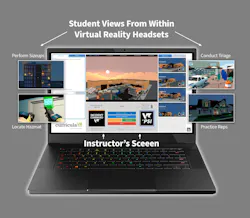
Fire Service VR Suite by Pleiadian Systems/VR by PSI
Pleiadian Systems
The Fire Service VR Suite brings a new level of realism and scalability to firefighter training, to create a virtual burn building that omits the need for cleanup and decontamination. The platform allows members to repeatedly practice fireground operations under varying conditions without the cost, logistics or out-of-service time that’s common to training at live-fire facilities. Multiple firefighters can train simultaneously while an instructor controls conditions, monitors performance and evaluates decision-making in real time. The suite offers three modules—Fire Rescue, Hazmat and Incident Command—that challenge officers and firefighters with interior operations and their understanding of fire behavior and hazard recognition while testing communication skills and command-level decisions. The suite allows for instant resets, so users can repeat evolutions to reinforce skills and measure improvement and to help to build muscle memory.
Firehouse Evaluation: Virtual reality is gaining popularity in the fire service, and this platform provides departments with a realistic way to sharpen decision-making, situational awareness and communication during simulated fire scenarios. Users are able to train as a crew, repeat scenarios and learn from their decisions at the completion of each scenario. Instructor oversight keeps training focused, and the platform provides a safe environment to build confidence, competency and teamwork while focusing on operational readiness.
First Due AI Scheduling Intelligence
First Due
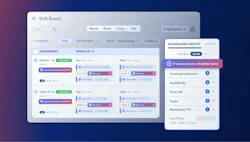
First Due AI Scheduling Intelligence applies artificial intelligence to one of the fire service’s most complicated administrative challenges: staffing apparatus based on a multitude of factors, including response needs. Built into First Due’s Scheduling & Personnel platform, the AI-powered technology evaluates staffing levels based on rank, availability and fatigue, certifications, overtime eligibility and rules and factors in labor agreements when vacancies or qualification gaps are present. Rather than requiring chiefs or officers to manually sort through those variables, the system offers a guided workflow for potential personnel moves, yet those people retain control and can accept, modify or bypass recommendations. By connecting scheduling with personnel qualifications, the technology can reduce administrative workload and ensure that qualified firefighters are in the right position.
Firehouse Evaluation: What stands out about this product is how quickly it can help to solve staffing problems that otherwise can eat up valuable time, to allow schedulers to focus on other tasks. Instead of someone working through lists of variables, such as availability, qualifications and overtime policies, the system helps to identify options and next steps. From a firefighter’s perspective, better scheduling means fewer mistakes and equity in staffing decisions with less disruption while still keeping chiefs in control.
Fury Gloves
Holík International
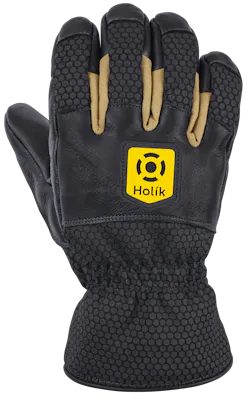
Fury combination structural firefighting gloves blend leather durability with advanced textiles to improve protection and dexterity on the fireground with PFAS-free material. Manufactured with CeramX Shield, the lightweight meta-aramid fabric features a ceramic coating to provide strength and flexibility without added bulk. The glove’s Heat Shield combines specially treated buffalo leather with CeramX Shield and a protective membrane, to deliver enhanced thermal protection with a thermal protective performance (TPP) rating that exceeds 60. Palm seams are strengthened with DuraSeam in high-wear areas, which improves glove longevity. The redesigned thumb eliminates movement restrictions, to give firefighters greater dexterity when they handle tools or advance hoselines. The construction also addresses stiffness, water absorption and liner displacement, to help to make the gloves easier to don while maintaining protection and comfort during extended fireground operations.
Firehouse Evaluation: What stands out is that these gloves address the key factors that affect firefighters every time that they respond: comfort, fit and dexterity. The PFAS-free hand protection provides better movement, and the liner stays where it belongs when firefighters don the gloves. It’s a thoughtful design that’s focused on protection without sacrificing how the gloves perform.
G8
Blacklinesafety.com
Blackline Safety’s G8 takes portable gas detection beyond individual alarms by turning real-time readings into shared operational intelligence. Designed for hazmat and fireground operations or other high-risk environments, the connected wearable brings continuous multigas detection, GPS location monitoring and live communications into one platform. Alerts, gas readings and locations are transmitted via Blackline Live software, to give incident commanders (ICs) visibility into changing conditions in real time. Automated alerts for hazardous gas levels or no-motion events can notify both personnel and command quickly. G8 also integrates with Blackline’s EXO 8 area monitor, which received a Firehouse Innovation Award in 2025, to create a layered monitoring network. Being capable of connecting atmospheric conditions and personnel with command, the G8 improves situational awareness and supports safer decision-making during complex incidents.
Firehouse Evaluation: The G8 connects ICs with critical data from the firefighters themselves and combines the data with atmospheric conditions, to provide responder safety. Gas readings, alarms and firefighter locations that are shared in real time give commanders a better picture of changing conditions and help with tactical decisions. During a hazmat call, the added visibility of on-scene data can help crews to adjust quickly, because individual alarms become part of the team’s approach.
Hands Free Extractor
Third Man Products
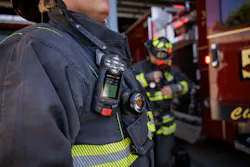
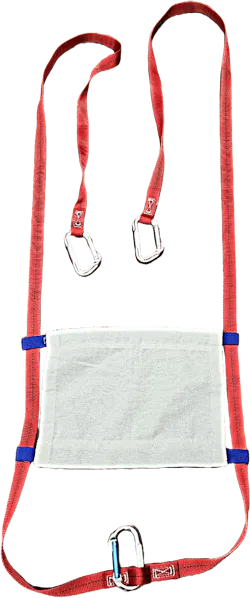
The Hands-Free Extractor (HFE) rescue system provides a hands-free tool for victim removal and is designed to make rescues faster, safer and less physically demanding on firefighters. The compact design of the system means that firefighters can crawl, walk, and move forward and backward while transporting a victim while keeping both hands available to open doors, clear debris and follow a hoseline. The design supports the victim’s head during removal, to reduce the potential for injuries that are associated with traditional removal techniques. With the HFE, rescuers have greater use of larger muscle groups and alternative movement techniques, which reduces fatigue and physical strain during demanding removals. The system weighs slightly more than 1 lb. and fits inside PPE pockets, to give firefighters a highly portable rescue tool that remains readily accessible in high-risk/high-reward environments.
Firehouse Evaluation: The Hands-Free Extractor offers firefighters another option for moving a victim without adding bulky equipment. Fitting into gear pockets, weighing about 1 lb. (removing hindrances for quicker searches) and being hands-free (not complicating the exit of the structure) are key. Being able to get the victim’s head off of the floor while reducing drag are big advantages for both the victim and the rescuer.
Lifeline Firehose
Lifeline Firehose
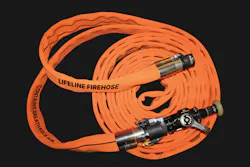
Lifeline Firehose adds a new layer of firefighter respiratory protection by integrating a continuous backup air supply into the hoseline itself. Designed to supplement SCBA in certain scenarios—not replace SCBA—the system gives firefighters another option for breathable air if their cylinder runs low while operating in IDLH environments. Rapid intervention crews can advance the hose to a firefighter who is low on air or trapped and provide continuous air without carrying additional cylinders that might not provide enough on-air time. The portable air cart extends the concept to high-rise, confined space and other scenarios. The hose combines the firefighter’s previous training with 1¾-inch hoselines and buddy-breathing connections for supplemental air. Lifeline Firehose transforms the familiar attack hoseline into an additional air-delivery resource during various operations.
Firehouse Evaluation: The Lifeline Firehose provides firefighters with another source of critical breathable air that’s built into something that they already take inside: a hoseline. It doesn’t replace SCBA but provides another option if a firefighter runs low on air or if a rapid intervention team must reach a downed member with a lengthy removal time. The concept fits naturally into fireground operations because of the use of existing equipment while adding another layer of protection.
Module 10 Multi-Use Skills Training Simulator
Symtech Fire
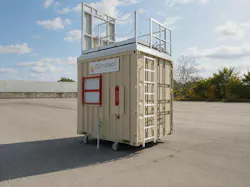
The Module 10 Multi-Use Skills Fire Simulator turns the footprint of a standard parking space into a versatile, multi-use firefighter training environment. The 8 x 10-foot product incorporates 10 critical firefighter skills, including confined space, the Denver Drill, forcible entry, ladder operations, search, VES and ventilation, into one unit. Its compact design gives departments that have limited space and budget the opportunity to conduct realistic, repetitive, hands-on evolutions at their station. Available as a fixed unit or with wheels and casters, Module 10 also can accommodate ceiling-pull, sprinkler, smoke and mayday training components. By consolidating multiple disciplines into one expandable platform, the training prop can help departments to increase training frequency while reinforcing fundamental skills and improving firefighter readiness.
Firehouse Evaluation: The Module 10 provides the means for daily training for firefighters by having multiple skill stations available at the firehouse. You can work on bailout skills, forcible entry, ladders, VES and other techniques without traveling to a fixed training center. Its compact footprint offers regular, hands-on repetitions via realistic scenarios. Add smoke for limited visibility, and crews can practice communication, decision-making and basic skills under conditions that better resemble the fireground.
Octave OnCall Public Safety Platform
Octave
Octave OnCall brings dispatch, incident management and fireground intelligence together in a single, unified public safety platform. Its browser-based computer-aided dispatch (CAD) combines configurable response plans with multisource mapping that can display critical infrastructure, drafting sites, pipelines and staging areas alongside incident locations. Interactive standard operating procedures (SOPs) allow ICs to track required tasks and to create notifications and operational milestones in real time, to help personnel to maintain a common operating picture. Mobile access provides a means for crews to get access, while integrated mapping supports deployment needs during large-scale incidents. Octave OnCall offers secure data-sharing between public safety and emergency management agencies. It provides analytics that turn response data into actionable insights via flexible cloud, SaaS or on-premises deployment.
Firehouse Evaluation: This platform allows commanders and firefighters to get the information that they need before they arrive at an incident and continuously monitor aspects of the incident as conditions change. Octave OnCall integrates mapping, response plans and SOPs with incident updates in one location, to reduce the time that’s needed to bring all data together. On larger incidents, accurate staging and reporting locations keep crews connected, from dispatch through the completion of the incident, while allowing them to focus on the job.
VipIR
908 Devices
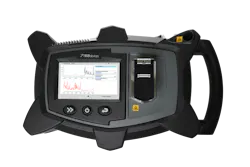
VipIR gives firefighters and hazmat and CBRNE crews laboratory-level chemical identification in a handheld device that’s designed for field operations. The key innovation combines Raman spectroscopy and FTIR analysis through Smart Spectral Processing, which cross-references data from both technologies to produce a single, high-confidence result from one sample. 908 Devices’ onboard library contains more than 39,000 chemical spectra to help to identify narcotics, explosives, toxic industrial chemicals, chemical warfare agents and common substances. Multiple sampling options allow responders to analyze solids and liquids, including materials through transparent containers. The built-in SmartID workflow minimizes training requirements, while built-in Wi-Fi and cellular connectivity simplify data-sharing and reporting. By reducing resampling, analysis time and uncertainty, VipIR gives hazmat teams faster intelligence for selecting protective measures, establishing control zones and determining response tactics.
Firehouse Evaluation: The VipIR gives responders one clear answer during a developing operation. The device allows firefighters to identify unknown substances with the use of FTIR and Raman reading and analyzes the same sample to bring the results together. This means less uncertainty when dealing with narcotics, explosives or hazardous chemicals. The confidence scoring that it provides also helps responders to make better-informed decisions when time is critical.
ResponseStandard
Fireground Analytics
ResponseStandard turns data from every fire into a performance-improvement opportunity. The cloud-based platform combines CAD data, AI-transcribed fireground radio traffic, incident photos and video, and observations and turns all of that into a detailed incident timeline for training. Crews can replay audio alongside the timeline to examine their tactical decisions and review communications and fireground benchmarks, while AI converts hot wash recordings into an outline for an after-action report. The platform’s innovations include scorecards for compliance with NFPA 1710: Standard for the Organization and Deployment of Fire Suppression Operations, Emergency Medical Operations, and Special Operations to the Public by Career Fire Departments, customizable quality-assurance checklists, staffing trackers and SyncPoint incident report cards. This brings fragmented incident information into a single platform, to give firefighters and officers a fact-based way to identify lessons, improve accountability, strengthen training and make future fireground operations more effective. Integration allows the data to be shared with national firefighter surveys.
Firehouse Evaluation: The platform allows departments to confidently break down what happened during and after a fire without having to rely on memory alone. By combining benchmarks, CAD data, imagery and radio traffic into one timeline, the platform helps crews to see what went well and where they can focus on improvement. For firefighters, that means learning from every incident while identifying training needs and having meaningful conversations about tactics and performance before the next run.
About the Author
 Peter Matthews