New Fire Station Alerting that Benefits Your Firefighters’ Long-Term Health and Comes with an Affordable Price Tag
Key Highlights
- Traditional fire station alarms can reach decibel levels higher than a fighter jet, causing stress and health risks for firefighters.
- New alerting systems like Prism-IPX and EaseAlert offer graduated tones, lighting, and tactile alerts to reduce startle responses and heart rate spikes.
- EaseAlert's wireless, customizable system can be installed in 1-2 days, saving on costs and time compared to traditional wiring methods.
- Clinically studied by the CFREHR/NDRI-USA, EaseAlert drastically reduces physiological stress during alarms, improving firefighter health.
- These innovative systems are especially beneficial for small and rural departments, providing scalable, cost-effective solutions to enhance safety and well-being.
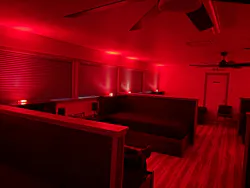
It's 4:23 a.m. and a 116-decibel bell starts to ring. Five people jolt awake and jump out of bed. Heart racing, they try to clear the fog from their heads while simultaneously plunging feet into boots, grabbing gear, and vaulting into an engine. The bay door opens, and they slam the truck doors as the wheels start rolling and the lights and sirens are flipped on. It's a standard scene that takes place in fire stations across the country at all hours of the day and night.
Over the past 10-20 years, as the push to improve the health and safety of firefighters has grown, studies have continually produced more information about how to better firefighters' lives. One area that has received attention lately is the startling sound of the fire bell throughout the station and the long-term effects it can have on a firefighter's health. The National Institute for Occupational Safety and Health (NIOSH) performed a noise study on sounds that firefighters are exposed to and determined that the station alerting system is the loudest. Audible station alerts can measure at decibel levels higher than a fighter jet 1,500 feet over head. And those alerts are frequently sounded in the middle of the night.
Many large city departments have invested in tones and lighting that slowly increase at night to prevent startling firefighters awake. These systems require significant investments and can take months to install. Smaller, rural departments can't afford that kind of capital investment, not to mention tearing apart their fire stations for months to run wiring through the living quarters. It is estimated that 70% of fire departments across the U.S. still rely on traditional audible alerting methods, such as a klaxon.
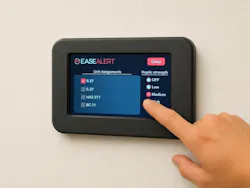
Two companies are working together to reduce that number, and many of the most influential fire departments across the country are turning to them for the solution. Prism-IPX Systems and EaseAlert® have paired up to create a healthier station alerting system that is built for firefighters and is much more affordable. Prism's product is a station alerting system that is both 700/800 P25 and VHF Analog compatible, it can operate simultaneously on both P25 and analog systems providing a level of redundancy. All this for about the cost of a mobile radio. The Prism FSA is easy to program, allowing you to add WAV file alerts for ramping tones, set priority between the P25 and VHF receivers, and set up day and night modes to only wake firefighters up for critical call-out tones. The system has eight relay ports that can control lighting, station tones, the bay doors — anything you plug into it, including EaseAlert, which is an IP-based alerting system that focuses on alerting the firefighter, not just the station.
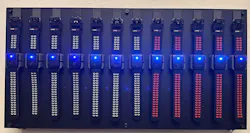
EaseAlert prevents the need for miles of cables through a station because it operates as its own closed wireless network. It can control graduated light and sound alerting, as well as its patented tactile alerting that wakes firefighters via a TacPod™ (vibration alert on your wrist) or BunkAlert™ (haptic motor on the bed). You can adjust the haptic motor strength and set it to wake up only the firefighters in the station who are being called out. It is no longer necessary to wake up everyone in the station for every call. EaseAlert even has a wireless touchscreen controller, so firefighters can go in and choose the unit they're on. All without requiring the station to run cabling from edge devices back to the main receiver, known as the Central Command Unit.
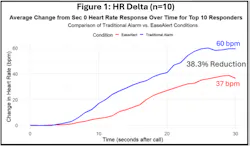
EaseAlert is the only station alerting system to have been clinically studied by the Center for Fire Rescue and EMS Health Research/National Development and Research Institutes of the United States (CFREHR / NDRI-USA), with funding from the National Institute of Health (NIH). EaseAlert resulted in as much as a 38.3% reduction in participants' heart rate spikes during the first 30 seconds after the alert. Being startled awake kicks in the body's fight or flight response, giving a person tunnel vision, a spike in heart rate, and a cortisol dump, which is an acute spike in the body's primary stress hormone. Firefighters are relying on muscle memory to reach the rig. They may not be listening to the dispatch; they're focused only on putting on gear and getting on the truck. Should they be speeding through town at 4 a.m. in that state?
Studies have shown that heart attacks are up to 14.1 times more likely during an alarm response. Chronic sleep disruption — a disease that firefighters already have a higher risk than the general population — has been associated with increased risks for a variety of adverse health outcomes, including certain cancers. In addition, sleeping less than four hours a night increases the rate of suicide by 3.5 times.
One of the biggest benefits of using Prism and EaseAlert together is the cost and time savings on installation. Some station alerting systems can take months to install, running wires from the receiver to all the devices it will control. Installation of Prism and EaseAlert can be accomplished in one to two days, saving up to 75% on installation costs. The system is also modular, so it can be purchased in more affordable pieces, rather than having a larger upfront investment. Smaller and rural communities may not have the budget to invest all at once, but they may be able to buy pieces to add to the system and expand it over a multi-year period.
Being startled awake can cause long-term negative effects on the health of firefighters. Graduated lighting and audible alarms help reduce the heart-rate spike caused by being startled awake. Still, many of those systems come with a hefty price tag and long installation schedules, making them cost-prohibitive for smaller or rural departments. The partnership between Prism and EaseAlert not only provides departments with a solution that offers lower costs and quick installation but also enables them to use alerting methods that benefit firefighters' long-term health. Visit Prism IPX and EaseAlert online for more information.