Body Cameras in Fire-Based EMS: Accountability or Added Headache?
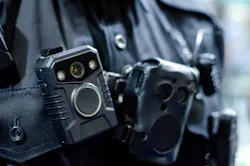
A crew arrives on scene for a patient in cardiac arrest and every interaction, every step and every word is recorded but so are the raw emotions of the distraught family and the nosey neighbors’ reactions. The patient is partially undressed while paramedics perform life-saving interventions, and nothing is left to the imagination when this scene is reviewed for quality assurance or at a future legal review.
While not is widespread use yet, there is a small movement to add body cameras to more than just law enforcement. The question then becomes is there value in adding this next level of accountability and is it worth the headache?
Covering accountability
The public safety world is one where people are taught from an early start that if it was not documented then it did not happen. Chiefs and managers have been adding cameras inside of buildings, apparatus, and now are considering adding them to people in the pursuit of accountability (or defensibility) for quite a while.
While some say it is about protecting public safety officials from false accusations, improving quality assurance and training, aiding in documenting difficult patient encounters, or just to add a degree of transparency, there is always a flip side to the argument. Whether it is creating new exposure to legal issues, aiding in witch hunts, or adding a new degree of stress to an already stressful job, there are just as many reasons why a department would want to avoid body cameras.
No matter the reason, the camera may capture what happened, but it does not always properly tell the story of why something happened. So, like all technology purchases, I would challenge you to start with the question: What problem is it going to solve? If you have an issue with standards of care, liability from false accusations, or a greater need for accountability, then it might be right for your department.
Privacy concerns
While there is some crossover between law enforcement and EMS at certain scenes, there is an obvious difference in the interactions, information provided, and sensitive nature of what is discussed that would alter the decision to use body cameras.
I remember being on scenes as a captain, telling a patient’s friend that we are not the police and do not care what drug they took, we just needed to know what it was, so we knew how to best save their friend’s life. Would body cameras add a degree of resistance we are not used to seeing? Would it make patient care more difficult?
That does not scratch the surface of questions related to patient privacy laws and how you as an organization are going to protect terabytes of sensitive patient data. Imagine the calls we go on, unconscious, confused, or intoxicated patients, children, vulnerable adults, mental health crisis, domestic violence, sexual assaults, sensitive medical conditions, nude or partially nude patients, and family members or bystanders inadvertently recorded. In an industry built upon patient consent, what process occurs to allow a patient to consent to being filmed?
- Doyle: EFO Research Brief: The Moral, Ethical, and Personal Effect of Body-Worn Cameras on Firefighters
The fact remains, EMS operates in sensitive, emotionally charged, and often private spaces that create issues when you start recording. While HIPAA does not directly prohibit body camera recording, it also does not support or allow it. Each organization must do a thorough legal review to make sure they are operating in accordance with national, state, and local laws to ensure they are lighting a legal stick of dynamite.
Camera provide operational value
I can remember when they started adding cameras to the command vehicles in the Charleston, SC region. At first, everyone thought it was a witch hunt or the "gotcha game" but in the end, no one can deny the operational value these recording added in post incident critiques/reviews, and when building training scenarios.
With human factor limitations relating to memory at stressful events, the video recording never lies. It captures everything and is a great witness when people are trying to recollect the various events that occurred on a scene.
Police saw a similar operational improvement when officers started wearing body cameras. Excessive force complaints, overturned conviction rates reduced, training scenarios improved, and officer accountability hit all time highs.
The question becomes, what operational value would we potentially see in fire-based EMS body camera usage? Better patient outcomes? Reduced errors? Better training scenarios? Less litigation against a department? Better community relations? In the end, if this technology is solving problem, it may be worth the headaches.
Initial vs. on-going costs
Body cameras range in price anywhere from $150-$2,000 each which is small compared to the cost of the storage and protection of those recordings.
Cloud subscriptions can run from $20-$100 per month, per person, but on-premises solutions can quickly add up with server, network, and cyber security costs. Data retention standards become another issue to consider as many of these videos can be considered evidence or public record.
In the end, there are the initial purchase, maintenance costs, and the ongoing storage considerations that need to be reviewed before deciding.
The human factor evolves
In science there is something called the observer effect, whereas you must interact with something to observe it.
In regular terms, the human factor of being observed must be considered. Will being recorded improve compliance or will it make someone hesitant to do their job because they are not sure if what they think needs to be done is “proper” or “by the book?” Would the knowledge that they are being recorded add a degree of reluctancy to be themselves and ruin the overall patient satisfaction?
On the other side, would wearing cameras improve patient behavior or as previously discussed add a new degree of difficulty? In the end, recording an interaction does not necessarily mean that the recording will improve the interaction.
Conclusion
I wanted to leave you with this thought: Just because we can, does that mean we should?
There is more technology available to first responders than ever before, and each solution has a time and place where it would add value. Improving accountability, reducing liability, and improving the quality of care are all great reasons to consider body cameras.
I do not think I am personally ready to advocate for body cameras for fire-based EMS, but I have also never been in a department that had major problems that this technology could help solve. I can see the pros and cons, and there is some intrinsic value that comes with recording performance, but it is ultimately up to each department to determine if accountability is worth the headache.
About the Author
 Jason Moore
Jason Moore is a 23-year veteran of the fire service who began his career with the U.S. Air Force as a fire protection specialist. Moore is involved with the International Association of Fire Chiefs’ Technology Council and is a founding member/associate director of the Indiana University Crisis Technologies Innovation Lab (IU Red Lab). He delivered presentations on implementing technology, using technology for community risk reduction and best practices to justify funding for innovative programs. Moore was the keynote speaker at FireFusion 2024 and is a member of the Firehouse Editorial Advisory Board.