What College Football Can Teach Us About Building a Community Risk Reduction Team
Key Takeaways
- Fire departments should treat community risk reduction (CRR) as a team effort, drawing on department staff and community partners to address local risks.
- Use proactive programs, prevention, planning, and operational observations to reduce the likelihood and impact of emergencies.
- Adapt available resources to fill CRR roles, even when your department lacks dedicated specialists
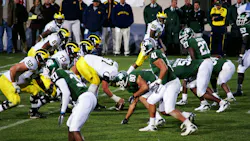
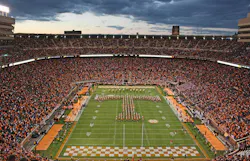
Fall and cooler weather are finally here, which means football season is in full swing. I've always enjoyed football, and until I moved from Michigan to Tennessee, I thought I understood college football season. Heck, I've worked more than my fair share of University of Michigan football games. Then, in 2012, I moved to the South and quickly learned that football here is an entirely different experience. Saturdays are practically spoken for, and I've learned that scheduling anything important requires checking the football schedule first.
Now, I am definitely not a football expert, but I have picked up a few things along the way. For one, having the biggest budget or the most talented players doesn't always guarantee a win (although both certainly help). A lot depends on how well a team works together, understands their opponents, and makes the most of the players they have.
You've got your powerhouse teams. The ones with a large budget, a deep bench, and resources for just about every position. Then you've got the teams that are pretty solid. They show up, win some games, lose some games, but probably aren't bringing home a championship this year. Then there are the underdogs. Their bench is a little shallow and their football field probably doubles as the soccer, lacrosse, field hockey, and you-name-it field. They don't have the newest equipment or a specialist for every position, but they've got heart, determination, and just enough creativity to pull off one of those upset wins that is remembered for years.
And really, when you think about it, building your community risk reduction (CRR) team isn’t all that different.
Some departments have dedicated CRR staff, Geographic Information System (GIS) experts, data analysts, educators, inspectors, and communications teams. Others have five people on duty, one mowing the lawn, another fixing something that broke yesterday, and someone who just found out they're also the data analyst. Most of us fall somewhere in between.
Whether you've got a deep bench or you're making up the roster as you go, success comes down to understanding your community's risks, knowing your team's strengths, and putting together a game plan that works with what you've got. Chances are that you have more players on your team than you realize.
Take the field with your offense
In CRR, offense is about taking what we know about our community's risks and doing something to reduce them. Smoke and carbon monoxide alarm programs, home safety visits, fall prevention, CPR training, and public education are all examples of proactive efforts. We're trying to prevent emergencies before they happen instead of just reacting to them.
However, just like football, you can't run every play through one player. Your Fire and Life Safety Educator can't be the entire offense, and the fire department doesn't always have to carry the ball.
That's where partnerships come in. Schools, hospitals, senior organizations, and community groups often have relationships, resources, and expertise we don't. Sometimes we bring the expertise, and sometimes they do. In CRR, just because someone wears a different jersey doesn’t mean they can’t play a crucial role on your team.
A true partnership isn't just about helping deliver our programs. It's recognizing when someone else has the knowledge, skills, or opportunity to make them better. A good offense gets the ball into the hands of whoever has the best opportunity to move it.
Build your defense around your plan
If offense is where we act on identified risks, defense is where we build protections to prevent incidents or lessen their impact. Fire prevention may be the most recognizable defensive line. Fire marshals, inspectors, plans reviewers, building officials, codes, and fire protection systems all play a role.
Make sure to include planning and development on your roster. Some of our best opportunities to reduce risk happen before a building is ever built. While fire departments spend a lot of time looking at what happened yesterday, planning and development are continually looking at what our communities may look like five or ten years from now.
A good CRR game plan needs both perspectives. Sometimes the best defensive play is preventing tomorrow's problem before it's built or making sure what's being built meets the right standards from the start.
Don't forget your special teams
Operations and EMS may be some of the most underused players on the CRR roster. Our crews go places few other people in local government ever go. They see missing smoke alarms, fall hazards, hoarding conditions, unsafe charging practices, repeat callers, and people struggling to remain safely in their homes.
Most of the time, we fix the immediate problem, clear the call, and move on. A CRR mindset asks one more question: Is there something we can prevent from happening again?
That doesn't mean your engine company needs to conduct a two-hour home safety assessment after every EMS call. Please don't tell them I suggested that. Sometimes it's just recognizing a potential problem and making sure the right person knows about it.
Give crews an easy way to communicate what they're seeing, and individual calls can start revealing much larger community risks.
Get in the film room
Good teams study their opponent. For us, the opponent is risk. GIS specialists, data analysts, and CAD/RMS personnel help us spot patterns we might miss one call at a time. Where are calls happening? What keeps happening? Who is being affected? What are our inspections telling us? What risk does our community have a great potential to experience.
One call tells us what happened to one person, but enough calls can tell us something about the community.
Don't limit your film room to fire department data, either (remember those partnerships we talked about in offense). Schools, hospitals, public works, utilities, law enforcement, and community organizations all have information we can learn from. They see things we don't. If all your information comes from inside the firehouse, you're only watching half the film.
Who is coaching?
Even the deepest roster doesn't accomplish much if everyone is running a different play. That's where leadership comes in. Chief officers and department leadership don't need to personally run every program, analyze every spreadsheet, or attend every community meeting. Their role is to make sure CRR is part of how the organization operates, not something assigned to one person down the hall.
Good coaches know their players. They recognize strengths, put people in positions where they can succeed, and make sure they have the resources and support they need. They also pay attention to the film.
If the data shows a growing problem, are resources being directed toward it? If crews repeatedly identify the same risk, is there a way to address it? If someone outside the department can help solve the problem, are we willing to bring them onto the field?
Sometimes a good coach recognizes that the best player for a particular position isn’t even on the fire department payroll.
Now, about the underdog
The powerhouse can put a specialist at every position. The underdog can't.
CRR doesn't require every job title. It requires the function:
- No GIS specialist? Who makes maps for your community?
- No data analyst? Pull a CAD report, sort it by address or incident type, and look for patterns.
- No public educator? Who on your shift is good with people or already has community relationships?
- No PIO? Who handles communications for your municipality or another local agency?
Your film room might have GIS software, dashboards, and analysts. Or it might have Excel, Google Maps, and a highlighter somebody stole from the training room. Either way, the goal is the same: understand your risks and figure out what to do about them.
One person may play several positions. Someone outside your department may fill another. You might even have someone on your bench with exactly the skills you need. You just haven't thought to ask.
Underdogs don't win by pretending they have the powerhouse's roster. They know what they've got, play to their strengths, and find creative ways to fill the gaps.
Borrow someone else's playbook
The good news with community risk reduction is that you don’t have to invent every play yourself. NFPA 1300 Standard on Community Risk Assessment (CRA) and Community Risk Reduction (CRR) Plan Development gives us a framework for conducting a community risk assessment and developing, implementing, and evaluating a CCRR plan. Think of it as a coach's guide.
Sometimes it's easier to understand a play after you've watched another team run it.
The Travis County ESD #2/Pflugerville Fire Department CRR plan is included in NFPA 1300 materials, giving departments an example of what putting that framework into practice can look like.
Here's where CRR gets a little different from football: Imagine a football team handing over its playbook and saying, "Here, take whatever you want." In CRR, that happens all the time. Departments share programs, lesson plans, data strategies, partnerships, forms, and even what worked and what didn't.
We're not competing against each other. A great CRR program in Texas doesn't make Tennessee any less safe. A successful idea in Tennessee doesn't take anything away from a department in Ohio. It just gives someone else other plays to consider.
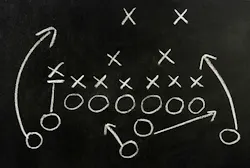
Now that doesn’t mean just copy and paste. Your community has different risks, needs, and resources. Borrow the play, adapt it to your roster, and see if it works for your community.
Someone else's win doesn't have to be our loss. In CRR, we can all get better at the same time.
Sometimes you still lose
You can have the right players, study the film, and call what looks like the perfect play and still lose.
The program you were convinced people needed may have terrible participation. Your social media campaign may go nowhere. You may spend weeks planning an event and have twelve people show up, and three of them work for you. A partner may say no, funding may disappear, or sometimes the intervention simply doesn't work.
Despite everything we've done to reduce risk, sometimes the incident still happens. Good teams watch the film after a loss, too. What did we miss? Did we choose the wrong audience? Did we misunderstand the data? Did we listen to the community, or did we decide what they needed before we asked?
Sometimes the uncomfortable answer is that we called the wrong play. So change it.
CRR shouldn't become a collection of programs we keep running forever just because we've always done them. Take the loss, learn from it, and adjust.
The goal was never an undefeated season. The goal is a safer community.
So, who's on your team?
Don't look at your organizational chart. Look at your roster. Who can move the ball? Who can prevent the big play? Who sees things others miss? Who studies the film?
More importantly, who's sitting on the bench because nobody thought to include them in CRR?
Maybe you're the powerhouse, or maybe you're the underdog. Play with the team you have and build relationships to fill the gaps. Study the film, borrow a few plays, and call an audible when something isn't working. Share the good plays when you find them.
CRR isn't the educator, the fire marshal, the GIS analyst, or the chief. It's the process that brings everyone together to reduce a community’s risks.
CRR is the game plan.
About the Author
 Jessica Curran
Jessica Curran is a Fire Education Specialist with Collierville, TN, Fire & Rescue, where she leads public education and community risk reduction (CRR) initiatives focused on building safer, more resilient communities through prevention, partnerships, and outreach. Her work emphasizes bridging the gap between fire service operations and public education while developing innovative programs that engage schools, families, older adults, and underserved populations. Curran also serves as a Lieutenant/Paramedic with the Shelby County, TN, Fire Department. Her operational experience provides valuable real-world insight that strengthens her approach to CRR, emergency preparedness, and public safety messaging. By combining field experience with prevention-focused strategies, she works to reduce risk before emergencies occur while improving outcomes for the communities she serves. She received the 2026 Bruce Womack Public Fire Educator of the Year from the Tennessee Public Fire Educators Association. In 2025, Curran was named one of 10 Rising Stars by the National Fire Protection Association, recognizing emerging leaders in fire safety who demonstrate outstanding commitment to public education.