EFO Research Brief: The Hidden Cardiac Risks Facing Chief Fire Officers
Key Takeaways
- Firefighters face elevated cardiovascular risk from strenuous responses, toxic exposures, disrupted sleep, and chronic occupational stress.
- Fire chiefs may carry these accumulated risks into leadership, where constant organizational demands add a new source of chronic stress.
- Study participants reported health concerns including hypertension, elevated cholesterol, arrhythmias, sleep apnea, and chronic fatigue.
Editor's note: "EFO Research Brief" is a collaboration between Firehouse.com and the National Fire Academy's Executive Fire Officer Program to highlight the research conducted by students. Each month, we will provide a summation brief of the student's final research capstone spanning multiple fire service topics.
Cardiovascular disease (CVD) remains the leading cause of line-of-duty deaths in the American fire service. For decades, the profession has invested significant resources in reducing cardiac events through annual medical evaluations, fitness initiatives, rehabilitation practices, behavioral health programs, and improved awareness of occupational risk factors. These efforts have undoubtedly saved lives. Yet they have largely focused on one population—frontline firefighters.
An important question has received far less attention: What happens after firefighters spend years responding to emergencies and then promote into executive leadership?
The answer may represent one of the next major challenges in firefighter health and wellness.
Research has consistently shown that firefighters face an elevated risk of CVD because of repeated exposure to intense physical exertion, smoke and toxic chemicals, sleep disruption, shift work, traumatic incidents, and chronic occupational stress. Studies also demonstrate that corporate chief executive officers (CEOs) experience increased cardiovascular risk from an entirely different source—persistent executive stress created by long work hours, organizational accountability, financial responsibility, political pressures, and continuous decision-making.
Chief executive fire officers occupy a unique position at the intersection of these two populations. Unlike corporate executives, they begin their leadership careers after decades of emergency response. Unlike frontline firefighters, they rarely leave occupational stress behind after the emergency ends. Instead, acute operational stress evolves into continuous organizational responsibility. Their cardiovascular risk does not disappear with promotion—it changes form and, in many cases, may intensify.
This concept became the foundation of my Executive Fire Officer capstone research, which examined the relationship between chronic occupational stress and cardiovascular health among chief executive fire officers. While CVD has been extensively studied among firefighters and chronic stress has been well documented among corporate CEOs, little research has explored the combined physiological impact experienced by executive fire service leaders.
Two proven risk populations
The cardiovascular risks associated with firefighting are well established. Every emergency response initiates the body's fight-or-flight response, increasing heart rate, blood pressure, vascular resistance, and oxygen demand. Firefighters routinely experience repeated exposure to thermal stress, combustion byproducts, sleep interruption, physically demanding work, and emotionally traumatic incidents. These acute physiological responses accumulate throughout a career.
Over time, repeated activation of the sympathetic nervous system contributes to chronic inflammation, immune dysregulation, endothelial injury, metabolic dysfunction, hypertension, and atherosclerosis. Rather than recovering completely between incidents, firefighters often begin the next shift carrying residual physiological stress from the previous one. This cumulative burden helps explain why CVD continues to account for approximately half of firefighter line-of-duty deaths.
Equally concerning is evidence demonstrating that cardiovascular risk increases significantly with years of service. Research cited throughout this study indicates that firefighters reaching approximately ten years of emergency response experience demonstrate nearly a 50-percent increase in CVD risk compared with those earlier in their careers. That finding should command the attention of every fire chief because ten years is often when firefighters begin transitioning into supervisory and executive leadership positions.
The private sector provides another important comparison. Research involving corporate CEOs has shown that executive leadership itself carries substantial cardiovascular risk. CEOs routinely work extended hours while managing organizational performance, financial accountability, stakeholder expectations, political relationships, litigation concerns, and strategic planning. Unlike firefighters, their stress is rarely episodic. It is constant.
Medical research demonstrates that prolonged executive stress activates many of the same physiological pathways seen in emergency responders. Persistent sympathetic nervous system activation elevates blood pressure, increases inflammatory activity, disrupts normal metabolic regulation, impairs sleep, and contributes to hypertension, arrhythmias, coronary artery disease, and other cardiovascular disorders. Executive leadership, by itself, has become recognized as an occupational health concern.
Where these two worlds collide
Chief executive fire officers differ from both populations because they experience both occupational exposures.
Most chiefs have already accumulated decades of emergency response before assuming executive leadership. They enter the chief's office carrying years of physiological adaptation from shift work, interrupted sleep, smoke exposure, high-adrenaline incidents, and repeated activation of the body's stress response. Promotion does not erase those physiological effects.
Instead, operational stress is replaced with another form of chronic exposure.
Fire chiefs manage personnel issues, labor negotiations, budgets, capital projects, strategic planning, political relationships, community expectations, emergency preparedness, litigation, media scrutiny, and organizational accountability. Unlike emergency incidents that eventually conclude, executive responsibilities rarely stop. Many chiefs remain continuously connected to their organizations through phones, email, text messages, meetings, and community obligations. Organizational responsibility follows them home, interrupts vacations, and often extends well beyond traditional work hours.
Rather than exchanging one risk profile for another, chief executive fire officers inherit both.
That combination may make them one of the highest-risk occupational groups for CVD within the fire service.
What executive leaders reported
The findings from my EFO research strongly supported this belief. Chief executive fire officers consistently described chronic occupational stress that differed substantially from their experiences as frontline firefighters. Participants identified political pressures, expanding administrative responsibilities, staffing shortages, financial constraints, organizational growth, community expectations, and continuous accountability as the most significant sources of stress.
Many participants also reported physician-diagnosed hypertension, elevated cholesterol, cardiac arrhythmias, sleep apnea, weight gain, chronic fatigue, and metabolic changes that became more noticeable after assuming executive leadership responsibilities. Although this qualitative study was not designed to establish medical causation, participants consistently perceived a relationship between prolonged executive stress and declining cardiovascular health.
Perhaps equally important, participants believed existing wellness programs remain largely focused on frontline firefighters while providing comparatively little attention to the unique occupational health challenges of executive leadership. Most departments offer annual medical evaluations, fitness initiatives, and behavioral health resources, yet few incorporate executive-specific cardiovascular risk assessments, chronic stress mitigation strategies, or longitudinal monitoring of cumulative occupational exposure.
As a result, interventions often address the downstream manifestations of CVD—such as hypertension, hyperlipidemia, obesity, sleep disorders, or anxiety—rather than the upstream occupational and physiological factors driving those conditions. Shifting the focus from symptom management to early identification of cumulative cardiovascular risk may provide an opportunity to improve long-term health outcomes among chief officers.
Moving from detection to prevention
The profession should not wait until symptoms appear before identifying CVD among executive leaders.
Current medical evaluations provide an excellent foundation, but departments should begin considering more comprehensive cardiovascular surveillance based on cumulative occupational exposure rather than age alone. A firefighter reaching ten years of emergency response has already accumulated significant physiological stress. Promotion into executive leadership adds another layer of chronic exposure that deserves increased medical attention.
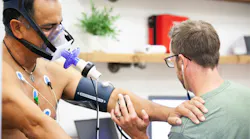
Departments should work with occupational medicine physicians to develop leadership-specific screening strategies that include routine blood pressure monitoring, lipid profiles, metabolic testing, sleep disorder evaluations, behavioral health assessments, and individualized cardiovascular risk stratification. Depending on age, family history, and occupational exposure, additional physician-directed testing may include coronary artery calcium scoring, echocardiography, exercise stress testing, ambulatory ECG monitoring, inflammatory marker evaluation, and advanced cardiovascular imaging when clinically appropriate.
The objective is not simply detecting disease. It is preventing it.
Early identification allows physicians and executive leaders to address modifiable risk factors before CVD progresses to myocardial infarction, stroke, heart failure, or sudden cardiac death.
Departments should also recognize executive workload as an occupational health issue. Leadership resilience, protected recovery time, executive wellness programs, physical fitness, sleep hygiene, peer support, delegation of responsibilities, and realistic expectations regarding constant availability should become essential components of organizational health, not optional benefits.
The need for continued research
This study represents an important first step, but much more remains to be learned.
Future research should examine larger populations of chief executive fire officers using physiological measurements alongside self-reported experiences. Longitudinal studies following firefighters from recruitment through retirement could help identify when cardiovascular risk accelerates and determines which interventions produce the greatest benefit. Additional research should evaluate inflammatory biomarkers, heart rate variability, sleep quality, metabolic changes, and advanced cardiac screening to establish evidence-based recommendations specifically for executive fire service leaders.
The fire service has successfully advanced firefighter cancer research, behavioral health awareness, and occupational safety through sustained scientific investigation. Executive cardiovascular health deserves the same level of attention.
Chief executive fire officers are not simply firefighters who became administrators. They represent a distinct occupational population whose cardiovascular risk is shaped by decades of emergency response followed by years of chronic executive leadership stress.
Protecting these leaders is about far more than individual wellness. Healthy chiefs provide stable leadership during crises, improve organizational resilience, support firefighter safety, and strengthen community preparedness. As the profession continues to advance firefighter health initiatives, the next frontier should be recognizing that cardiovascular risk does not end at promotion. In many respects, it may only be entering a new and equally dangerous phase.
EFO Research Briefs
- EFO Research Brief: Adapting How We Train Gen Z Firefighters
- EFO Research Brief: Identifying Competency Gaps in the Civil Service Promotional Process
- EFO Research Brief: Overcoming Barriers to Collaboration for Fire Protection
- EFO Research Brief: Retirement from the Fire Service and the Loss of Identity
- EFO Research Brief: The Role of Fire Chiefs in Community Risk Reduction Efforts
- EFO Research Brief: Why Vulnerability Is a Leadership Strength in the Fire Service
- EFO Research Brief: Identifying Competency Gaps in the Civil Service Promotional Process
- EFO Research Brief: Removing Barriers to Professional Development in the Fire Service
- EFO Research Brief: Beyond the Fireground: Measuring Organizational Capacity in the Modern Fire Service
About the Author
 S. Matthew Shupe
S. Matthew Shupe, EFO, CFO, is the deputy chief of operations for the Caldwell, ID, Fire Department. He brings more than 28 years of fire service experience, with leadership roles spanning truck company operations, regional hazardous materials response, training, and department administration. He leads operational planning and helps advance a rapidly growing department, including introducing a new truck, acquiring additional apparatus, adding personnel, and developing the department's training division. Shupe oversees daily operations, including staffing, budgeting, fleet management, standard operating procedures, and coordination with city departments and regional response partners.
Previously, Shupe led the Region 1 HazMat Task Force and managed hazardous materials program budgets. As training division chief for South Davis Metro Fire Department in Utah, he developed a training division and also directed fire, EMS, technical rescue, and hazardous materials training and oversaw onboarding, certification tracking, continuing education, and leadership instruction.
He holds a Master of Science in Fire Executive Leadership with a concentration in public administration from Columbia Southern University and a Bachelor of Science in Fire Service Administration. He completed the National Fire Academy's Executive Fire Officer Program in June 2026 and earned the Center for Public Safety Excellence's Chief Fire Officer designation in October 2026.
His EFO capstone research examined the impact of chronic occupational stress on the cardiovascular health of chief executive fire officers. Raised in a family of physicians, he developed an appreciation for preventive medicine that informs his professional interests in firefighter occupational health, executive wellness, cardiovascular disease prevention, and organizational resilience.
Related
 skyler